Landmark: Temple of Bacchus
City: Baalbek
Country: Lebanon
Continent: Asia
Temple of Bacchus, Baalbek, Lebanon, Asia
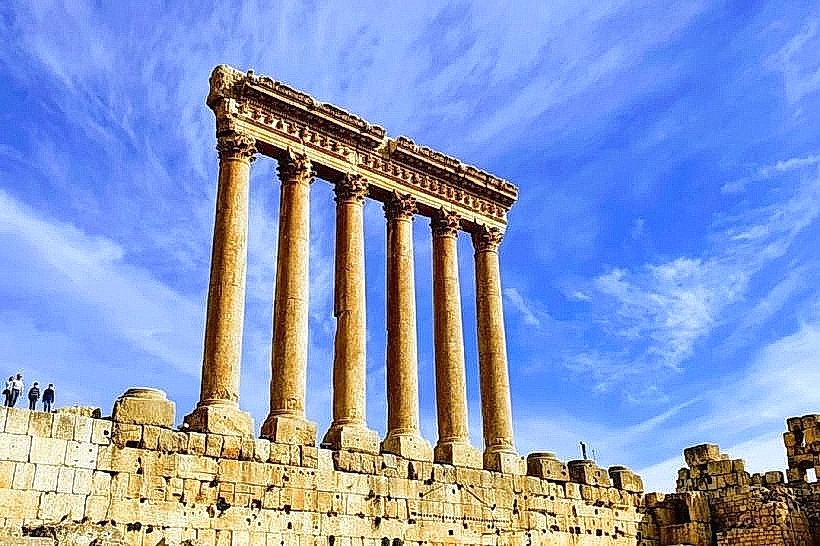
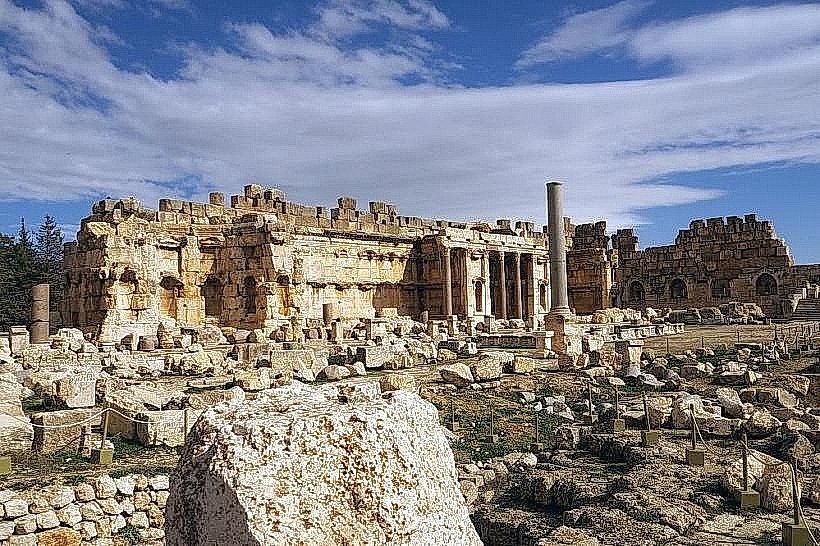
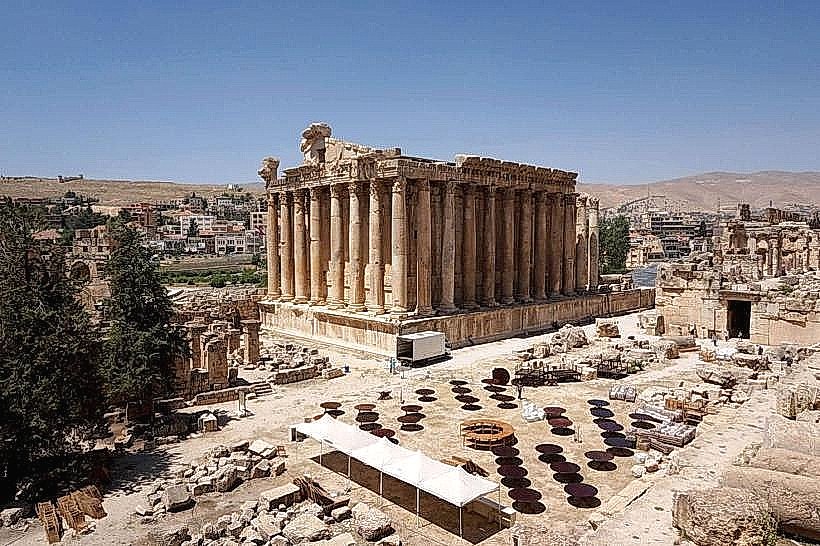
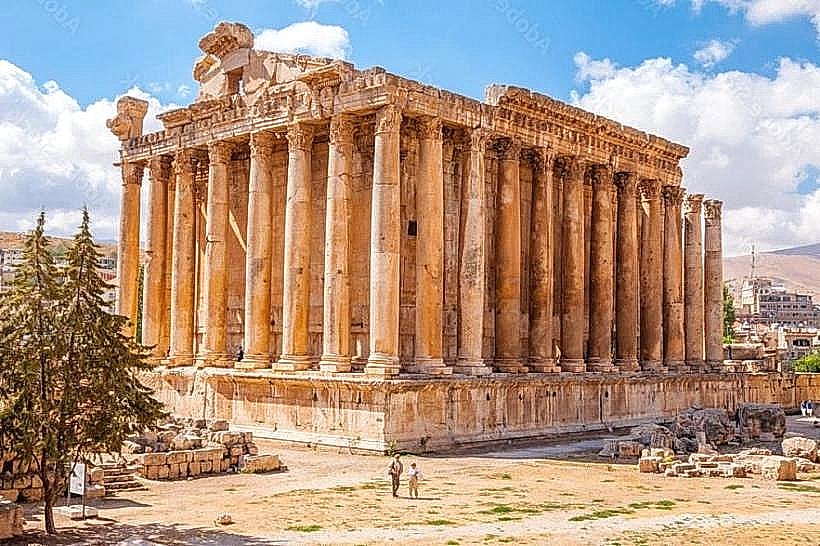
The Temple of Bacchus is an ancient Roman temple complex situated within the Al-Qalaa archaeological site in Baalbek, located in the Beqaa Valley of Lebanon. It stands as one of the largest and most well-preserved Roman temple ruins in the world, positioned immediately south of the larger Temple of Jupiter.
Visual Characteristics
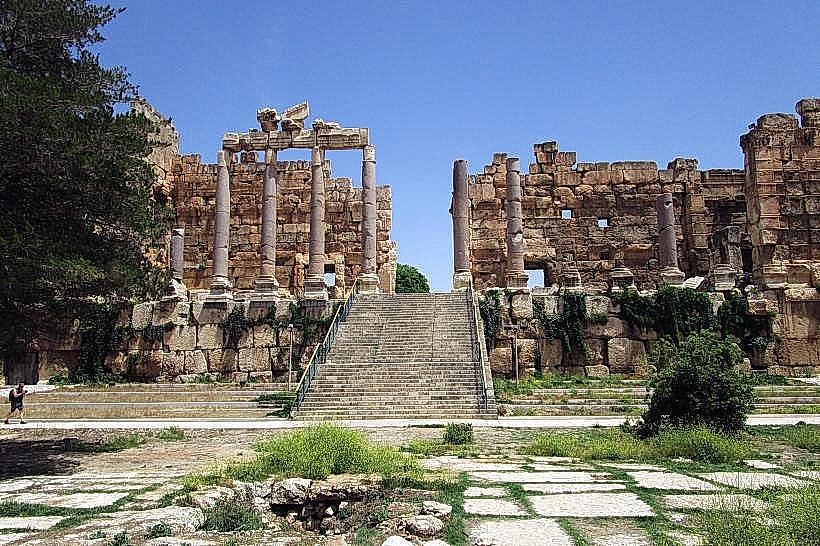
Constructed from massive blocks of local cream-colored limestone, the temple exhibits classical imperial Roman architecture of the Corinthian order. The structure measures 66 meters in length, 35 meters in width, and features columns that rise to a height of 19 meters. A monumental staircase leads to a portico, which opens into an adyton (inner sanctuary) adorned with intricate deep-relief carvings of grapevines, ivy, and mythological figures. The peristyle originally consisted of 42 Corinthian columns, 19 of which remain standing with their complete entablature intact.
Location & Access Logistics
The temple is located within the Baalbek archaeological zone on Baalbek Castle Road, approximately 85 kilometers northeast of Beirut. Access from the capital is via the Damascus Highway (Route 30M) to Chtaura, then turning north along the Baalbek-Riyak Highway. A designated municipal parking lot is located directly opposite the main visitor entrance and ticket office. Public transport consists of daily minivans departing from Beirut’s Cola intersection to Chtaura, where passengers transfer to a secondary minivan heading directly to Baalbek terminal, located a 10-minute walk from the ruins.
Historical & Ecological Origin
Commissioned by Roman Emperor Antoninus Pius, construction of the temple began around 150 AD and was completed under the reign of Septimius Severus around 250 AD. The monument was built over a pre-existing Phoenician terrace to serve as a major place of worship, historically associated with the Roman god Bacchus (Dionysus), though it may have also honored the solar deity Heliopolitan Baal. The surrounding terrain is a semi-arid high-altitude plateau, situated at an elevation of approximately 1,170 meters between the Lebanon and Anti-Lebanon mountain ranges.
Key Highlights & Activities
Inspecting the monumental lintel carving of an eagle holding a caduceus, which dropped from the central doorway during an 18th-century earthquake and was structurally reinforced in the late 19th century.
Walking through the interior cella to observe the double-tiered engaged columns and classical stone friezes.
Photographing the freestanding columns of the northern peristyle from the lower courtyard.
Attending evening musical performances held inside the temple steps during the annual Baalbek International Festival in July and August.
Infrastructure & Amenities
The archaeological park features a modern visitor center at the main entrance, which includes public restrooms and a ticket booth. The interior of the temple lacks modern shade structures, requiring sun protection during mid-day hours. Reliable 4G cell phone signal is available across the site from local networks Alfa and Touch. While food and beverage vendors are prohibited inside the immediate temple boundaries, numerous local restaurants, cafes, and souvenir shops operate directly across the street from the exit gate.
Best Time to Visit
The optimal months for visiting are from April to June and September to November to avoid sub-zero winter conditions and extreme summer heat. The site opens daily from 8:30 AM until sunset. For photography, early morning just after opening provides directional lighting on the eastern facade, while the late afternoon golden hour illuminates the limestone structures with minimal shadows from the surrounding temple walls.
Facts & Legends
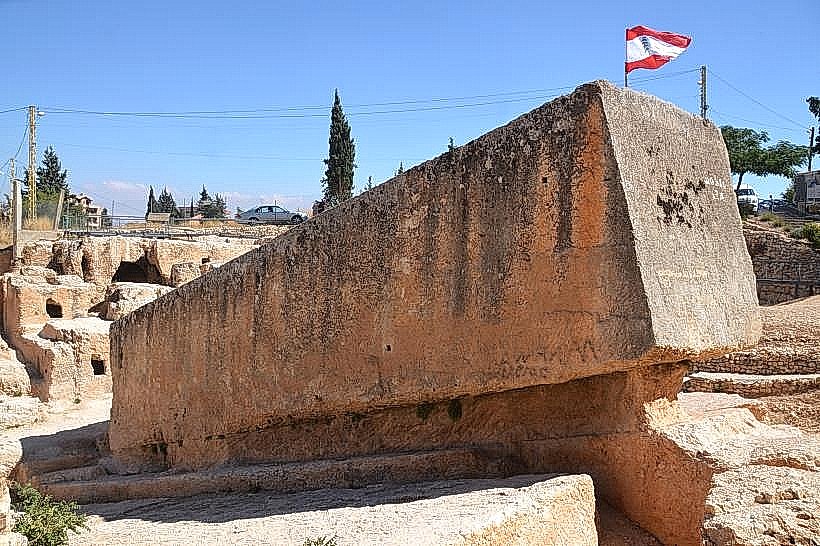
A verified historical oddity is the graffiti carved into the interior limestone walls by historic European figures, including Kaiser Wilhelm II of Germany, who visited the site in 1898 and subsequently funded the first major German archaeological excavations of the complex. Local folklore long held that the monumental stones used to construct the foundation terraces were so immense that they could only have been moved and positioned by captive djinns or ancient giants.
Nearby Landmarks
Temple of Jupiter: 0.1km North
Great Court and Hexagonal Court: 0.15km Northeast
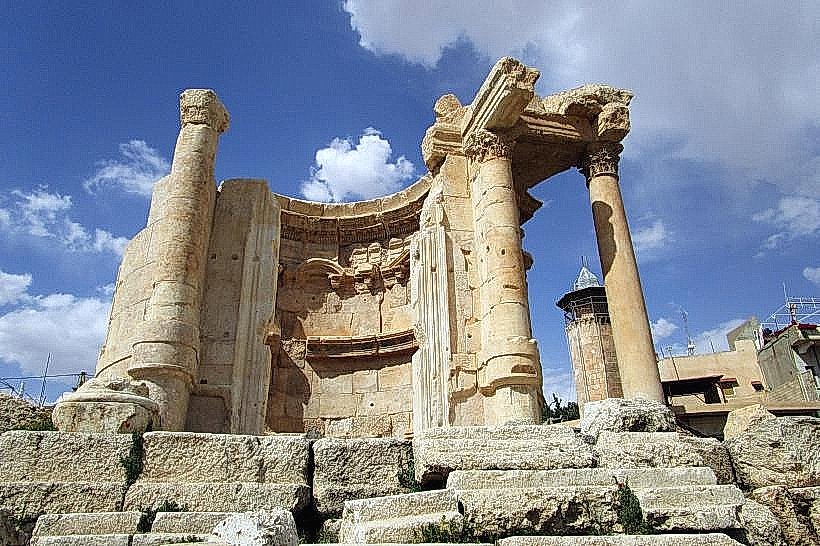
Temple of Venus: 0.3km East
Stone of the Pregnant Woman (Ancient Quarry): 1.2km Southwest
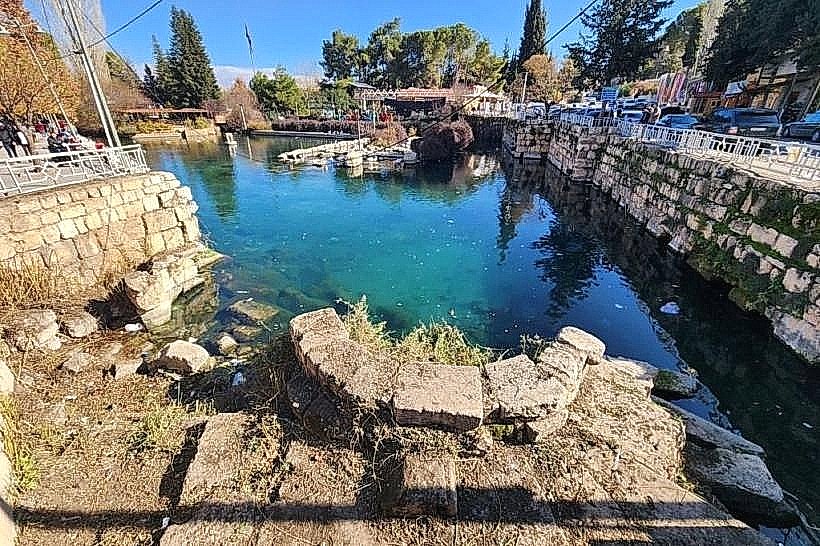
Ras Al Ain Spring: 1.5km Southeast