Landmark: Obelisk Temple
City: Byblos
Country: Lebanon
Continent: Asia
Obelisk Temple, Byblos, Lebanon, Asia
The Obelisk Temple is an ancient Bronze Age sanctuary located within the primary archaeological site of Byblos (Jbeil), Lebanon. The monument sits in the southern sector of the excavation park, positioned between the Early Bronze Age Royal Tombs and the remains of the L-shaped temple.
Visual Characteristics
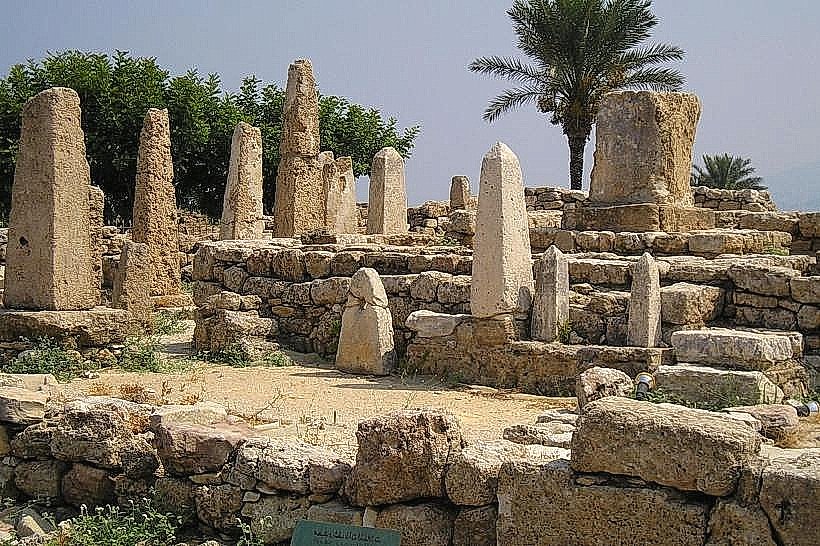
The temple complex consists of a small, elevated central cella built from unhewn limestone blocks, surrounded by a courtyard containing over 200 monolithic stone obelisks and betyls. These obelisks vary in height from 0.5 meters to over 2 meters, displayed vertically on stone pedestals or embedded directly into the earth floor. The stone surfaces are heavily weathered, displaying a rough, porous texture and a pale yellow-gray coloration characteristic of local maritime limestone.
Location & Access Logistics
The monument is situated inside the gated Byblos Archaeological Site on Rue de la Citadelle, approximately 38 kilometers north of central Beirut. Drivers utilize the Beirut-Tripoli Highway (Route 51), exiting at the Jbeil junction and moving west toward the historic port district. Visitors must park at the public municipal parking lot located 350 meters east of the main ticket office. From Beirut's Charles Helou Station, public buses drop passengers at the Byblos highway overpass, requiring a 15-minute westbound walk to reach the site entrance.
Historical & Ecological Origin
The structure was constructed between 1900 BC and 1600 BC during the Middle Bronze Age, dedicated to the Canaanite war deity Resheph. It was built directly over the ruins of an earlier 3rd-millennium BC "L-shaped Temple" that was destroyed by fire. During excavations led by French archaeologist Maurice Dunand in the 1930s, the entire temple was systematically dismantled and reconstructed 40 meters to the east of its original footprint to allow for the excavation of the older structures underneath.
Key Highlights & Activities
Foot transit is restricted to designated gravel paths winding through the stone obelisk field to preserve the integrity of the foundations. Visitors can examine the distinct shapes of the standing monoliths, which served as votive offerings from ancient worshippers. The elevated stone platform of the inner sanctum provides vantage points for photographing the layout of the surrounding archaeological park and the Mediterranean coastline.
Infrastructure & Amenities
There are no restrooms, shade structures, or benches at the immediate temple site; these facilities are located exclusively at the main entrance visitor center 200 meters north. The open-air excavation zone provides no protection from solar radiation, requiring personal sun protection. Cellular reception via the Alfa and Touch networks is uninterrupted, delivering consistent 4G and 5G signals across the entire ruins area. Food and beverage options are located outside the main gates in the adjacent Old Souk.
Best Time to Visit
The optimal time for photography is during the early morning from 08:30 to 10:30, or late afternoon from 16:00 to 18:00, when low-angle sunlight creates distinct shadows among the dense field of stone obelisks. The best months for comfortable outdoor exploration are April through June and September through November. Midday visits during July and August should be avoided due to high heat indexes and a complete lack of overhead shade on the terrain.
Facts & Legends
Excavations beneath the temple floor uncovered thousands of valuable votive offerings, including a famous cache of dozens of small, bronze human figurines covered in gold leaf, depicting warlike deities wearing conical hats, which are now housed in the National Museum of Beirut.
Nearby Landmarks
Byblos Citadel – 0.15km North
Sultan Abdul Majid Mosque – 0.25km North-East
Saint John-Marc Church – 0.3km West
Byblos Old Souk – 0.25km North-East
Ancient Phoenician Port – 0.45km West