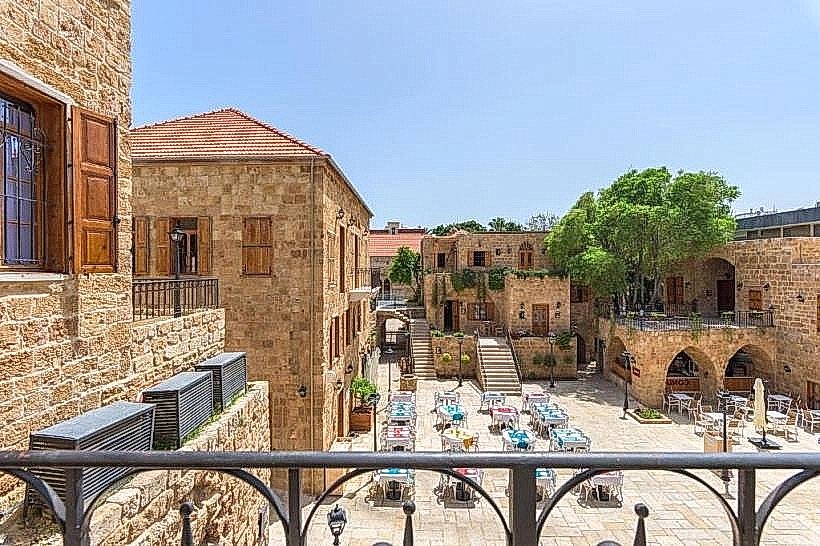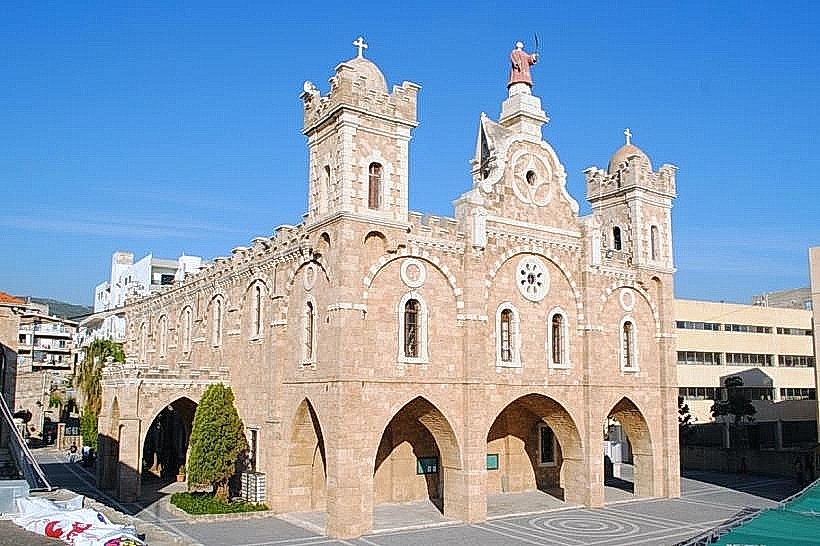
Landmark: Saint Stephan’s Cathedral
City: Batroun
Country: Lebanon
Continent: Asia
Saint Stephan’s Cathedral, Batroun, Lebanon, Asia
The Saint Stephan’s Cathedral (Stephansdom) is a monumental Roman Catholic mother church located in Stephansplatz at the geographic center of Vienna, Austria. It serves as the seat of the Archbishop of Vienna and stands as the primary architectural symbol of the city and Austrian national identity.
Visual Characteristics
The edifice is constructed from local sandstone blocks and features a highly complex Gothic architectural profile mixed with Romanesque western elements. The exterior is dominated by the South Tower, which reaches a height of 136.4 meters, and a steeply pitched roof covered by 230,000 multi-colored glazed tiles arranged in geometric diamond patterns and coat-of-arms designs. The interior is divided into a three-aisled nave supported by massive clustered pillars featuring life-sized stone sculptures, leading to ribbed vaulted ceilings and a Baroque high altar made of dark marble.
Location & Access Logistics
The cathedral is positioned in the center of the pedestrianized first district (Innere Stadt) of Vienna. Direct public transport is available via the Vienna U-Bahn metro network, with the Stephansplatz station (Lines U1 and U3) exiting directly onto the cathedral square. Vehicular access to the immediate square is legally restricted; the closest public underground parking infrastructure is the Parkgarage am Hof or the Garage Concordiaplatz, both situated roughly 600 meters away. Regional trains connect to the city center via the Wien Mitte station, located 1.2 kilometers east.
Historical & Ecological Origin
The initial Romanesque church foundation was consecrated in 1147 CE under the authority of Duke Henry II Jasomirgott. Duke Rudolf IV ordered a major Gothic expansion in 1359 CE, which established the footprint of the present-day nave and initiated the construction of the South Tower under the master builder Michael Knab. The building material consists of porous Leitha limestone quarried from the nearby Vienna Basin, which is highly susceptible to atmospheric sulfur discoloration, requiring ongoing continuous masonry conservation.
Key Highlights & Activities
Primary visitor activities include self-guided audio tours of the central nave, guided subterranean excursions through the extensive catacombs, and a 343-step pedestrian ascent up the South Tower to the watchman's room viewing platform. The North Tower is accessible via an internal elevator, providing direct exposure to the Pummerin, the largest bell in Austria. The interior also features the Wiener Neustädter Altar (a 15th-century triptych) and the red marble tomb of Emperor Frederick III.
Infrastructure & Amenities
The cathedral precinct contains a dedicated ticketing and information desk inside the western portal, though public restroom facilities are located externally within the underground Stephansplatz metro complex. Shade is provided by the massive exterior stone buttresses and the deep recessed portals of the building. Mobile network coverage (5G) is robust throughout the square, though signal strength degrades inside the subterranean catacombs. Hundreds of retail vendors, international restaurants, and historic cafes operate immediately within the surrounding pedestrian zone.
Best Time to Visit
Architectural photography of the west facade and the glazed tile roof is optimal during the late afternoon when the sun aligns with the main entry portal. The ideal months for general visitation are from May to September for stable weather, though December features high seasonal foot traffic due to the traditional Christmas markets in the square. Entering between 06:00 and 08:00 allows for unobstructed observation of the nave before commercial tourism ticketing begins.
Facts & Legends
A verified historical oddity embedded in the external stone wall near the main entrance is the O5 symbol, a secret resistance graffito carved during World War II where the '5' signified the fifth letter of the alphabet ('E'), forming the abbreviation for "Österreich" (Austria) as a silent protest against Nazi annexation. Local folklore also links the unfinished shorter North Tower to a pact made by the architect Hans Puchsbaum with the devil; Puchsbaum supposedly broke a clause of the pact by uttering a holy name, causing him to fall to his death from the scaffolding and leaving the tower permanently incomplete.
Nearby Landmarks
Mozarthaus Vienna: 0.25km East
Albertina Museum: 0.65km Southwest
Hofburg Palace: 0.75km West
Anker Clock (Ankeruhr): 0.35km North
Imperial Crypt (Kapuzinergruft): 0.4km Southwest