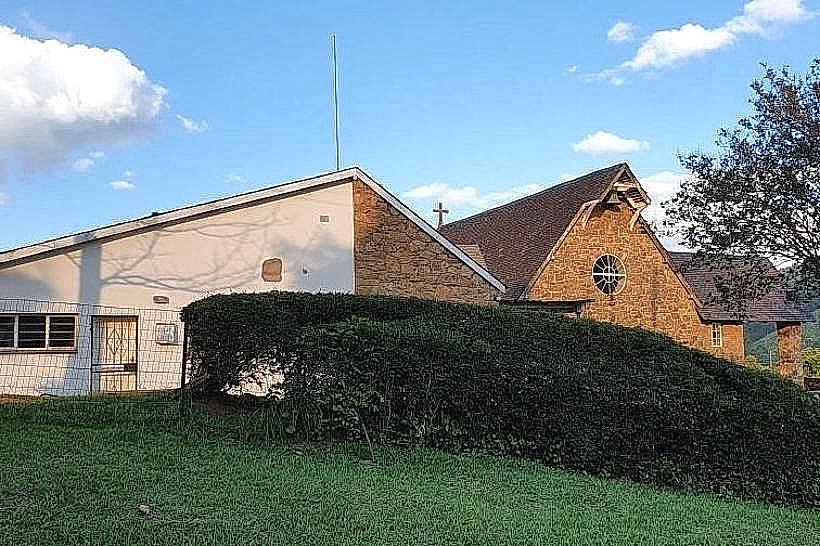
Landmark: All Saints Cathedral
City: Mbabane
Country: Eswatini
Continent: Africa
All Saints Cathedral, Mbabane, Eswatini, Africa
All Saints Cathedral is an Anglican church building located on a hillside overlooking the central business district of Mbabane, Eswatini. The cathedral serves as the seat of the Anglican Diocese of Eswatini and acts as a primary architectural and spiritual landmark within the capital city.
Visual Characteristics
The cathedral is a prominent modernist ecclesiastic structure built from a combination of rough-hewn local granite blocks, reinforced concrete, and large glass pane installations. The architectural design features a striking, steeply pitched A-frame roof clad in dark corrugated sheeting that extends nearly to the ground, dominating the building's profile. Inside, the sanctuary is characterized by high, open timber trusses, a spacious concrete nave, and a large altar area illuminated by natural light filtering through expansive floor-to-ceiling windows that provide panoramic views of the surrounding mist-belt hills.
Location & Access Logistics
The site is positioned at the intersection of Shield and Cathedral Roads, approximately 1 kilometer southwest of the downtown commercial core and the Swazi Plaza shopping complex. Visitors arriving by private vehicle can navigate the paved urban roads climbing the ridge from the town center, utilizing the dedicated, secure asphalt parking lot situated directly inside the church gates. Public transport access is dense, with local minibuses (kombis) servicing the major nearby arteries and dropping passengers within a 5-minute uphill walk of the main cathedral entrance.
Historical & Ecological Origin
The cathedral was constructed during the mid-20th century to replace smaller colonial-era parish structures, keeping pace with the postwar expansion of Mbabane as Eswatini's executive administrative capital. The building was designed by regional architects to withstand the specific high-altitude environmental pressures of the Highveld, incorporating thick stone walls that naturally regulate temperature. The granite used in its masonry was quarried directly from the surrounding hills of the Hhohho region, reflecting the local geological composition which is dominated by ancient Archean rock formations.
Key Highlights & Activities
The primary activities center on attending scheduled liturgical services, which are conducted in both English and siSwati, featuring traditional Anglican choral music and acoustic accompaniment. The cathedral grounds host regular community gatherings, organ recitals, and civic ceremonies owing to its status as a major regional institutional hub. Self-guided architecture walks allow for the inspection of the unique structural integration of local stone and glass, alongside the exploration of the manicured memorial gardens that border the main building.
Infrastructure & Amenities
The cathedral complex features modern urban infrastructure, including indoor electrical lighting, clean municipal restrooms, and paved, accessible walkways connecting the main sanctuary to the administrative offices. High-speed cellular network coverage (4G/5G) is exceptionally stable across the entire property due to its elevated position within the capital. The facility is fully operational for ceremonial events, though it lacks commercial vendors, meaning food and drink must be accessed at the numerous restaurants located down the hill in the central business district.
Best Time to Visit
The best time for structural and landscape photography is during the early morning hours between 07:00 and 09:00, when low-angle sunlight hits the eastern stone facade and illuminates the high interior windows without creating harsh glare. The dry winter months from May to August offer the most comfortable weather for exploring the exterior grounds, characterized by clear skies and crisp alpine air. Sunday mornings are the most vibrant time to witness the cultural life of the cathedral, while those seeking quiet architectural observation should visit during weekday operating hours from 09:00 to 16:00.
Facts & Legends
A notable historical characteristic of All Saints Cathedral is its role as an inclusive, multi-racial sanctuary during the apartheid era in neighboring South Africa, serving as a safe theological meeting ground for regional religious leaders. Local community accounts note that the cathedral's elevated hillside location was intentionally chosen by its founders so that its towering roofline would remain visible from anywhere within the valley floor, metaphorically acting as a spiritual beacon over the expanding capital city.
Nearby Landmarks
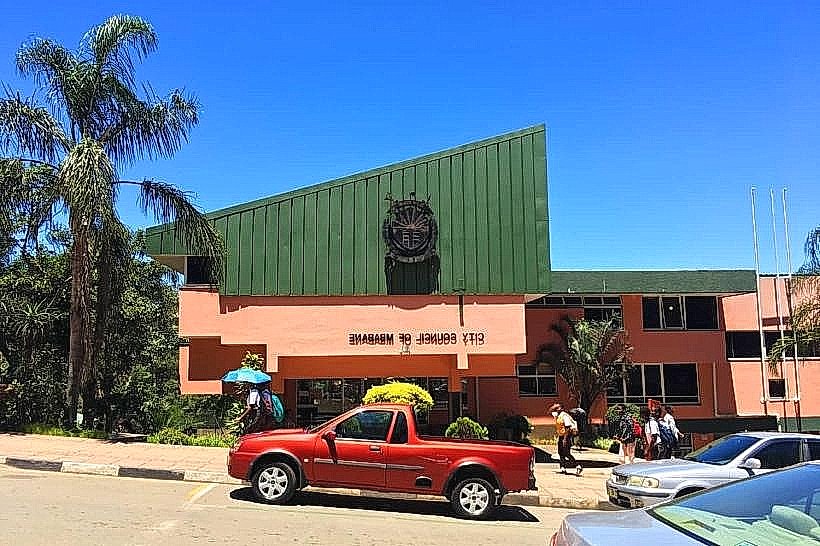
Mbabane City Hall - 0.4km Northeast
Hilton Garden Inn Mbabane - 0.7km Northeast
Swazi Plaza - 0.9km Northeast
Mbabane Market - 1.1km Northeast
Indingilizi Gallery - 0.8km Northeast