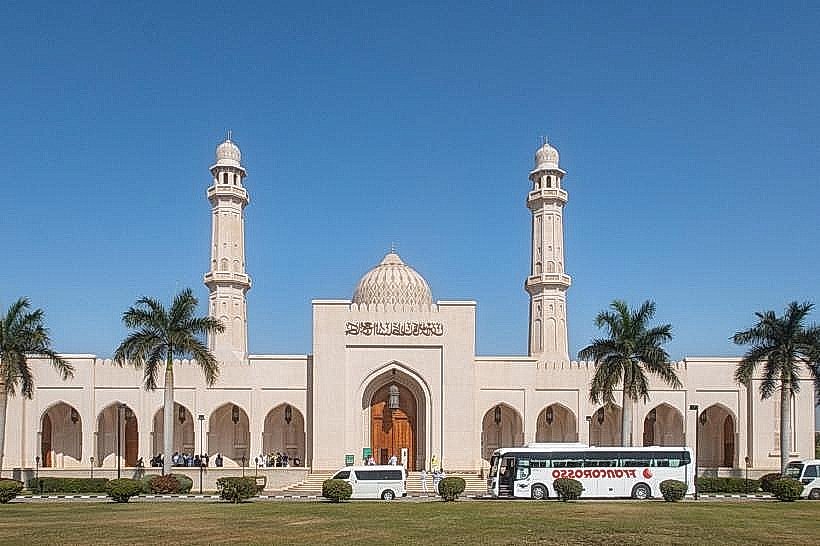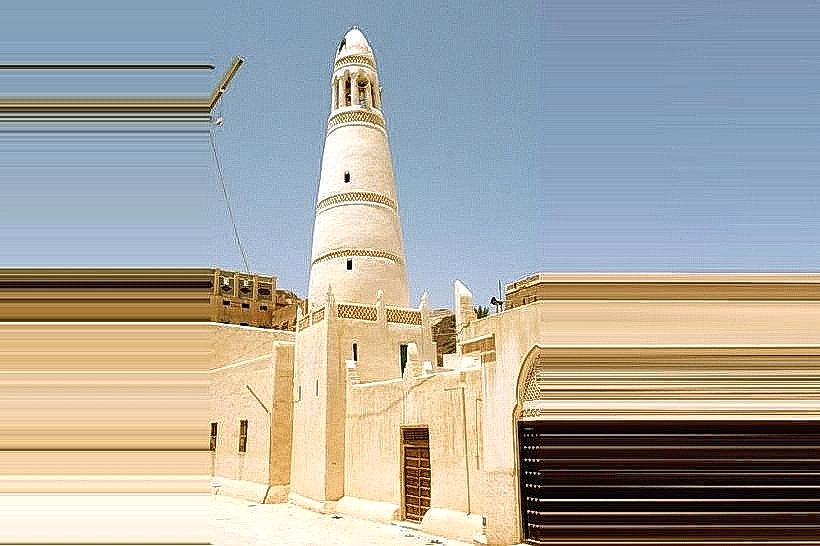
Landmark: Ba'alawi Mosque
City: Salalah
Country: Oman
Continent: Asia
Ba'alawi Mosque, Salalah, Oman, Asia
Ba'alawi Mosque is a historic religious structure located in the center of the old city of Tarim in the Hadhramaut Valley. The site is situated approximately 35 kilometers northeast of the city of Seiyun in eastern Yemen.
Visual Characteristics
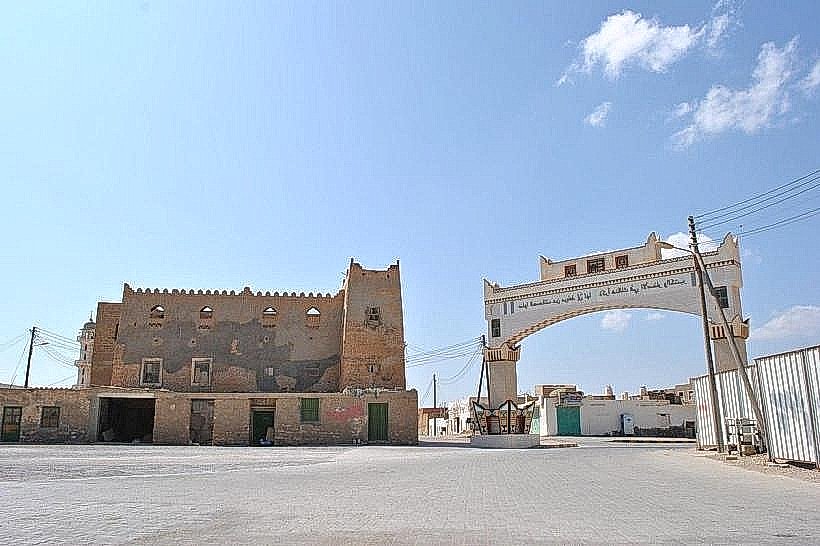
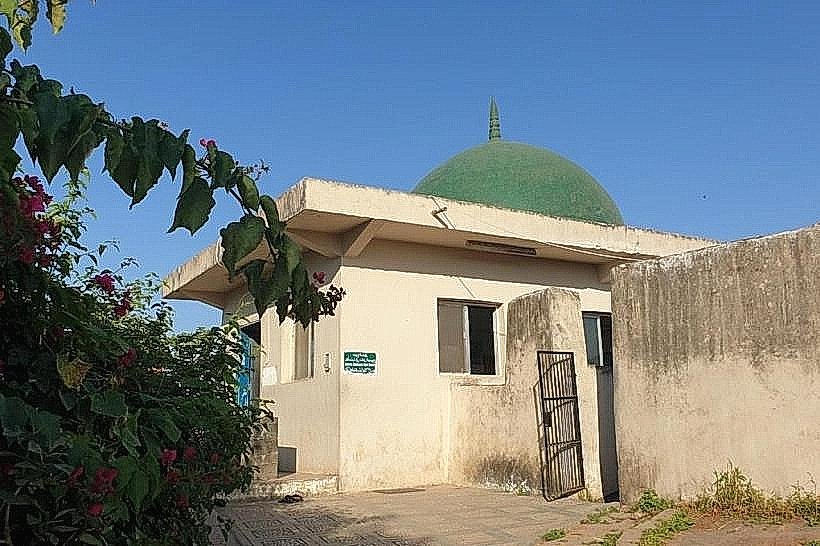
The mosque is constructed primarily from mud-brick and sun-dried clay, utilizing traditional Hadhrami architectural techniques. The exterior is coated in a white lime plaster (nura), featuring a distinct square minaret with a tapered top that rises significantly above the surrounding rooftops. The interior is characterized by a series of thick, white-washed pillars and arches that support a flat timber roof made of local jujube wood. The floor is covered in simple woven mats and prayer rugs, with minimal ornamentation except for the geometrically carved wooden pulpit (minbar) and the mihrab indicating the direction of Mecca.
Location & Access Logistics
The mosque is located in the Tarim Old City district, accessible via narrow pedestrian alleys and secondary roads off the main Al-Qara Road. It is approximately a 45-minute drive from Seiyun Airport. Parking is restricted to open plazas approximately 200 meters from the site, as the immediate vicinity is composed of traditional narrow walkways. No formal public transit serves the mosque directly; visitors utilize private taxis or walk from the central Tarim bus station.
Historical & Ecological Origin
The mosque was originally founded in the 10th century (approximately 929 AD) by Imam Ali bin Alawi, the progenitor of the Ba'Alawi Sufi order. It was built as a center for Islamic jurisprudence and spiritual teaching. The site is located within a flood-plain valley characterized by deep alluvial clay deposits, which provided the primary building material for the mosque and the surrounding mud-brick skyscrapers of Tarim.
Key Highlights & Activities
The primary activity is the performance of daily prayers and the observation of traditional "Hadra" or spiritual gatherings held on specific evenings. Visitors may inspect the architectural mud-brick techniques and the ancient wooden carvings of the interior doors. The library associated with the mosque contains thousands of hand-written Islamic manuscripts. Photography is generally permitted in the exterior courtyard but is restricted during prayer times and within certain internal sections.
Infrastructure & Amenities
The facility includes a traditional courtyard for ablutions and basic restroom facilities. Shaded areas are provided by the deep arcades of the mosque interior. There are no food vendors on the immediate grounds, but the surrounding Tarim Souq provides numerous cafes and markets within a 5-minute walk. Cell phone signal (3G/4G) is functional but can be inconsistent within the thick mud-brick walls of the structure.
Best Time to Visit
The optimal time for a visit is between November and February when daytime temperatures are manageable. For photography, the early morning (7:00 AM to 9:00 AM) highlights the contrast between the white lime plaster and the brown mud-brick surroundings. To witness the local religious culture, visiting during the late afternoon (Asr) prayer provides the most activity.
Facts & Legends
A verified historical oddity is that the mosque was built without the use of any metal or reinforced concrete, relying entirely on the structural integrity of sun-dried clay and timber. Local tradition holds that the foundation of the mosque was blessed with water brought specifically from the Zamzam well in Mecca. A local tip for visitors is to look for the ancient wooden ceiling beams, which are treated with a natural resin that has successfully repelled termites for centuries.
Nearby Landmarks
Al-Muhdhar Mosque (0.4km West)
Qasr al-Ishah (0.8km Northwest)
Tarim Public Library (0.3km Southwest)
Mount Tarim Viewpoint (1.2km North)