Landmark: Kande Beach
City: Mzuzu
Country: Malawi
Continent: Africa
Kande Beach, Mzuzu, Malawi, Africa
Kande Beach is a prominent freshwater coastal strip situated on the western shore of Lake Malawi within the Nkhata Bay District of northern Malawi. It is located approximately 60km south of Nkhata Bay boma and roughly 105km southeast of Mzuzu city.
Visual Characteristics
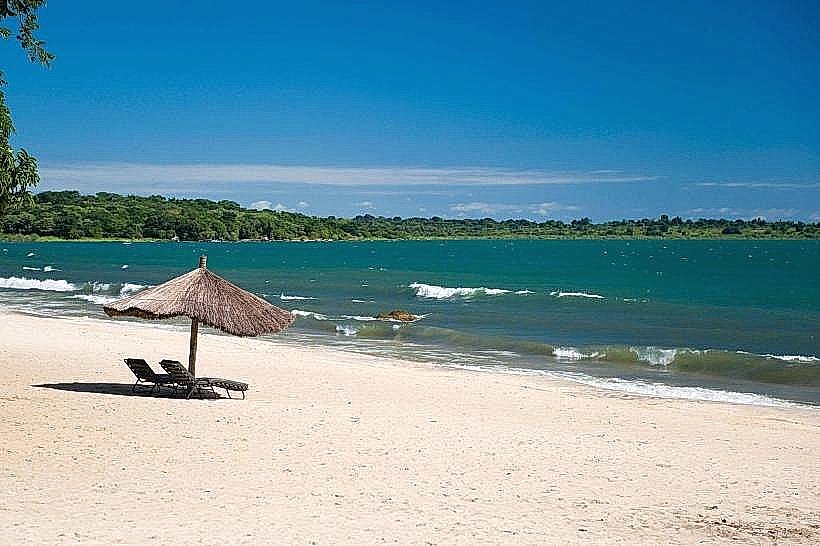
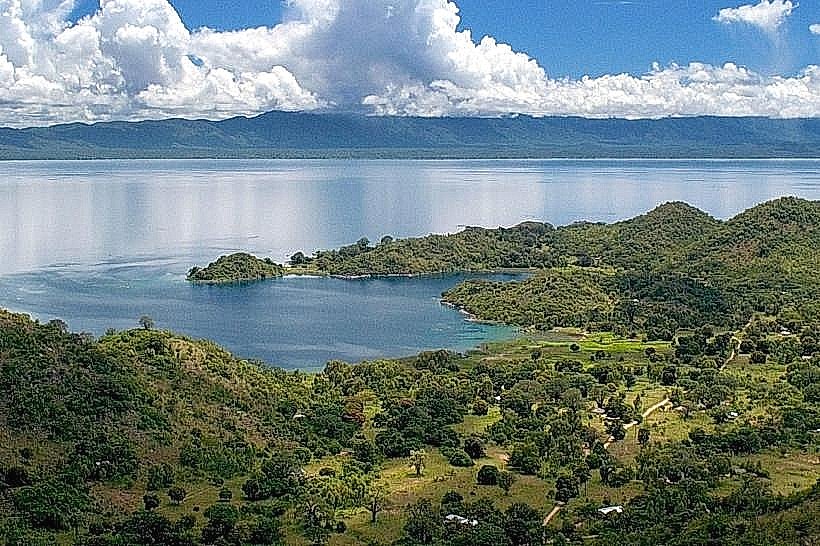
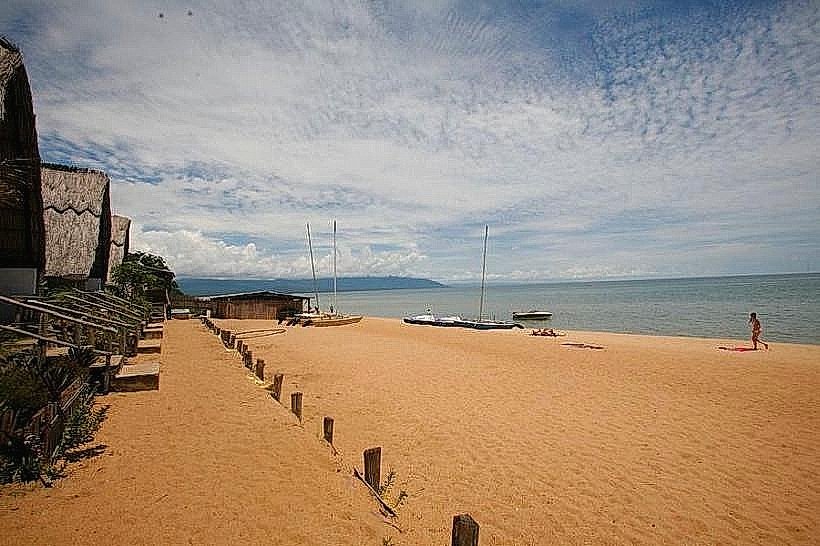
The landmark features a wide, straight coastline consisting of fine, golden-white sand that slopes gently into the lake. The freshwater is transparent, showing a turquoise color near the shoreline that transitions into deep blue farther out into the Rift Valley basin. Approximately 500m offshore lies Kande Island, a low, rocky, green-capped granitic inselberg that creates a sheltered channel along the mainland. The immediate inland landscape is flat, dominated by mature stands of wild mango trees, cassias, and low-lying lakeside grasses.
Location & Access Logistics
The beach is located directly off the paved S125 coastal highway (the Nkhata Bay-Nkhotakota route). From Mzuzu city, drivers travel southeast via the paved M5 highway to Nkhata Bay, then proceed south on the S125 for 60km to the Kande trading center. From the tarmac highway, a 2km unpaved, sandy access track branches east to terminate at the waterfront. This track is navigable by standard light passenger vehicles year-round, though high-clearance configurations are useful in loose sand near the campsite entrances. Public minibuses running the coastal route drop passengers at the Kande junction, leaving a 20-minute walk to the sand.
Historical & Ecological Origin
Geologically, the beach profile is defined by quartz sand accumulations eroded from the post-tectonic Viphya escarpment mountains and deposited via lacustrine wave action along the lake floor. Historically, Kande Beach became a major staging post and campsite during the mid-to-late 20th century for international overland expedition trucks traveling between East and Southern Africa. Ecologically, the sheltered underwater trenches and rocky reefs surrounding Kande Island support a dense concentration of endemic, colorful cichlid fish (mbuna), which are highly specialized to specific depth profiles.
Key Highlights & Activities
Freshwater swimming and snorkeling are the primary activities, particularly within the shallow, calm channel between the mainland and the island. Motorized boats and dugout canoes can be hired on-site to transfer visitors to Kande Island for rock jumping and underwater fish observation. Windsurfing, sailing, and kayaking are conducted across the open bays. Scuba diving training courses operate directly out of the established beach concessions.
Infrastructure & Amenities
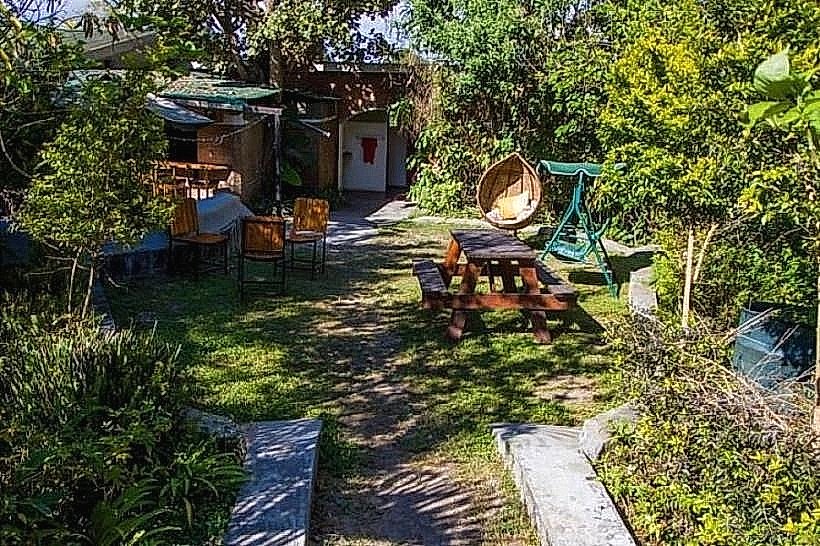
The shoreline is anchored by a large, long-running overland camp and resort facility that provides extensive visitor infrastructure. Amenities include public flushing toilets, hot showers, covered beach bars, and a lakeside restaurant. Natural shade is abundant under the large wild mango trees set back from the high-water line. No informal beach vendors are permitted within the resort perimeters, ensuring a controlled environment. Cellular phone reception (4G) is strong and consistently functional across the entire beach zone.
Best Time to Visit
The optimal period for visitation is the dry winter season from May to October, when humidity is low, temperatures are moderate, and mosquito populations are minimal. Early morning hours from 05:30 to 07:30 deliver clear, low-angle sunlight over the water horizon, which optimizes conditions for landscape and action photography before the southwesterly mwera wind creates choppy water in the afternoon. The rainy season from November to April brings high heat and intense downpours, though the lake remains warm.
Facts & Legends
Kande Beach is traditionally noted as one of the oldest designated budget backpacker and overland truck nodes in Malawi, having hosted overland travelers continuously since the early 1980s. A practical safety tip for swimmers is to avoid the small river mouths located at the far northern and southern extremities of the beach strip, as these slow-moving channels can host the snail vectors responsible for schistosomiasis (bilharzia), whereas the open, wave-washed central sands are generally considered low-risk.
Nearby Landmarks
Kande Island – 0.5km East
Kande Trading Centre – 2.0km West
Bandawe Mission Site – 14.2km North
Chintheche Beach Strip – 18.5km North
Nkhotakota Game Reserve Northern Boundary – 32.0km South