Landmark: St. Peter's Cathedral
City: Mzuzu
Country: Malawi
Continent: Africa
St. Peter's Cathedral, Mzuzu, Malawi, Africa
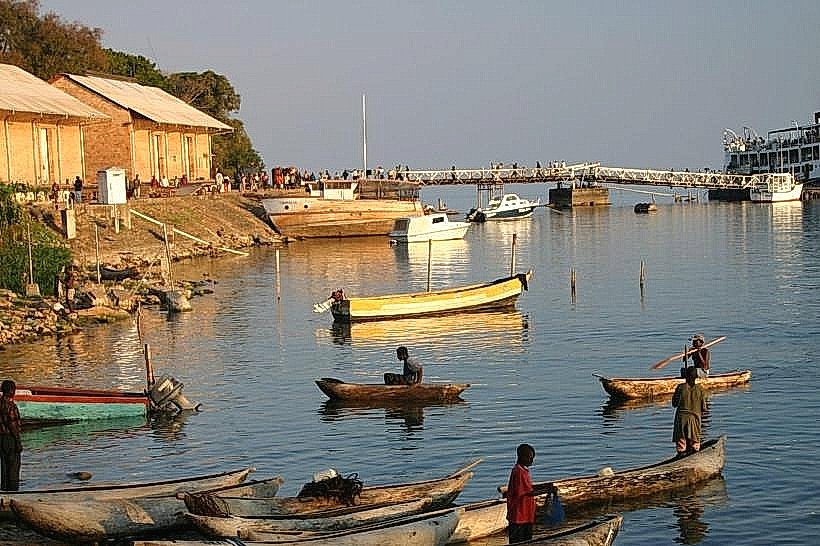
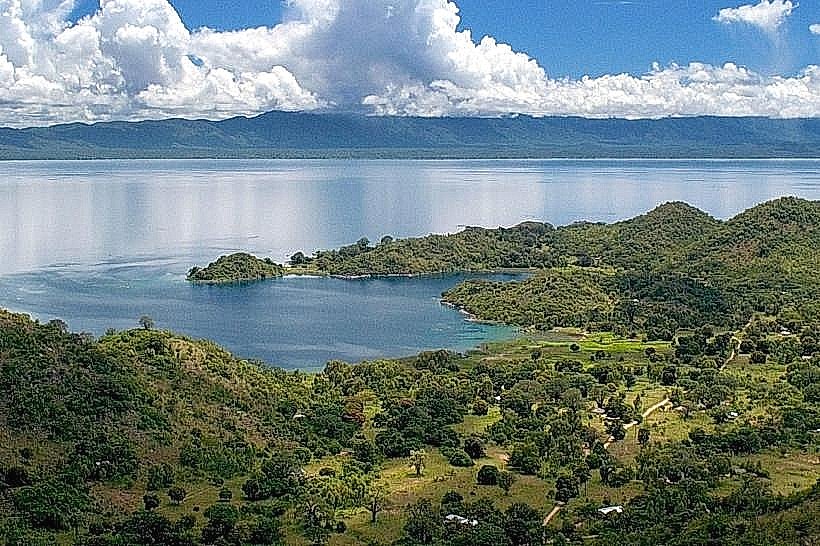
St. Peter's Cathedral is a massive historical Anglican cathedral located on Likoma Island within the northeastern waters of Lake Malawi. The landmark stands within the Likoma District, positioned approximately 1.9km south of the central island landing docks and roughly 70km east of Nkhata Bay Port.
Visual Characteristics
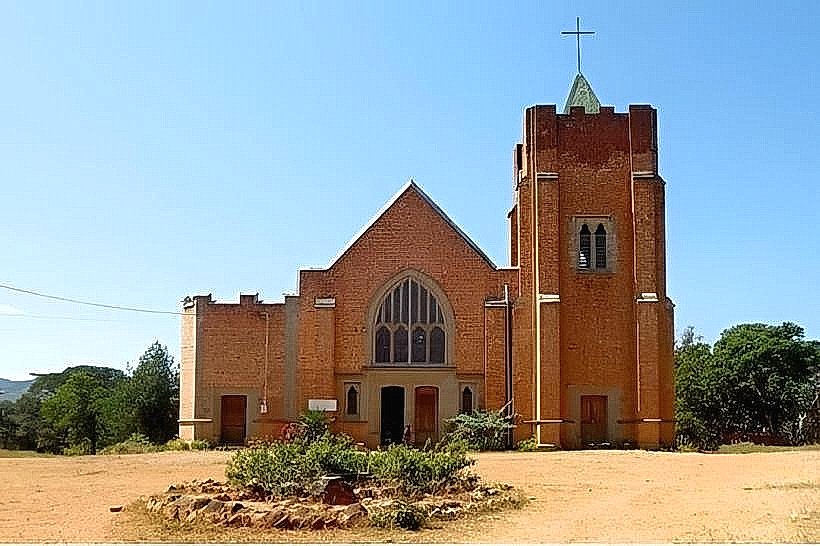
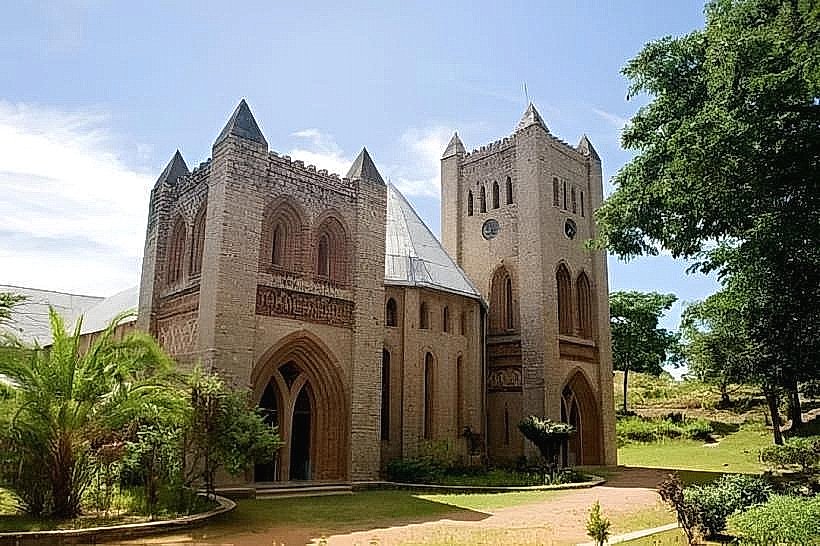
The landmark is a monumental cruciform structure measuring 100m in length and 26m in width, with its dimensions rivaling those of Winchester Cathedral in England. The exterior walls are constructed from hand-quarried dark grey island granite, local clay bricks, and lime mortar made from burnt lake shells. The architectural style blends Scottish Romanesque and Gothic revival elements, featuring thick load-bearing masonry walls, high semicircular arches, clerestory windows, and a prominent multi-tiered square bell tower. The interior is characterized by a high open-timber roof, stone-paved aisles, carved soapstone pillars, and vibrant stained-glass windows behind the main altar. The cathedral sits on an elevated ridge surrounded by manicured sandy lawns, low stone retaining walls, and ancient baobab trees.
Location & Access Logistics
Reaching the cathedral requires traveling to Likoma Island via the passenger ferry MV Ilala from Nkhata Bay Port, or via chartered light aircraft arriving at Likoma Airport. From the main Mbamba town landing site or the airport tarmac, the cathedral is accessed via a 15-minute walk or a 2km trip along unpaved, sandy dirt tracks heading inland. Because light passenger vehicles are rare on the island, access is achieved via foot travel, bicycles, or local motorcycle taxis (kabazas). There is no paved or formalized parking infrastructure; visitors and the congregation utilize the open dirt clearings surrounding the main western entrance portal.
Historical & Ecological Origin
The foundation stone of the cathedral was laid by Bishop Gerard Trower on January 27, 1903, and the structure was officially dedicated by Bishop Thomas Cathrew Fisher on November 14, 1911. It was built by the Universities' Mission to Central Africa (UMCA) to serve as the permanent spiritual and administrative headquarters for the Anglican Diocese of Nyasaland. The site was intentionally selected on a ridge that historically served as a place for execution and the burning of individuals accused of witchcraft by local tribal authorities, transforming the ground into an anti-slavery and missionary educational sanctuary. Ecologically, the massive stone structure functions as a micro-climatic thermal mass within the dry, hot savanna ecosystem of the island.
Key Highlights & Activities
Guided historical tours are conducted through the interior galleries by church vergers, who detail the construction techniques and structural components. Detailed architectural photography is a primary activity, focusing on the intricate Soapstone Choir Stalls carved by African artisans and the stained-glass window array that depicts historical missionary crossings. Climbing the narrow internal stone steps of the Square Bell Tower provides panoramic views over the island's baobab canopy and across the lake toward the Mozambican escarpment. Attending a Sunday morning service allows visitors to experience traditional choric liturgical singing.
Infrastructure & Amenities
The cathedral operates as an active place of worship and historical monument with basic, localized infrastructure. There are no modern commercial facilities, public restroom blocks, or municipal water networks directly inside the main building, though basic toilet facilities are available in the adjacent administrative parish offices. Natural shade is highly abundant under the mature baobab and wild mango trees lining the perimeter courtyard. No food or beverage vendors operate on the immediate church grounds, requiring visitors to walk 300m into the Mbamba trading center for provisions. Cellular phone signal (4G) is strong and stable across the entire ridge.
Best Time to Visit
The dry winter season from May to October represents the optimal period for visitation, matching the safest lake conditions for transit to the island. The cathedral doors are open daily for visitors. The early morning window between 06:30 and 08:30 provides the best directional, low-angle sunlight to illuminate the granite facade and capture the stained-glass reflections inside the nave before intense midday heat sets in. Sunday mornings offer high cultural activity but limit independent movement within the chancel due to active services.
Facts & Legends
A verified historical oddity of the cathedral is that despite its immense scale and technical masonry requirements, no foreign construction crews were employed; Dr. Robert Laws and UMCA engineers trained local islanders who molded, baked, and carried every single brick and stone by hand without any heavy machinery or motorized cranes. Local oral history claims that the heavy timber beams supporting the roof were sourced from the mainland escarpment and towed through the open waters of Lake Malawi by dugout canoes, surviving intense lake storms due to specialized blessing rituals performed by the early converts.
Nearby Landmarks
Mbamba Town Landing Site – 1.9km North
Katundu Artisan Workshop – 2.1km Northwest
Likoma Airport Runway – 2.4km North
Chizumulu Island Ferry Lane – 2.5km West
Mozambique Territorial Water Boundary – 7.2km East