Landmark: Mantenga Falls
City: Lobamba
Country: Eswatini
Continent: Africa
Mantenga Falls, Lobamba, Eswatini, Africa
Mantenga Falls is a major riverine waterfall system situated on the Lusushwana River within the northern perimeter of the Mantenga Nature Reserve. It stands as one of the most prominent fluid-dynamic landmarks in Eswatini, characterized by its wide, multi-tiered cascade structure and high hydraulic volume.
Visual Characteristics
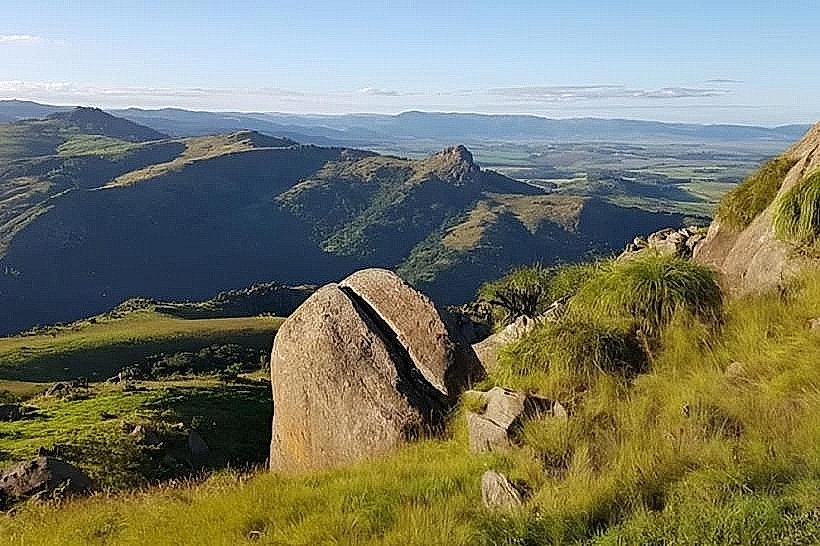
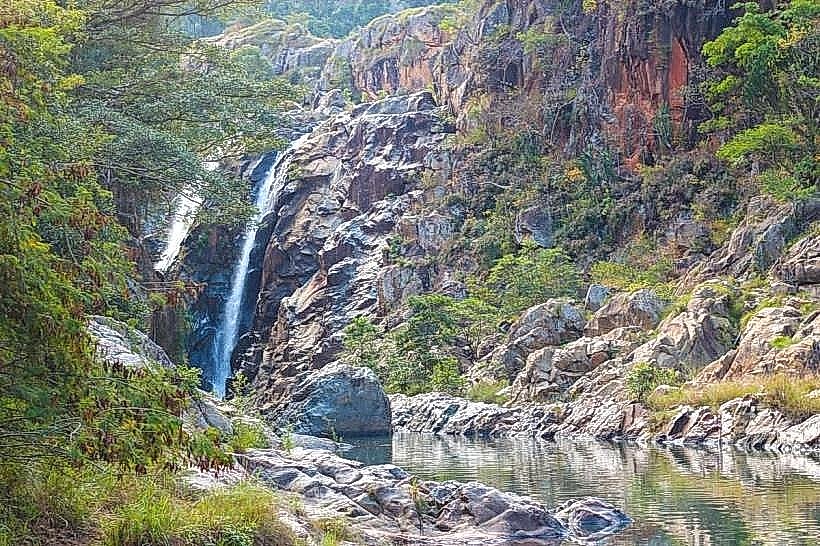
The landmark presents a broad, multi-tiered white-water cascade that plunges approximately 30 meters over a massive, sloping shelf of dark, polished granite rock. The base of the falls forms a turbulent, deep plunge pool surrounded by large, fractured boulders and steep rocky banks. The immediate topography is exceptionally rugged, characterized by sheer quartzite cliffs and a dense, closed-canopy Afromontane riverine forest that heavily cloaks the canyon walls in varied shades of deep green.
Location & Access Logistics
The waterfall is situated within the secure boundaries of the Mantenga Nature Reserve, roughly 16 kilometers south of Mbabane. Access is achieved by turning west off the paved MR103 road onto Mantenga Drive, passing the reserve gate, and driving 2 kilometers along a graded gravel track to the designated trailhead parking lot. Public transport minibuses drop passengers at the MR103 junction, requiring a 3.5-kilometer walk to the falls area. From the parking lot, a well-maintained 300-meter dirt footpath leads directly to an elevated wooden viewing deck.
Historical & Ecological Origin
Geologically, the falls are the result of structural erosion along a major fault line within the ancient granite plutons of the Ezulwini Valley, where the perennial Lusushwana River has carved through Archean stone formations over millions of years. The site has been protected under environmental legislation since the proclamation of the reserve in 1994. Ecologically, the hyper-humid microclimate generated by the continuous waterfall spray supports specialized colonies of ferns, mosses, and rare bird species, including the endangered southern bald ibis which roosts on the adjacent cliff faces.
Key Highlights & Activities
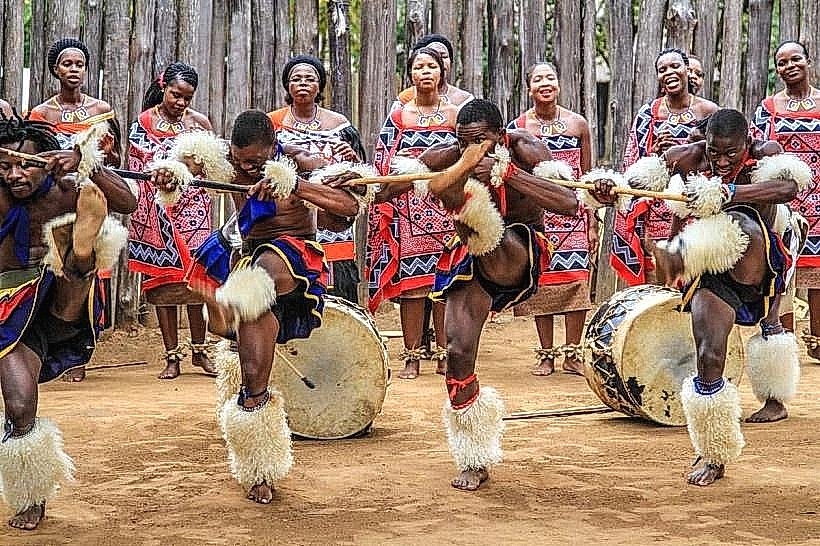
Landscape photography and scenic observation from the reinforced wooden viewing deck are the primary activities. Visitors can hike the network of rugged footpaths that wind along the riverbank and ascend to higher vantage points on the canyon rim. Birdwatching is highly productive, with frequent sightings of water-associated avifauna such as the African finfoot and giant kingfisher. Guided cultural tours originating from the nearby traditional village terminate at the falls to explain the ecological history of the river system.
Infrastructure & Amenities
The immediate viewing area is equipped with basic, functional infrastructure, including a raised timber viewing platform, wooden handrails, and cleared dirt pathways. There are no restrooms, running water taps, shelters, or food vendors directly at the waterfall site. Cellular network coverage (4G/5G) is operational but unstable on the lower viewing deck due to the intervening topography of the deep granite gorge. Comprehensive amenities, public toilets, and dining services are located 1.5 kilometers away at the reserve’s central reception complex.
Best Time to Visit
The waterfall reaches its maximum aesthetic volume and visual velocity during the summer wet season from November to March, when heavy upstream rains feed the Lusushwana River. The optimal time of day for photography is during the mid-morning hours between 09:00 and 11:00, when the sun clears the canyon eastern lip and illuminates the cascading water without creating harsh highlights. The dry winter months from May to August offer safer, dry trail conditions and lower humidity, though the water volume decreases significantly.
Facts & Legends
Local oral histories record that the deep plunge pool at the base of the falls was treated as a sacred and spiritually dangerous zone by early Swati clans, who believed the churning waters were inhabited by powerful river spirits capable of pulling down reckless travelers. A modern geological oddity is that despite the proximity of urban developments, the complex granite filtration along the upper rapids keeps the water clarity at the falls remarkably consistent outside of extreme flood events.
Nearby Landmarks
Mantenga Cultural Village - 0.5km East
Mantenga Lifestyle & Craft Centre - 1.9km East
The Gables Shopping Centre - 3.3km East-Southeast
Ludzidzini Royal Residence - 4.2km Southeast
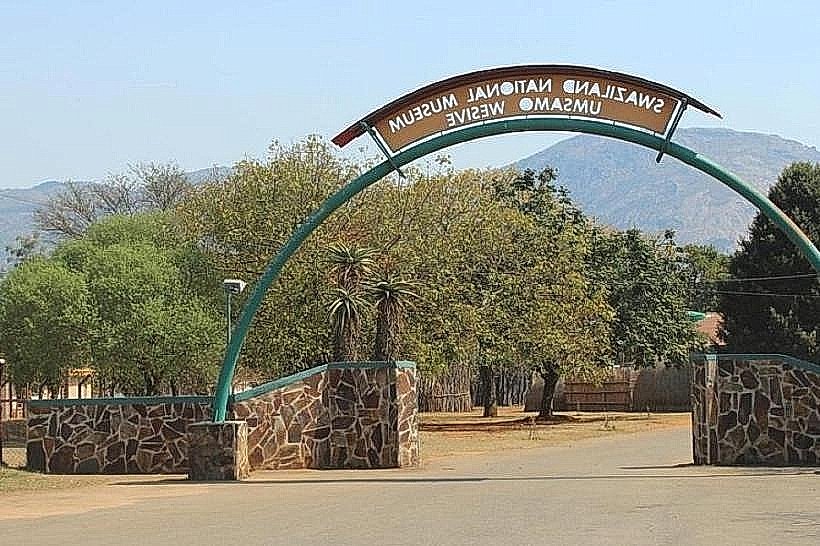
Eswatini National Museum - 5.0km Southeast