Landmark: Swaziland Islamic Centre
City: Lobamba
Country: Eswatini
Continent: Africa
Swaziland Islamic Centre, Lobamba, Eswatini, Africa
The Swaziland Islamic Centre is a prominent religious, educational, and community complex located in the urban periphery of Ezulwini, Eswatini. The facility serves as the principal administrative and spiritual headquarters for the country's Muslim population, coordinating Islamic affairs, welfare distribution, and theological instruction across the region.
Visual Characteristics
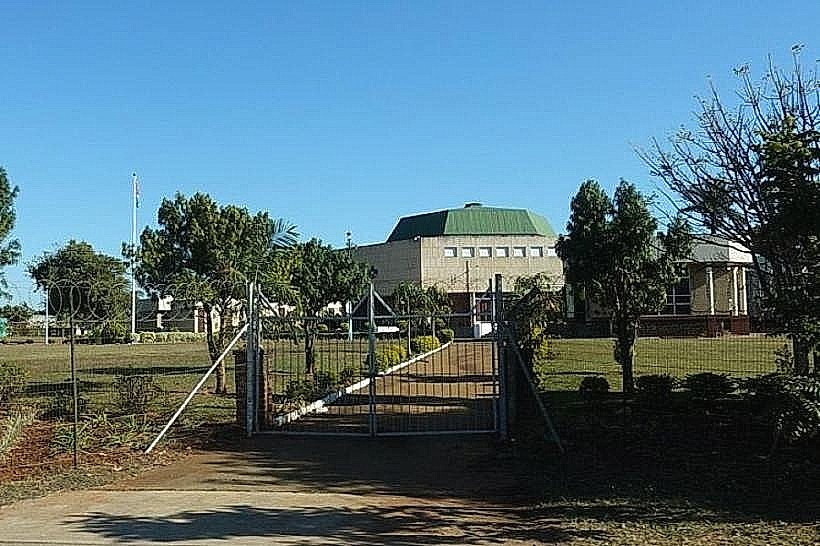
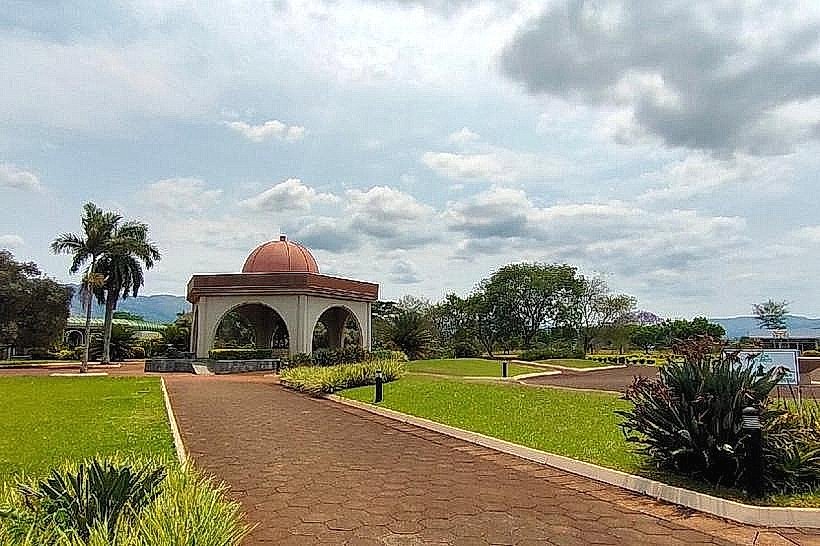
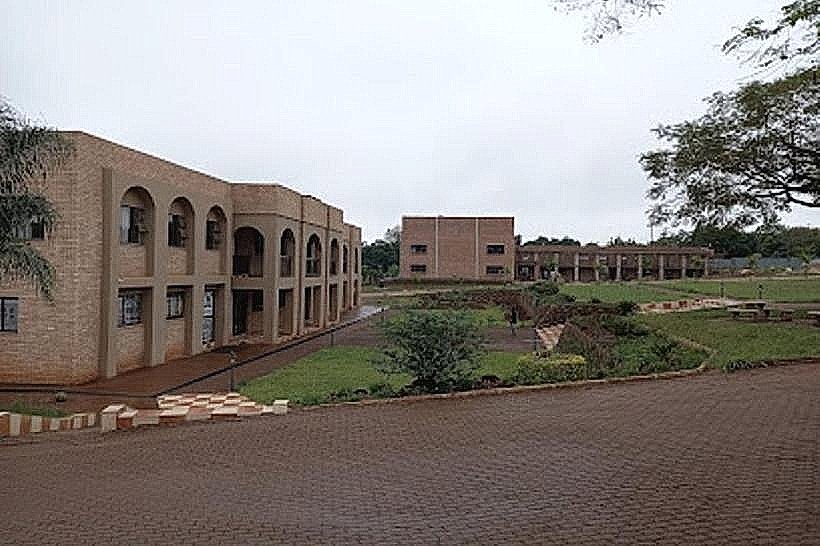
The landmark is a large multi-structural complex dominated by an assembly mosque designed in a contemporary Islamic architectural style. The exterior features white and pale plastered masonry walls, highlighted by a prominent central dome and a tall, slender minaret tower that rises above the surrounding valley landscape. The interior comprises a spacious, carpeted main prayer hall characterized by geometric window designs, simple hanging chandeliers, and an arched mihrab (prayer niche) facing Mecca. The surrounding grounds are flat and bordered by perimeter security walls, featuring asphalt vehicular zones and small ornamental garden spaces.
Location & Access Logistics
The center is positioned directly along the main transport corridor in the Ezulwini Valley, situated near the MR103 road approximately 14 kilometers south of Mbabane and 20 kilometers west of Manzini. Access is direct via the dual-carriageway MR3 highway, exiting into the central Ezulwini zone and transitioning onto the local paved asphalt road network. Public transport is frequent, with local minibuses (kombis) on the Mbabane-Manzini route dropping passengers within a short walking distance of the main gates. Secure, paved parking areas are located directly inside the compound to accommodate private vehicles during congregational assemblies.
Historical & Ecological Origin
The institution was established during the late 20th century to accommodate the growing community of Muslim expatriates, traders, and local Swati converts within the kingdom, formalizing the infrastructure under the Islamic Center of Swaziland organization. The campus was structurally expanded to incorporate educational classrooms, a library, and administrative offices to manage national charitable initiatives. Geologically, the site occupies the flat alluvial valley floor between the Highveld escarpment and the Mdzimba mountains, a terrain characterized by deep weathered granitic soils.
Key Highlights & Activities
The primary activities center on the performance of the five daily congregational prayers and the central Jumu'ah (Friday afternoon) prayer service, which draws worshipers from across the Hhohho and Manzini districts. The facility operates an Islamic school (madrasah) providing Arabic language literacy, Qur'anic studies, and theological instruction to local youth. Additionally, the center functions as a logistics hub for community welfare programs, organizing the distribution of food relief, medical aid, and educational scholarships to vulnerable populations regardless of faith.
Infrastructure & Amenities
The religious complex features well-developed institutional infrastructure, including continuous municipal electricity, treated water networks, and modern public restroom blocks equipped with specialized wudu (ablution) washing facilities. High-speed cellular network coverage (4G/5G) is completely stable across all indoor halls and outdoor courtyard sections due to its location within the developed Ezulwini tourism and commercial zone. While there are no commercial vendors inside the secure gates, comprehensive retail, banking, and dining services are located 2 kilometers away at major shopping malls.
Best Time to Visit
The facility is accessible year-round, but the most significant period of activity occurs on Fridays during the midday Jumu'ah service, typically between 12:00 and 14:00, which offers the most profound insight into the cultural life of the community. The dry winter months from May to August offer the most comfortable weather for external architectural observation and walking. Photography of the exterior minaret and dome is best executed in the early morning or late afternoon when low-angle sunlight minimizes harsh reflections on the white plastered surfaces. Non-Muslim visitors seeking entry must arrange visits in advance and adhere to strict dress codes, including modest attire and the removal of footwear before entering prayer spaces.
Facts & Legends
The center houses the national administrative council that manages the printing and translation of Islamic educational literature into the native siSwati language, a structural linguistic effort aimed at making theological texts accessible to local communities. Administrative records note that the center's establishment marked the formal integration of Islamic dietary standards (Halal) into regional commercial slaughterhouses, a historical regulatory shift that enabled the expansion of Muslim-owned businesses and trade relationships across Southern Africa.
Nearby Landmarks
Mantenga Lifestyle & Craft Centre - 1.5km South-Southwest
The Gables Shopping Centre - 1.8km Southeast
Traditional Swazi Craft Markets - 2.2km South-Southwest
Mantenga Nature Reserve (Entrance) - 2.8km South-Southwest
Parliament Building - 4.9km South-Southeast