Landmark: Parliament Building
City: Lobamba
Country: Eswatini
Continent: Africa
Parliament Building, Lobamba, Eswatini, Africa
The Parliament Building of Eswatini is the legislative headquarters of the kingdom, located in the royal and institutional capital of Lobamba. The complex houses both the House of Assembly and the Senate, serving as the central venue for national governance and legislative state ceremonies.
Visual Characteristics
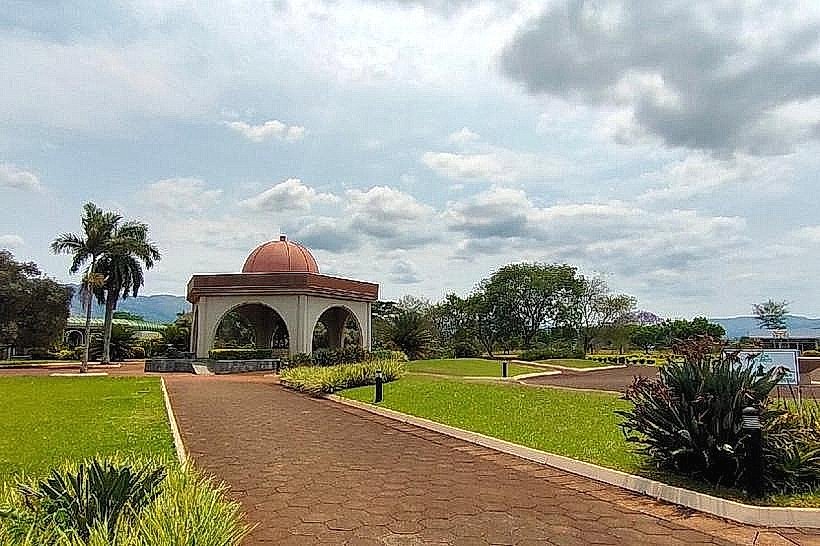
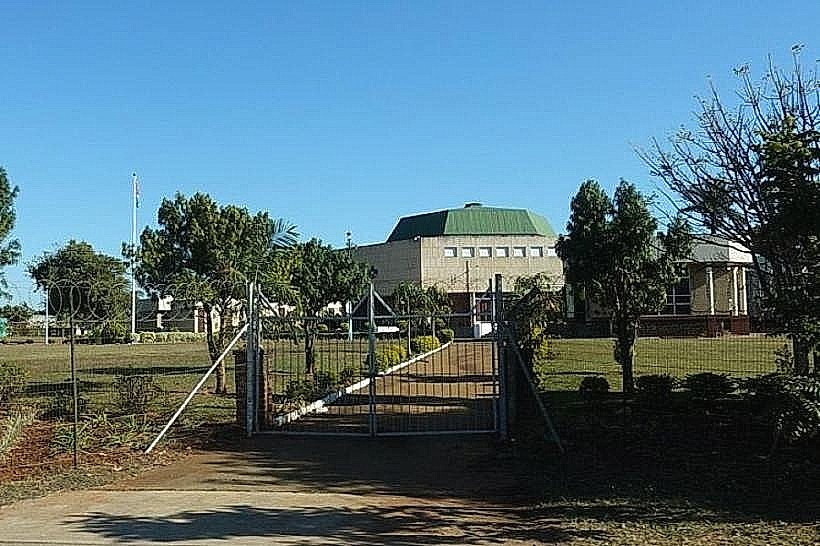
The landmark features a distinct mid-20th-century classical civic architectural style dominated by a large, central copper dome that has weathered to a characteristic green patina. The exterior facade is constructed of pale plastered masonry and concrete, highlighted by a formal colonnade of tall structural pillars framing the main entrance. The building is positioned within extensive, high-security grounds featuring manicured grass lawns, ornamental shrub borders, and a wide asphalt ceremonial driveway lined with official flagpoles.
Location & Access Logistics
The facility is situated directly off the paved MR103 road in central Lobamba, approximately 18 kilometers south of Mbabane and 22 kilometers west of Manzini. Private vehicles can access the site via the MR3 highway, exiting onto the MR103 and following signs toward the royal area, though general public parking is restricted to designated gravel shoulders outside the main security perimeter. Public transport is frequent, with local minibuses (kombis) on the Mbabane-Manzini via Ezulwini route dropping passengers directly outside the parliament gates along the main road.
Historical & Ecological Origin
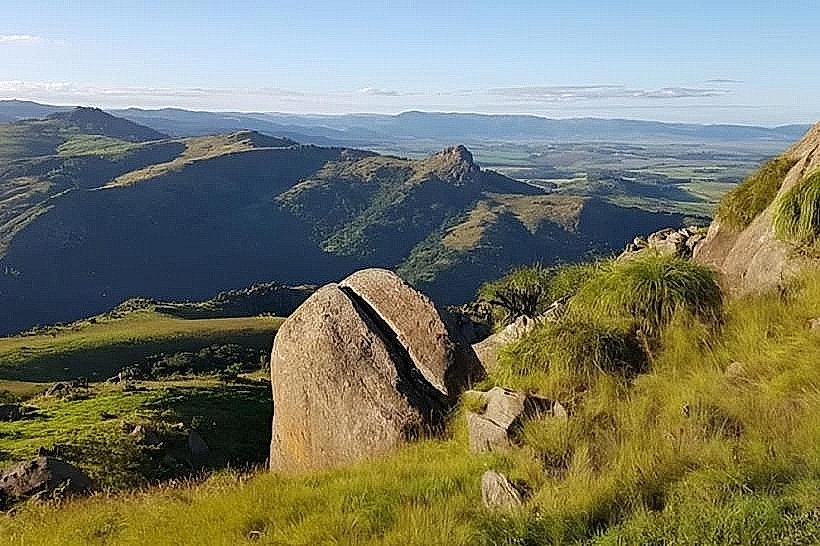
The legislative complex was constructed during the late 1960s to coincide with Eswatini's independence from British protection in 1968, formalizing a transition from colonial administration to a combined modern and traditional governance system. The structure was engineered to host joint sittings of the modern parliament alongside state openings conducted by the monarch. Geologically, the site occupies the flat alluvial floor of the Ezulwini Valley, an area characterized by ancient granitic and gneissic sub-strata feeding the adjacent Lusushwana River system.
Key Highlights & Activities
The primary activities are formal state legislative processes, committee hearings, and diplomatic events. Public access to the interior is strictly regulated, but pre-arranged guided educational tours are occasionally permitted to view the debating chambers, gallery spaces, and official portraits of the country's historical leadership. Exterior architectural observation and photography are conducted from the public perimeter fencing, as unauthorized entry into the secure inner courtyard is prohibited.
Infrastructure & Amenities
The government complex features highly developed institutional infrastructure, including secure electricity feeds, backup generator systems, treated municipal water supplies, and internal restroom networks for staff and official visitors. High-speed cellular network coverage (4G/5G) is completely stable across the entire perimeter due to its status as a vital national security zone. There are no commercial food vendors or public amenities inside the legislative gates, but retail services and dining are situated 1.5 kilometers away at regional shopping centers.
Best Time to Visit
The facility can be viewed externally year-round, but the dry winter months from May to August provide the most comfortable weather for perimeter walking. Early morning between 08:00 and 10:00 offers the clearest lighting for photographing the eastern facade and the central copper dome without harsh midday glare. Legislative sessions occur during fixed parliamentary terms on weekdays, while the spectacular State Opening of Parliament by the King occurs annually, typically in February, drawing massive ceremonial turnouts.
Facts & Legends
The architectural integration of the Parliament Building in Lobamba was intentionally designed to position modern governance directly adjacent to the Ludzidzini Royal Hamlet and the national Eludzidzini cattle byre, symbolizing the structural unity between western legislative systems and traditional Swati custom. National administrative lore notes that the orientation of the main debating chamber was aligned to face the sacred Mdzimba mountains, spiritually anchoring the politicians to the resting place of the nation's historical monarchs.
Nearby Landmarks
King Sobhuza II Memorial Park - 0.4km South
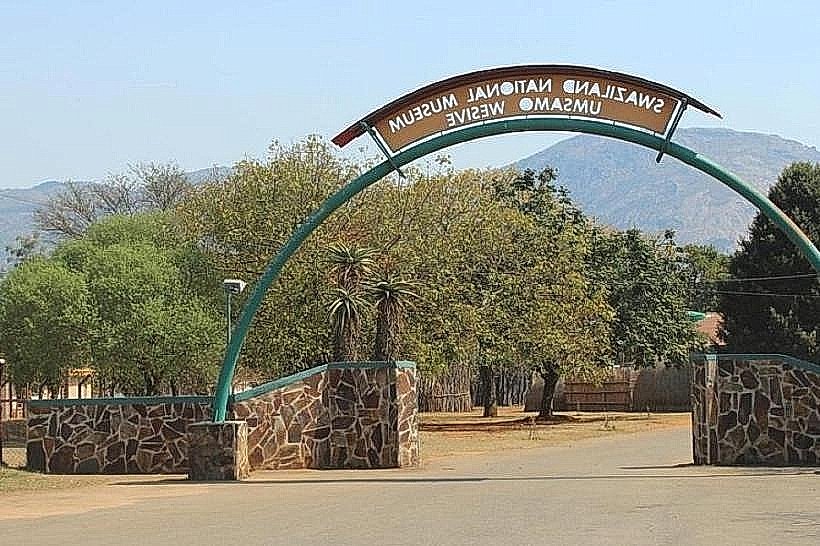
Eswatini National Museum - 0.5km South
Ludzidzini Royal Residence - 1.2km West
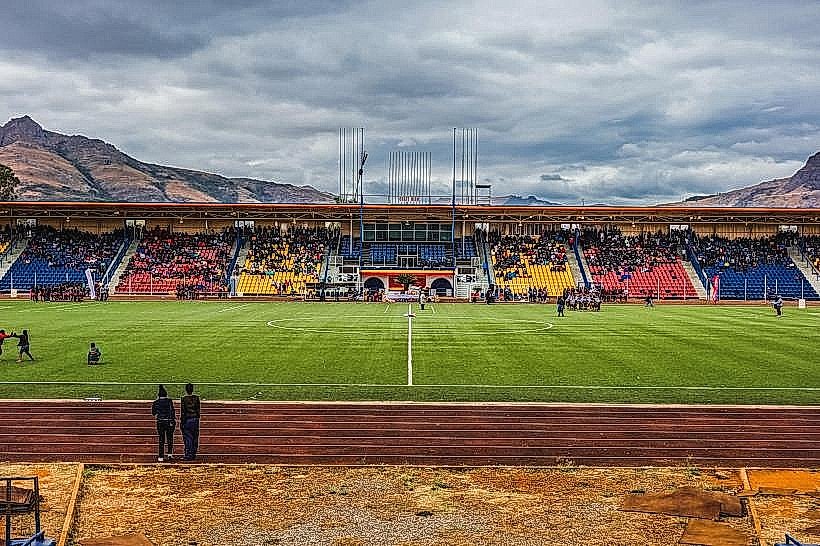
Somhlolo National Stadium - 1.4km East-Southeast
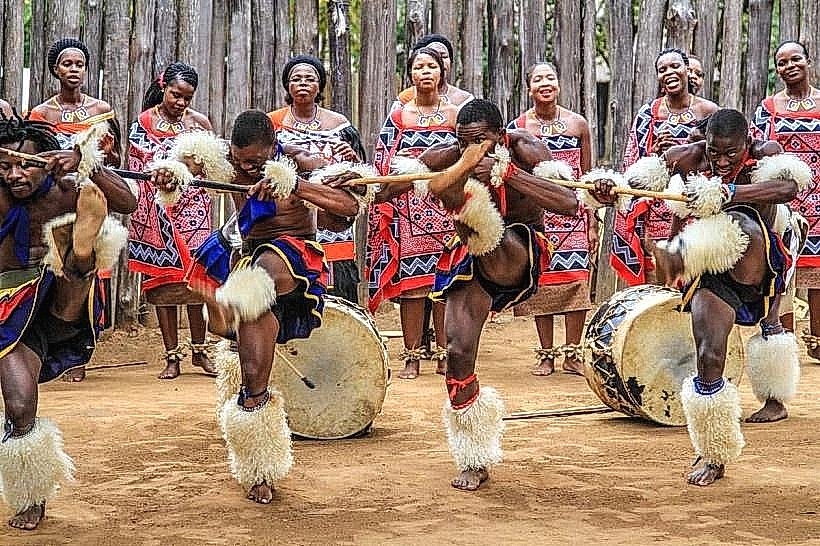
Mantenga Cultural Village - 4.2km Northwest