Landmark: Sindia Baobab Forest
City: Thies
Country: Senegal
Continent: Africa
Sindia Baobab Forest, Thies, Senegal, Africa
The Sindia Baobab Forest is a dense concentration of ancient African baobab trees located in the Mbour Department of the Thiès Region. It represents one of the most significant and visually uniform stands of Adansonia digitata in western Senegal, situated between the rural commune of Sindia and the Atlantic coastline.
Visual Characteristics
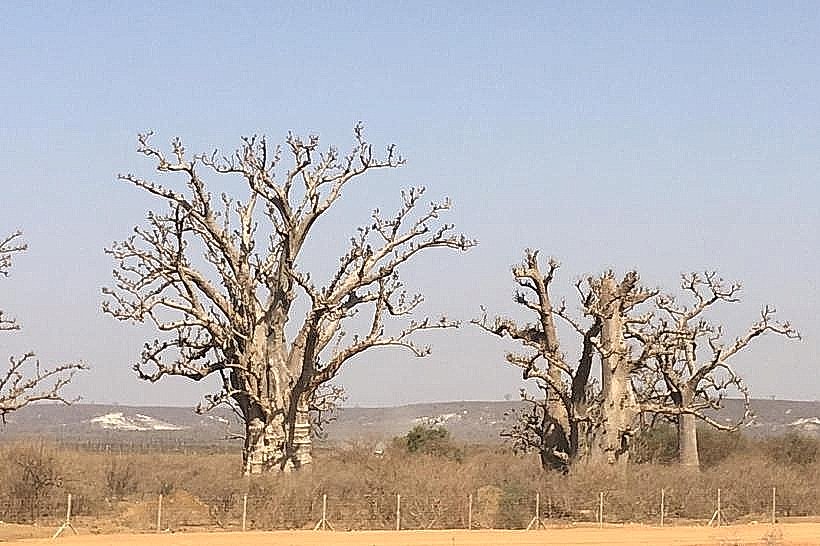
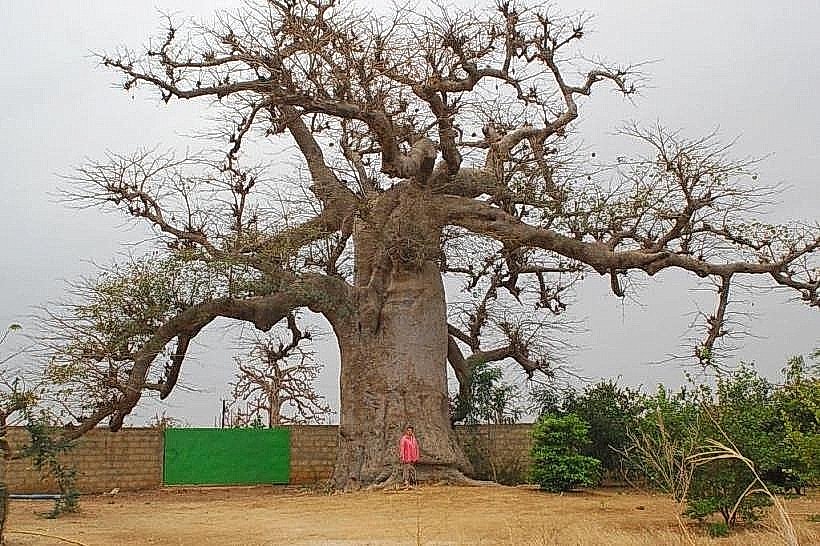
The forest is characterized by a high density of massive, cylindrical baobab trunks, many exceeding several meters in diameter. The bark is smooth and grey, with a metallic sheen under direct sunlight. The ground is composed of loose, sandy-beige soil typical of the coastal savannah, often covered in dry leaf litter or sparse seasonal grasses. The canopy is erratic, featuring thick, taproot-like branches that remain leafless for approximately nine months of the year.
Location & Access Logistics
The site is positioned directly off the N1 National Road and the A1 Toll Road (Sindia/Popenguine exit), roughly 20km west of Mbour and 65km southeast of Dakar. Entry is achieved through unpaved sandy tracks branching off the N1. Public transport via Dakar-Mbour station wagons ("sept-places") stops at the Sindia crossroads, where local motorcycle taxis (Jakarta) provide transit to the forest interior.
Historical & Ecological Origin
The forest is a naturally occurring botanical colony thriving on the well-drained, sandy-clay soils of the coastal plain. Historically, these baobab groves served as natural landmarks and communal gathering points for the local Serer and Wolof populations. Ecologically, the forest functions as a vital habitat for nocturnal mammals and raptors, while the trees themselves act as massive water storage vessels capable of surviving prolonged Saharan droughts.
Key Highlights & Activities
Walking and nature photography are the primary activities, focusing on the unique architectural shapes of the veteran trees. Local foraging occurs during the harvest season for baobab fruit (bouye), which is used for juice and medicinal pulp. The flat terrain and open spacing between the trees make the area suitable for mountain biking and guided botanical walks focused on traditional plant uses.
Infrastructure & Amenities
The forest remains a wild site with no formal tourism infrastructure. There are no paved paths, public restrooms, or information kiosks. Shade is abundant under the wide canopies of the baobab trees. 4G and 5G cellular coverage is excellent due to the proximity of the A1 highway and nearby telecommunication towers. Visitors must bring their own water and supplies, as vendors are only located in the town of Sindia.
Best Time to Visit
The dry season from November to June is optimal for accessibility, as sandy tracks can become muddy and difficult during the wintering rains. The best lighting for photography occurs in the final hour before sunset, which illuminates the smooth bark of the trees with orange and red hues. During the midday period (13:00 to 15:00), the lack of low-level vegetation results in high heat reflection from the sandy soil.
Facts & Legends
Local tradition holds that the largest and oldest baobabs are inhabited by protective spirits, and some trees in the Sindia area have historically served as "griottes' tombs," where traditional storytellers were once buried inside the hollowed-out trunks. A modern logistical oddity is that the forest's proximity to the international airport has made it a popular site for rapid "safari" stopovers for travelers arriving in Senegal.
Nearby Landmarks
Bandia Reserve – 5.5km North
Accrobaobab Adventure Park – 4.0km North
Popenguine Nature Reserve – 11.0km West
Blaise Diagne International Airport (AIBD) – 14.0km Northwest