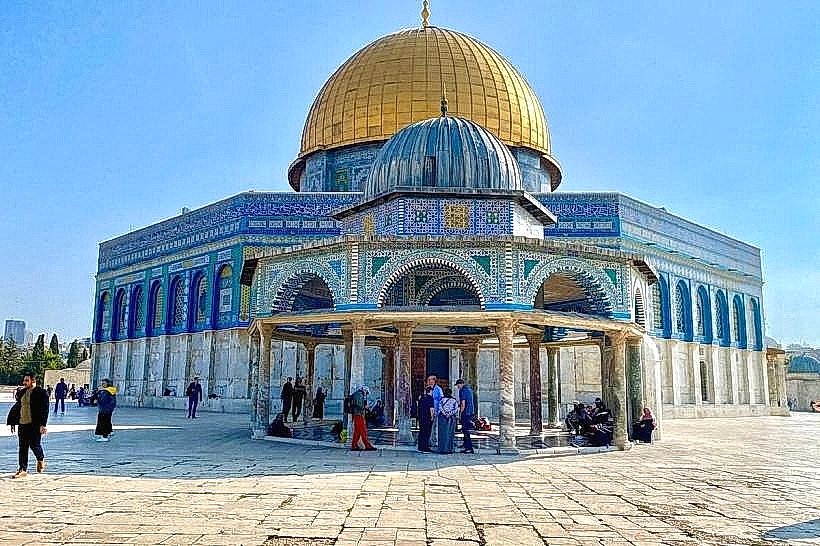
Landmark: Dome of the Rock
City: Jerusalem
Country: Israel
Continent: Asia
Dome of the Rock, Jerusalem, Israel, Asia
The Dome of the Rock is an Islamic shrine located on the Temple Mount (Haram al-Sharif) in the Old City of Jerusalem. It is centered over the Foundation Stone, a site of significant religious importance in Islamic, Jewish, and Christian traditions.
Visual Characteristics
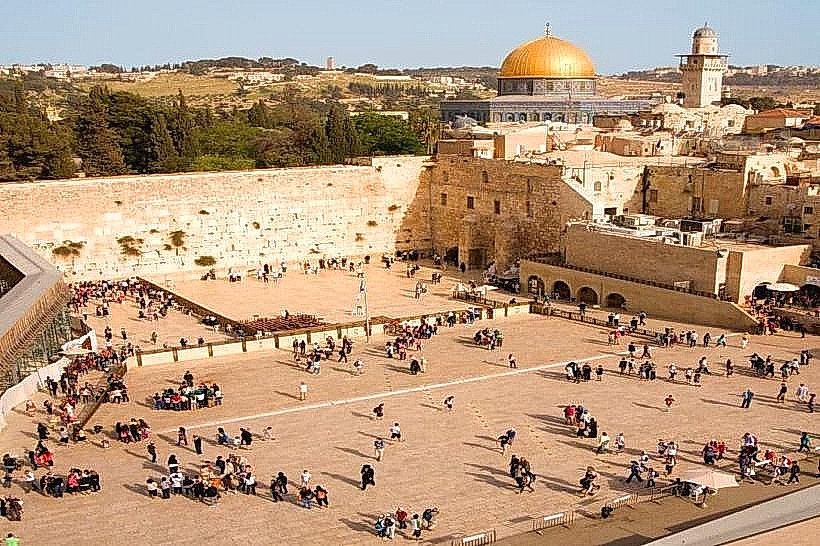
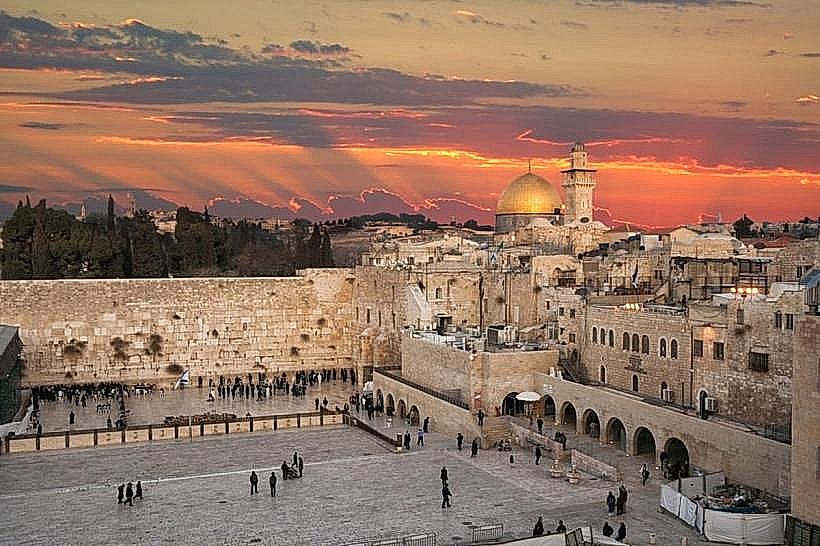
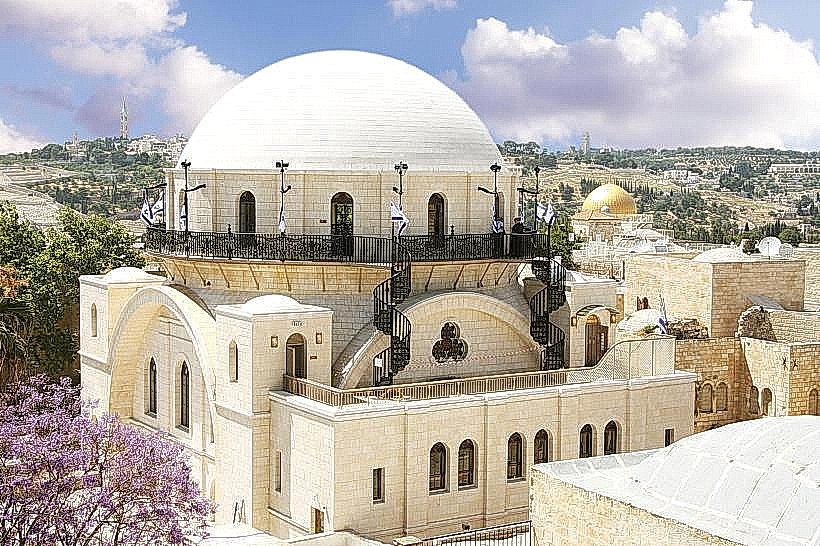
The structure is an octagonal building topped by a prominent gold-plated wooden dome. The exterior walls are clad in Persian tiles featuring intricate geometric patterns, floral motifs, and Arabic calligraphy in shades of blue, turquoise, white, and yellow. The lower half of the exterior is faced with white marble. The dome reaches a height of 35 meters and is crowned with a full-moon crescent. Internally, the building features two concentric ambulatories supported by marble columns and piers, centered around the exposed limestone bedrock of the Foundation Stone.
Location & Access Logistics
The shrine is located on the elevated platform of the Temple Mount in the southeastern corner of the Old City. Non-Muslim access is strictly limited to the Moroccan Gate (Bab al-Maghariba), reached via a wooden ramp near the Western Wall plaza. Access is restricted to specific hours, typically Sunday through Thursday mornings and early afternoons, excluding Muslim holidays. Public transport is available via the Jerusalem Light Rail to the City Hall stop, followed by a walk through the Old City to the Western Wall area.
Historical & Ecological Origin
Commissioned by the Umayyad Caliph Abd al-Malik ibn Marwan, construction was completed in 691 AD. It was built on the site of the Second Jewish Temple, which was destroyed by the Romans in 70 AD. Architecturally, it follows the design of Byzantine martyria. The site sits atop a limestone plateau known as Mount Moriah, which forms part of the Judean mountain range.
Key Highlights & Activities
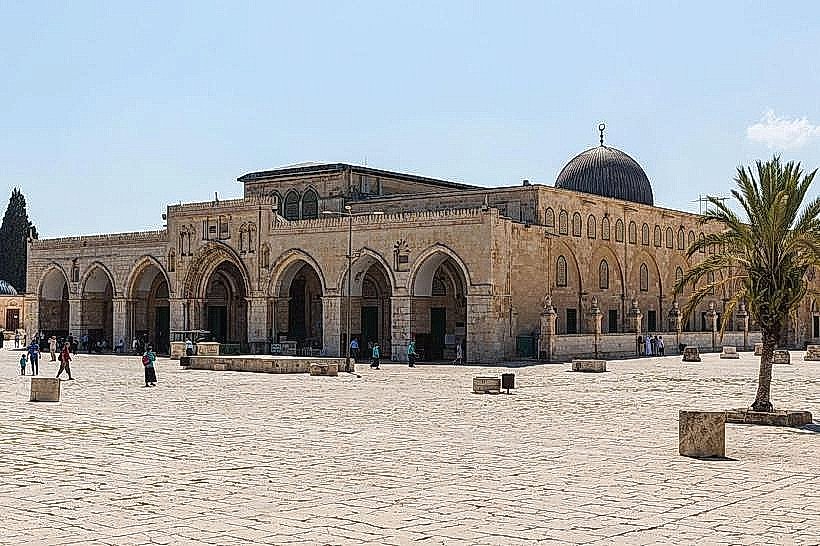
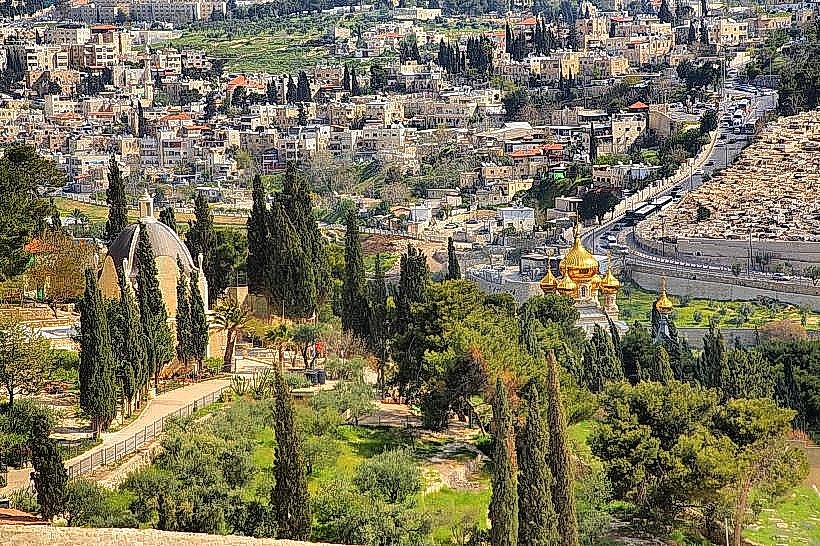
Visitors can walk the perimeter of the octagonal platform to view the tilework and the Al-Aqsa Mosque to the south. Non-Muslims are currently prohibited from entering the interior of the Dome or the cave beneath the rock (Well of Souls). Observational photography is permitted from the exterior plaza. The platform provides elevated views of the Mount of Olives to the east.
Infrastructure & Amenities
Public restrooms are available on the Temple Mount perimeter but are often crowded. There is limited shade on the open stone plaza, though some trees are planted along the western and northern edges. 4G/5G cell signal is generally stable across the open platform. There are no food or drink vendors allowed on the Temple Mount; visitors must use facilities in the surrounding Old City quarters.
Best Time to Visit
The best time for photography is early morning when the sun illuminates the eastern tilework and the gold dome. The site is most accessible during the spring (March to May) and autumn (September to November) when temperatures are moderate. Visitors must arrive at the Moroccan Gate at least one hour before the scheduled opening time to clear security queues.
Facts & Legends
According to Islamic tradition, the central rock is the spot from which the Prophet Muhammad ascended to heaven during the Night Journey. In Jewish tradition, it is the location where Abraham prepared to sacrifice Isaac and the site of the Holy of Holies in the First and Second Temples.
Nearby Landmarks
Al-Aqsa Mosque - 0.2km South
Western Wall - 0.15km West
Church of Saint Anne - 0.4km North
Lions' Gate - 0.5km Northeast
Chain Gate - 0.1km West