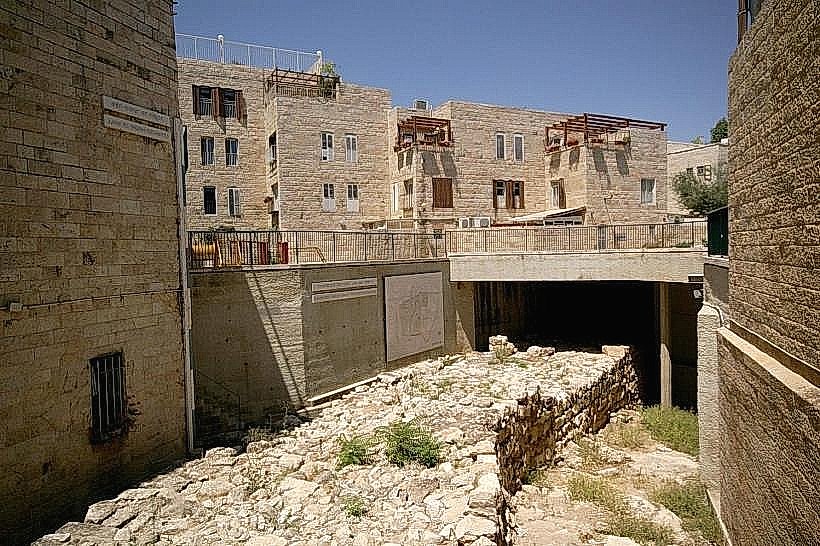
Landmark: Broad Wall
City: Jerusalem
Country: Israel
Continent: Asia
Broad Wall, Jerusalem, Israel, Asia
The Broad Wall is an ancient defensive fortification located in the Jewish Quarter of the Old City of Jerusalem. It serves as a visible archaeological record of the city's expansion during the First Temple period.
Visual Characteristics
The landmark consists of a massive stone wall segment measuring 65 meters long and 7 meters wide. The construction utilizes unhewn fieldstones and large limestone blocks stacked without mortar. The remaining ruins sit several meters below modern street level within an open-air archaeological pit, surrounded by contemporary residential buildings.
Location & Access Logistics
The site is situated on Plugat HaKotel Street in the Jewish Quarter. Pedestrian access is via the stairs leading from the Jewish Quarter Plaza toward the Cardo. The nearest public transport is Egged bus lines 1 or 3, which stop at the Western Wall plaza; from there, visitors must walk 300 meters uphill. Parking is restricted to residents, with the nearest public parking located at the Zion Gate or Mt. Zion lots.
Historical & Ecological Origin
King Hezekiah commissioned the wall's construction in the late 8th century BCE. The fortification was built to protect the newly settled Western Hill of Jerusalem from the impending Assyrian siege led by Sennacherib. Geologically, the stones are local "Meleke" limestone quarried from the surrounding Judean hills.
Key Highlights & Activities
Visitors can view the fortification from a perimeter walkway that provides a top-down perspective of the thickness of the ruins. Informational plaques at the site explain the military engineering of the Iron Age. Photography is the primary activity, as the site is integrated into the public thoroughfare.
Infrastructure & Amenities
The site is located in a high-density urban area with immediate access to public restrooms and benches in the nearby Hurva Square. Most of the viewing area is exposed to the sky, providing no shade during midday. 4G/5G cell signal is strong. Food vendors and cafes are situated within 50 meters of the ruins.
Best Time to Visit
Mid-day provides the most direct lighting into the archaeological pit, minimizing shadows cast by the surrounding tall buildings. The site is an open public area accessible 24 hours a day, though the best months for visiting are October through April to avoid high summer temperatures.
Facts & Legends
Archaeological evidence confirms that Hezekiah demolished existing private houses to make room for the wall, a detail specifically noted in the biblical Book of Isaiah (22:10): "And you numbered the houses of Jerusalem, and the houses you broke down to fortify the wall."
Nearby Landmarks
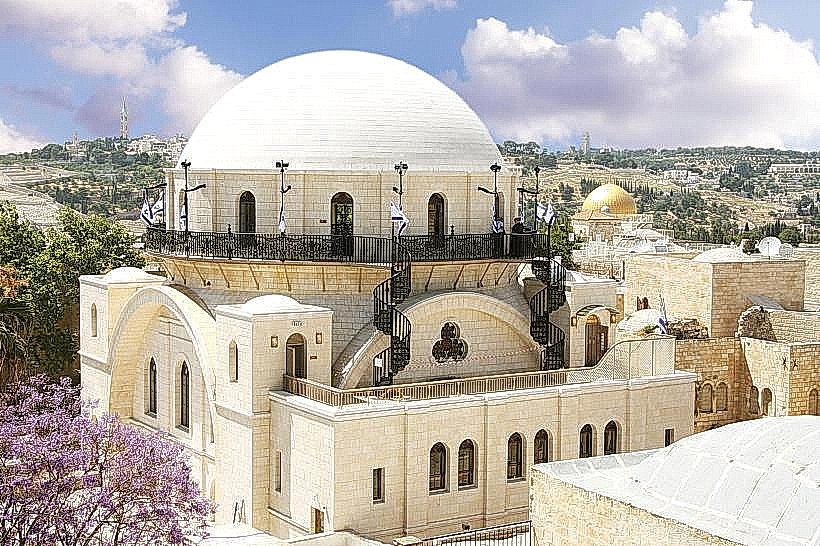
Hurva Synagogue (0.1km South)
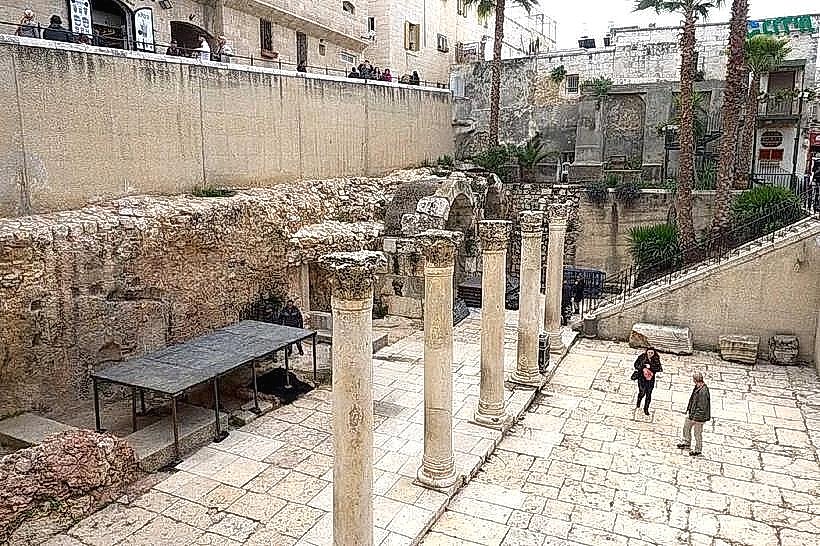
Cardo (0.15km West)
Western Wall (0.3km East)
Burnt House Museum (0.2km East)
Dung Gate (0.5km Southeast)