Landmark: Temple Mount
City: Jerusalem
Country: Israel
Continent: Asia
Temple Mount, Jerusalem, Israel, Asia
The Temple Mount is an elevated stone plateau in the southeastern corner of the Old City of Jerusalem. It is a sacred site containing the Dome of the Rock and the Al-Aqsa Mosque, serving as a primary focal point for Judaism, Christianity, and Islam.
Visual Characteristics
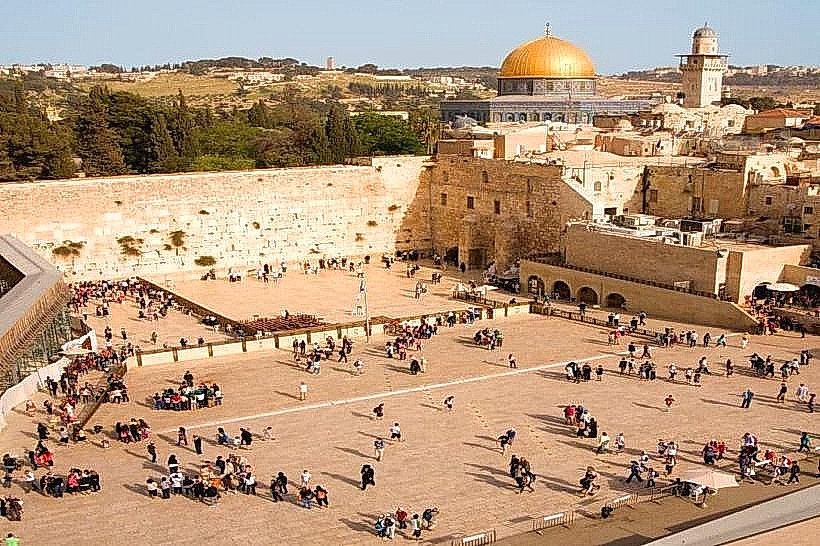
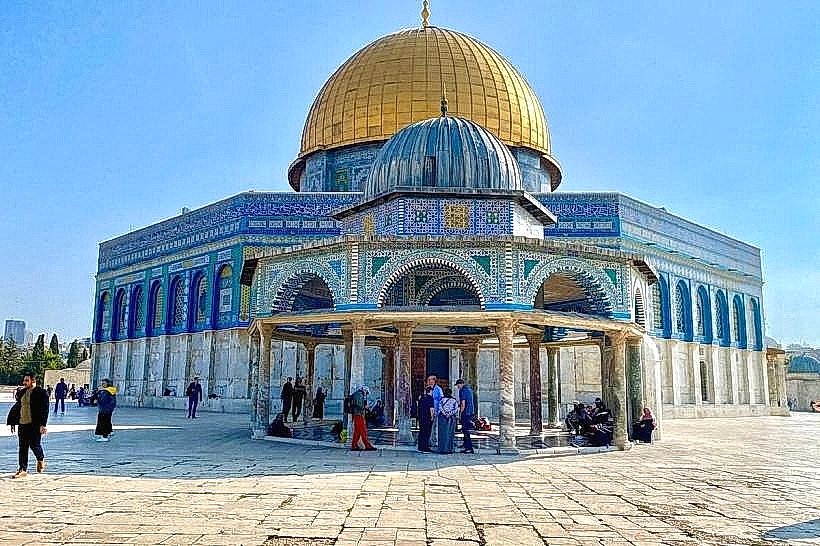
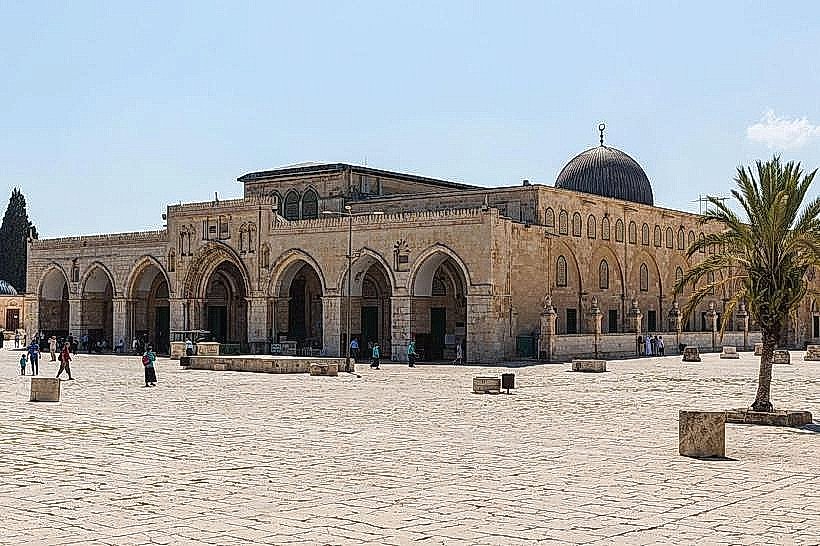
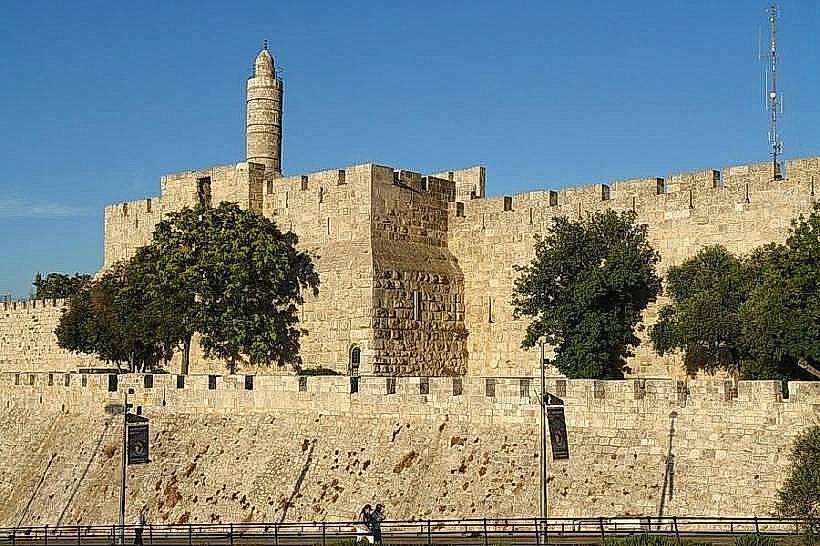
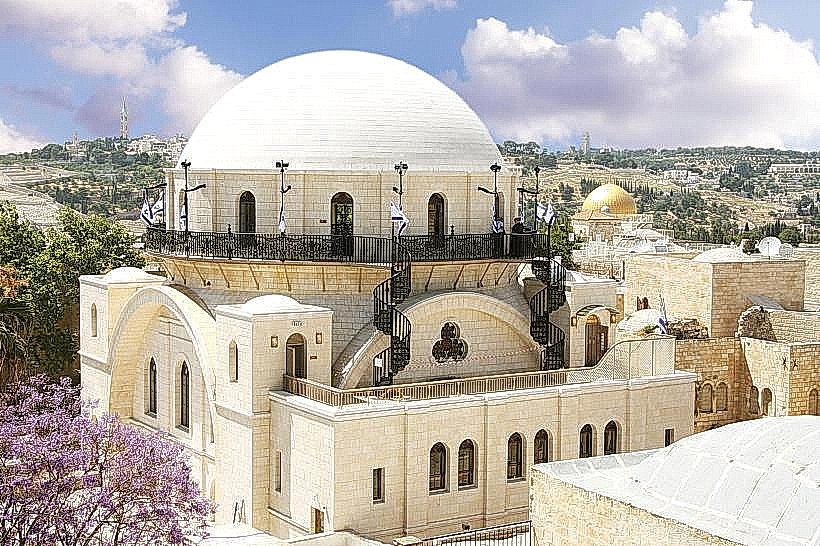
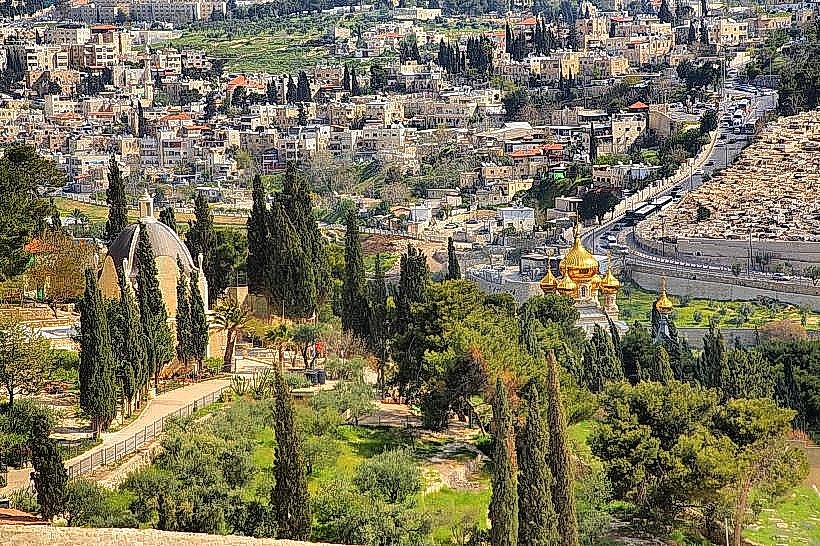
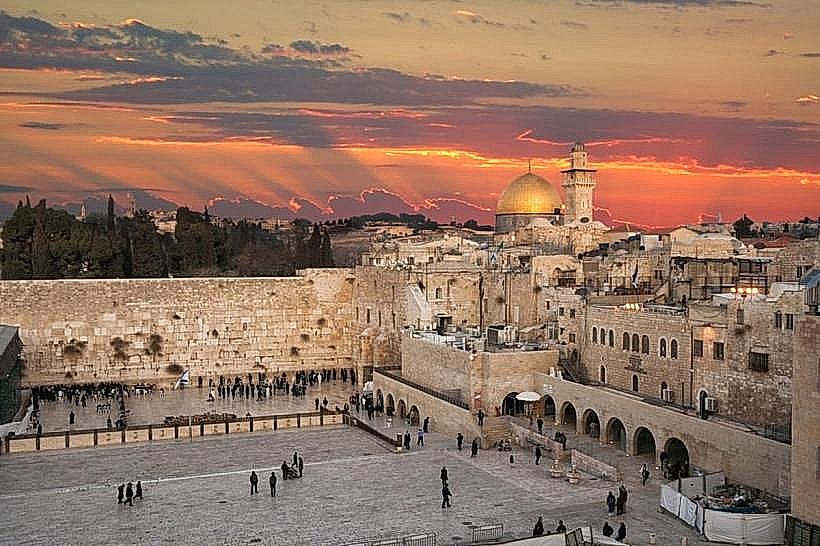
The site is a flat, trapezoidal plaza covering approximately 144,000 square meters. It is supported by massive retaining walls built of large, dry-stone limestone blocks, some exceeding 10 meters in length. The dominant feature is the octagonal Dome of the Rock with its gold-plated exterior and blue glazed tilework. At the southern end sits the silver-domed Al-Aqsa Mosque. The platform consists of open stone-paved areas, arched gateways (mawazin), and various smaller domed structures, all set against the backdrop of the Mount of Olives.
Location & Access Logistics
Access for non-Muslims is restricted to the Moroccan Gate (Mughrabi Gate), accessed via a wooden ramp near the Western Wall Plaza. Entry is pedestrian-only; the nearest vehicle access is via the Dung Gate or Jaffa Gate. Visitors must clear security screening at the entrance. Public transport options include the Jerusalem Light Rail to the City Hall stop or various bus lines stopping at the Western Wall terminal. Parking is available at the Mamilla or Karta garages outside the city walls.
Historical & Ecological Origin
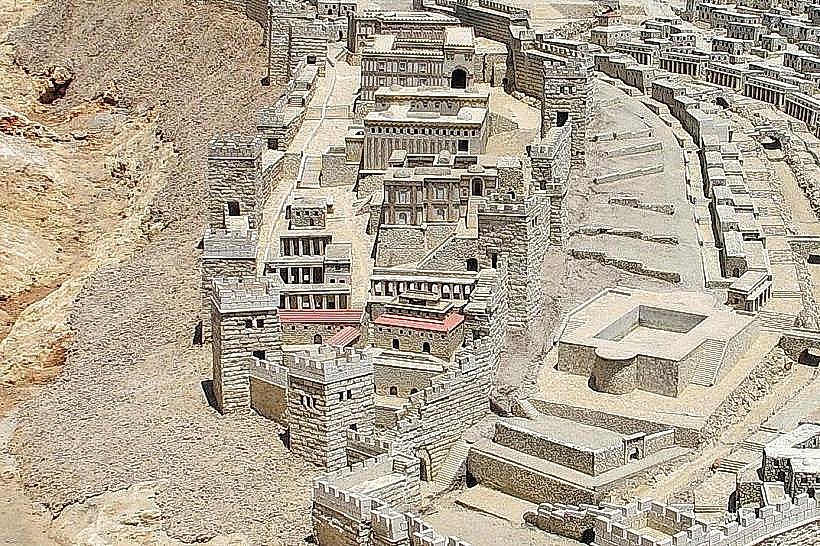
The plateau was expanded to its current scale by Herod the Great around 20 BCE to accommodate the Second Temple, which was destroyed by Roman forces in 70 CE. Geologically, it is the leveled summit of Mount Moriah, a limestone ridge. The Islamic structures were established following the Muslim conquest in the 7th century, with the Dome of the Rock completed in 691 CE by Caliph Abd al-Malik ibn Marwan.
Key Highlights & Activities
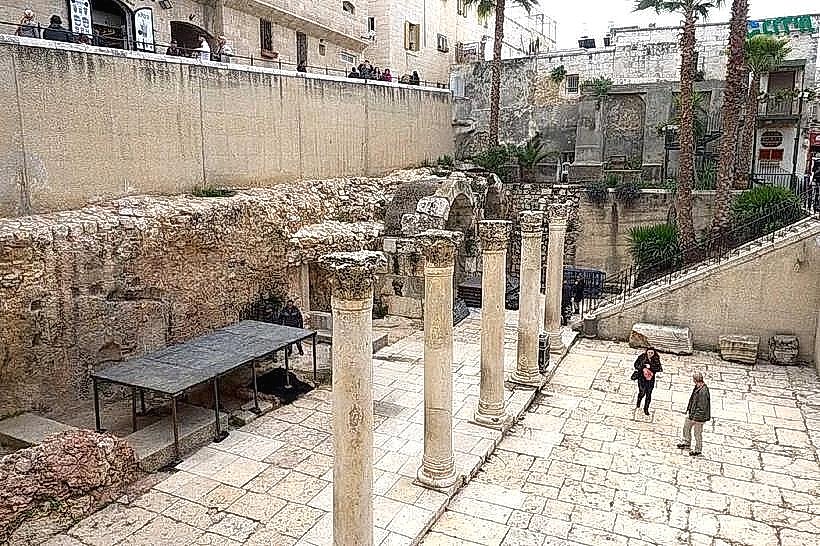
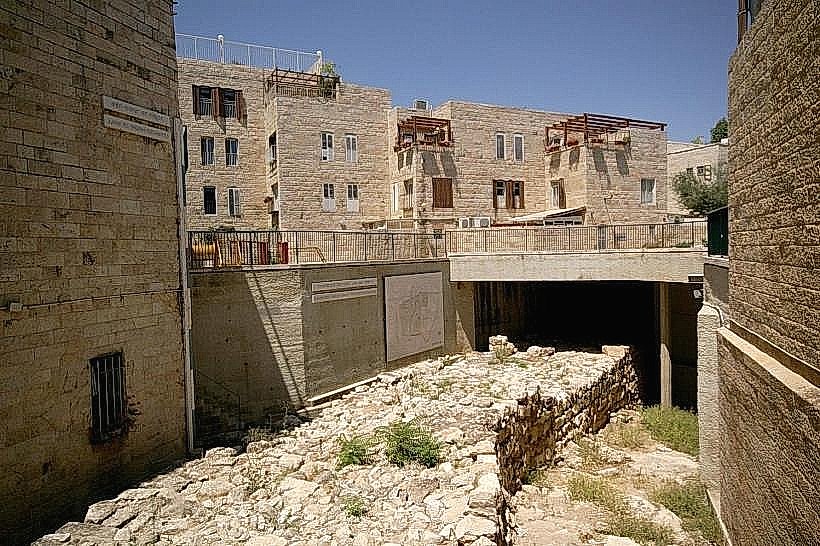
Walking the perimeter of the platform allows for viewing the 16th-century Ottoman tilework and the exterior of the Al-Aqsa Mosque. Photography is permitted in the open plaza areas. Archaeological remnants, such as the Robinson’s Arch and the Southern Steps, are visible from the base of the retaining walls. Non-Muslims are prohibited from entering the interior of the religious buildings or engaging in non-Islamic prayer on the site.
Infrastructure & Amenities
Public restrooms are located on the northern and western sides of the compound. There is minimal shade on the open stone plaza, though some cypress and olive trees are planted in the courtyards. 4G/5G cell signal is generally stable throughout the site. No commercial vendors or food services are permitted on the platform; water fountains (sabils) are available for worshippers, but visitors should bring their own water.
Best Time to Visit
The site is open to non-Muslims Sunday through Thursday during strictly enforced windows, typically 7:30 AM – 10:30 AM and 12:30 PM – 1:30 PM. Early morning is the optimal time for photography to capture the sun hitting the eastern face of the Dome of the Rock. Spring and autumn offer the most temperate conditions for traversing the unshaded stone platform.
Facts & Legends
The Foundation Stone, located inside the Dome of the Rock, is identified in Jewish tradition as the "Even ha-Shetiya," the point from which the world was created. In Islamic tradition, it is the spot from which the Prophet Muhammad ascended to heaven during the Night Journey. A local legend suggests that a cave beneath the stone, known as the Well of Souls, contains the spirits of the dead awaiting the day of judgment.
Nearby Landmarks
Western Wall – 0.1km West
City of David – 0.4km South
Church of Saint Anne – 0.3km North
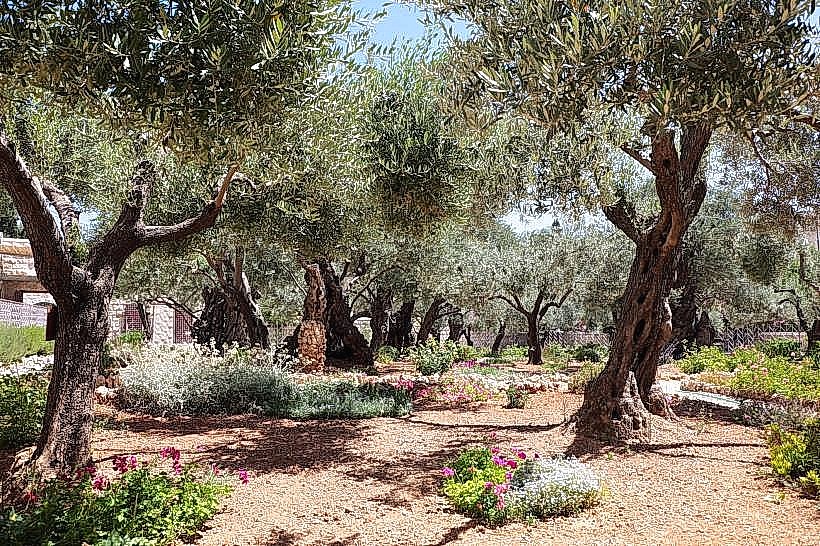
Garden of Gethsemane – 0.6km East
St. Stephen's Gate (Lions' Gate) – 0.4km Northeast