Landmark: Madatech Science Museum
City: Haifa
Country: Israel
Continent: Asia
Madatech Science Museum, Haifa, Israel, Asia
MadaTech, the Israel National Museum of Science, Technology, and Space, is located in the historic Hadar HaCarmel neighborhood of Haifa. It occupies the original campus of the Technion – Israel Institute of Technology, a complex of landmark buildings designed in the early 20th century.
Visual Characteristics
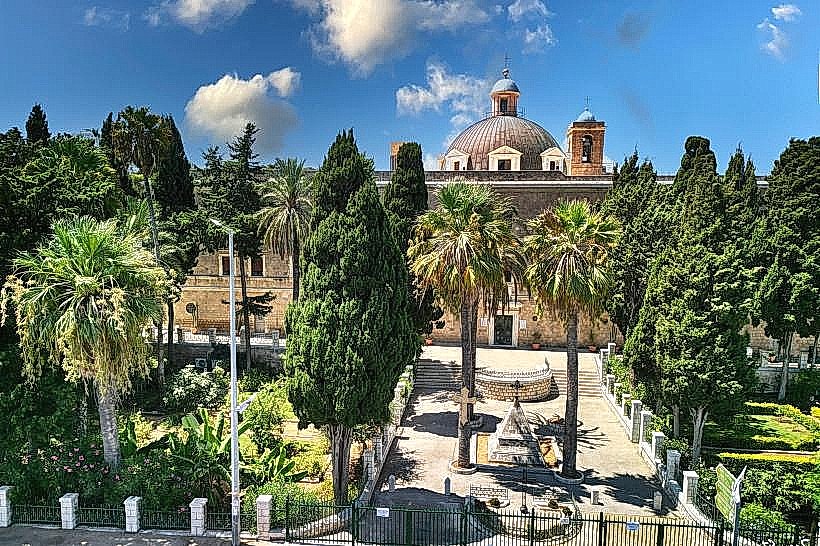
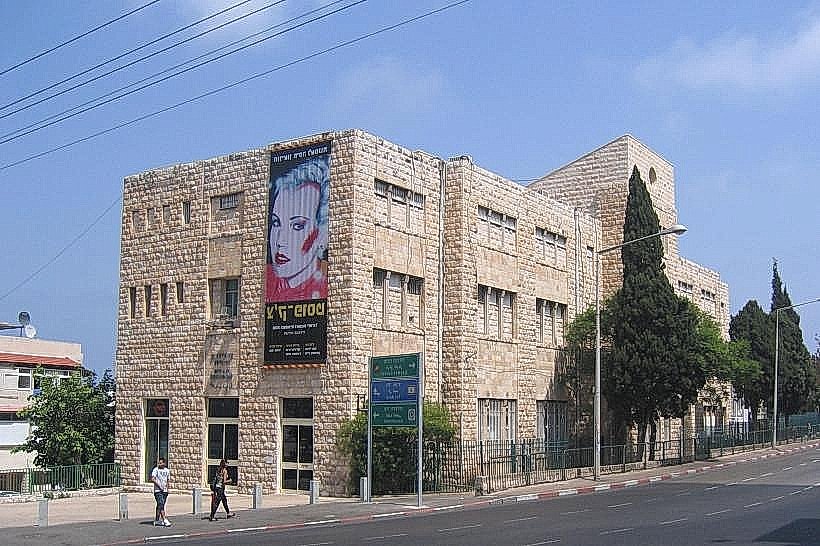
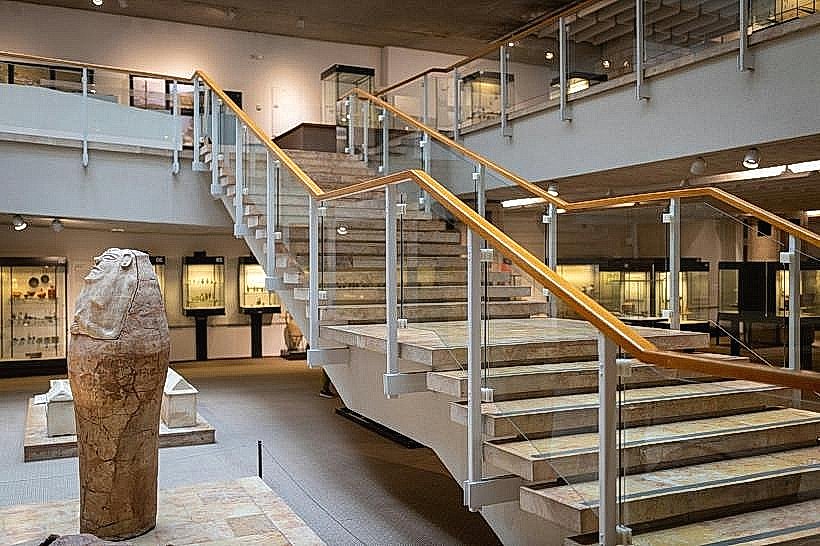
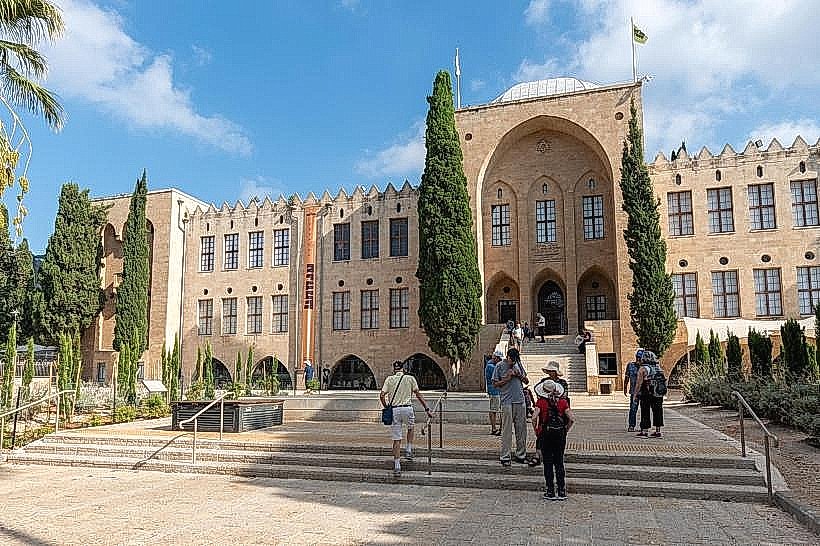
The museum is housed in a monumental structure built from yellow-toned limestone, featuring a blend of European architectural traditions and local Oriental motifs. The main building, known as the "Technion Old Building," is characterized by symmetrical wings, pointed arches, and thick masonry walls. Its central courtyard is paved with stone and surrounded by arched cloisters. Interior spaces have been retrofitted with modern glass, steel, and high-tech interactive exhibits, creating a stark contrast between the historic shell and the contemporary scientific installations.
Location & Access Logistics
The museum is located at 25 Shmaryahu Levin Street, approximately 1.5 km south of the Haifa Lower City. It is accessible by car via Arlozorov or Balfour Streets, with a paid parking lot located on-site for visitors. The district is well-connected by public transport; the Carmelit underground funicular stops at the nearby HaNevi'im Station. Numerous Egged bus lines, including the 12, 21, and 28, serve the immediate vicinity with stops on Balfour and Herzl Streets.
Historical & Ecological Origin
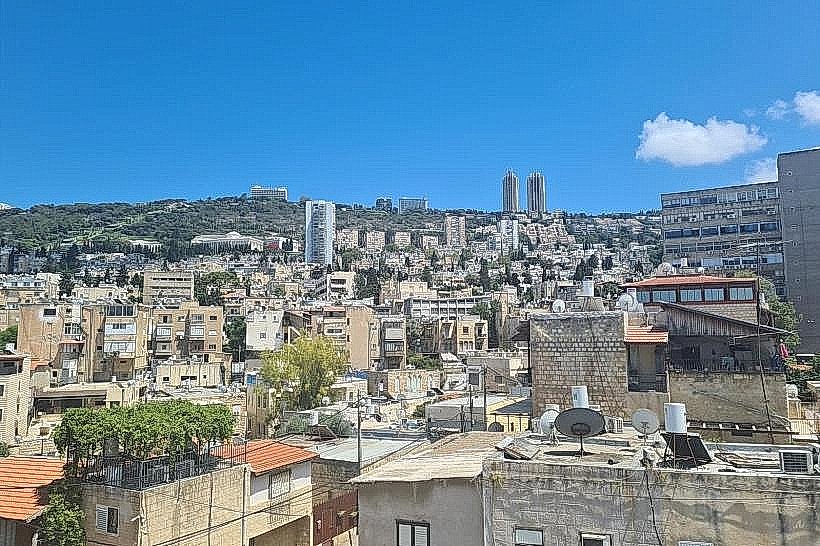
The primary building was designed by the German-Jewish architect Alexander Baerwald, with construction beginning in 1912. It originally served as the first home of the Technion, opening for classes in 1924 after delays caused by World War I. The site is situated on the mid-slope of Mount Carmel, characterized by a steep gradient and Mediterranean terra rossa soil. In 1986, the complex was repurposed as a national science museum to preserve the historic site while promoting scientific education.
Key Highlights & Activities
Visitors engage with over 20 interactive exhibitions covering physics, renewable energy, and space exploration. Key features include the "Nobel Prize Winners" gallery and the "Fab Lab" for 3D printing and digital fabrication. The outdoor Science Park is divided into thematic courtyards where large-scale kinetic sculptures demonstrate the principles of Archimedes, Leonardo da Vinci, and Isaac Newton. A 3D Cinematrix provides multi-sensory educational films.
Infrastructure & Amenities
The museum complex is fully accessible to visitors with limited mobility, featuring ramps and elevators connecting the historic floors. Public restrooms are located on every level and within the Science Park. A cafeteria and a museum shop are located near the main entrance. The site provides full 5G cellular coverage and a dedicated Wi-Fi network for interactive exhibit content. Shaded areas are abundant in the Science Park and the internal courtyards.
Best Time to Visit
The museum is open daily, but peak attendance occurs on Saturdays and during school holidays. For a quieter experience, weekday afternoons (14:00–17:00) are recommended. The outdoor Science Park is best visited during the morning or late afternoon to avoid the midday Mediterranean sun. Photography is optimal in the central courtyard during the midday hours when the sun is positioned directly above the symmetrical facade.
Facts & Legends
A historic palm tree stands in the museum courtyard, famously planted by Albert Einstein during his visit to the Technion in 1923. Legend has it that the building’s design was deliberately intended to harmonize "East and West," serving as a blueprint for a new Hebrew architectural style that avoided purely European or purely Ottoman influences.
Nearby Landmarks
Binyamin Park – 0.2km East
Wadi Nisnas – 0.9km Northwest
Haifa City Museum – 1.4km Northwest
Baháʼí Gardens (Main Entrance) – 1.2km West
Hanevi'im Tower – 0.4km North