Landmark: Museum of Malawi
City: Blantyre
Country: Malawi
Continent: Africa
Museum of Malawi, Blantyre, Malawi, Africa
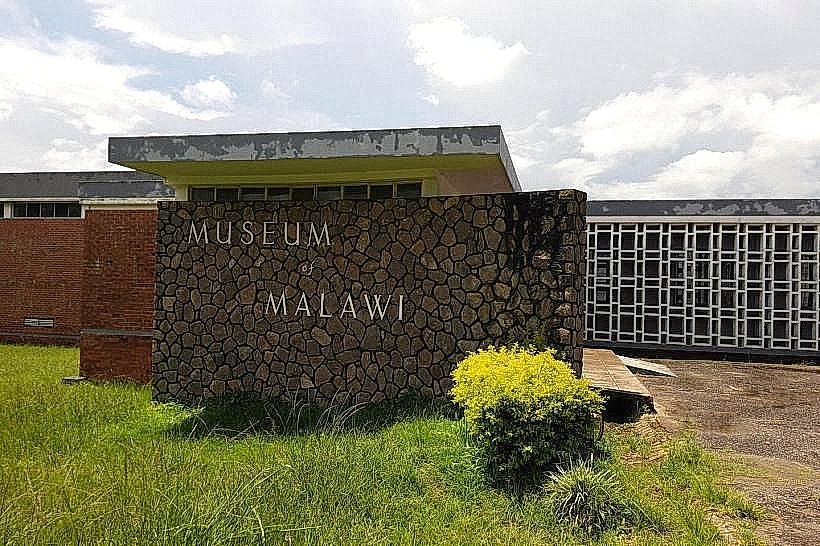
The Museum of Malawi, also known as the Chichiri Museum, is the principal cultural repository and historical institution in the country. The museum occupies a dedicated parkland complex situated at the intersection of Kasungu Crescent and the main Chipembere Highway in the Chichiri sector of Blantyre.
Visual Characteristics
The landmark is an elongated single-story exhibition pavilion executed in the mid-century structural functionalist architectural style. The exterior features unpainted dark grey aggregate concrete panels, red facing brick columns, and a low, flat concrete roofline designed with elevated horizontal clerestory windows to allow ambient natural light into the interior galleries. The main entrance approach incorporates a wide concrete portico leading to large timber entry doors. The surrounding open grounds function as an open-air display, featuring historical mechanical installations, a full-scale replica of a traditional Malawian village dwelling, and unpaved dirt footpaths winding through a grove of mature indigenous trees.
Location & Access Logistics
The facility is situated approximately 3.2 kilometers east of the Blantyre central business district, directly opposite the Chichiri Shopping Mall. Private vehicles access the property via the main gated entrance on Kasungu Crescent, which connects directly to a secure, unpaved gravel vehicle parking lot inside the perimeter fence. Public transit commuters can board any local minibus or inter-city coach operating along the primary corridor connecting Blantyre and Limbe via Chipembere Highway, disembarking at the prominent Chichiri Mall transit stop. From this drop-off point, the pedestrian walking route across the highway and into the museum entrance gates measures 150 meters heading north.
Historical & Ecological Origin
The institution was established by an act of parliament in 1957, with initial public collections opened to the public in temporary quarters down in Limbe in 1960. The current purpose-built pavilion structure at Chichiri was constructed utilizing public and private development funds and was officially inaugurated in July 1966 by President Dr. Hastings Kamuzu Banda to mark Malawi's transition to a republic. Geologically and ecologically, the site occupies an elevated ridge within the Shire Highlands, preserving a small micro-reserve of local topsoil and mature indigenous tree lines amidst a heavily developed municipal and commercial district.
Key Highlights & Activities
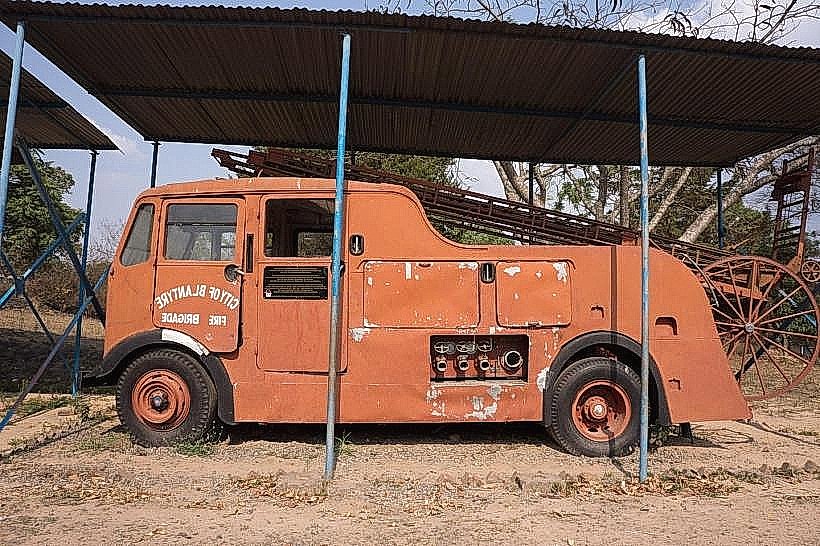
Visitors can complete self-guided structural tours across the interior galleries, which are organized into distinct archaeological, ethnographic, and natural history sectors. The central indoor exhibits feature an extensive collection of prehistoric stone tools, traditional iron-smelting apparatus, and a comprehensive display of authentic Gule Wamkulu ritual masks. The open-air grounds allow visitors to inspect historical transport artifacts, including an original steam locomotive utilized during the construction of the early Shire Highlands Railway network. Educational lectures and school group orientation programs are hosted regularly within the central audio-visual gallery hall.
Infrastructure & Amenities
The main exhibition pavilion contains permanent public restroom blocks equipped with standard plumbing installations near the administrative wing. Extensive shade is provided by the wide architectural overhang of the entrance portico and the large canopy trees growing across the open-air lawn perimeter. Mobile telecommunications connectivity is excellent, with consistent 4G and 5G network signals active across the entire museum property. No commercial food or beverage vendors operate inside the museum gates, but full-scale dining complexes, retail outlets, and supermarkets are located 300 meters south within the adjacent Chichiri Shopping Mall.
Best Time to Visit
The optimal period for photographing the external mid-century architecture and checking out the outdoor machinery displays occurs during the mid-morning hours between 09:00 and 11:30, when natural sunlight clearly illuminates the grey aggregate panels without creating harsh shadows beneath the portico roof. The preferred months for visiting align with the dry winter season from May to August, when ambient temperatures range between 16 and 21 degrees Celsius and rainfall risks are lowest. The galleries open daily from 07:30 to 16:30, including weekends, with weekdays offering a quieter environment for academic study.
Facts & Legends
A prominent structural highlight within the natural history hall is an extensive collection of taxidermic specimens representing Malawi's diverse bird and mammalian lineages, which local curators note includes select historical mounts prepared during the early twentieth century. Local field guides frequently direct attention to the open-air traditional hut replica on the grounds, which was constructed using authentic regional clay-plastering techniques to explicitly demonstrate the thermal insulation properties of thatched roofs compared to modern corrugated iron sheets.
Nearby Landmarks
Chichiri Shopping Mall Complex – 0.3km South
Kamuzu Stadium National Arena – 0.6km Northwest
Queen Elizabeth Central Hospital – 0.9km Southwest
Blantyre Sports Club – 2.8km West
Mandala House (La Caverna) – 2.5km Southwest