Landmark: Thyolo Tea Estates
City: Blantyre
Country: Malawi
Continent: Africa
Thyolo Tea Estates, Blantyre, Malawi, Africa
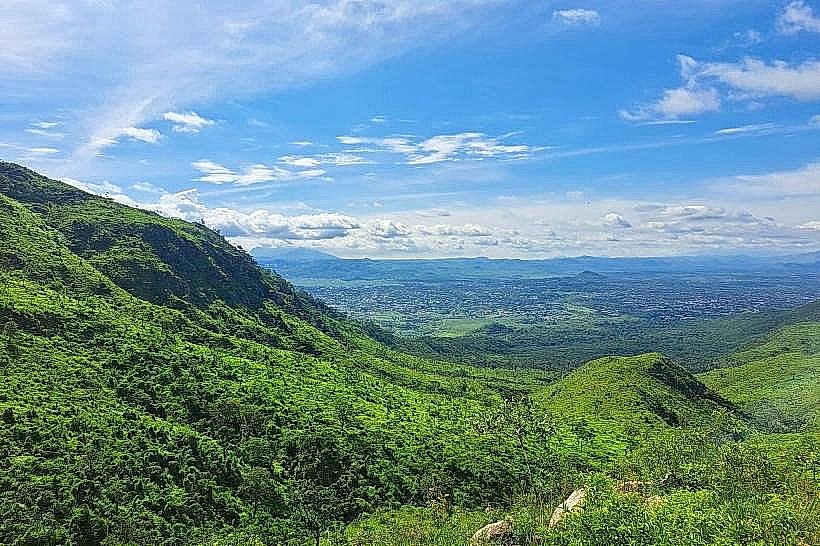
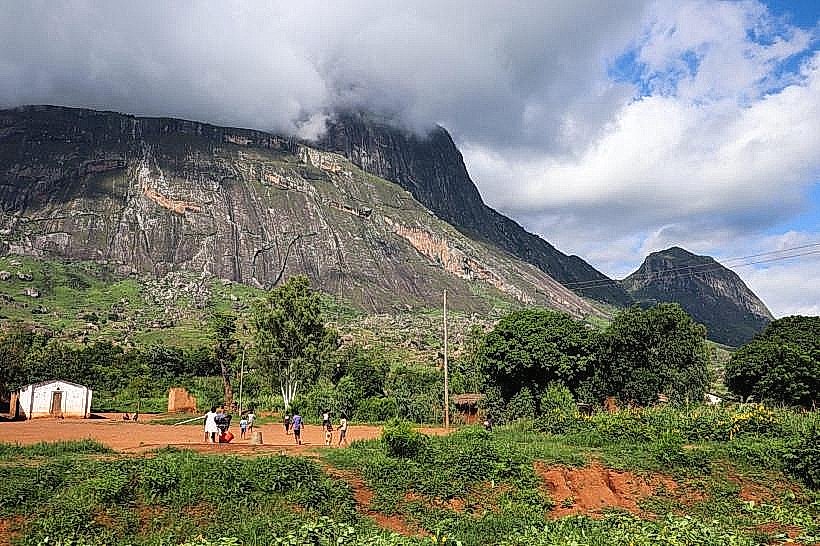
The Thyolo Tea Estates comprise a vast, historic agro-industrial region and agri-tourism destination situated in the Shire Highlands of Southern Malawi. The estates cover a large, contiguous expanse of rolling hill country across the Thyolo District, forming a major geographic and economic corridor positioned between the commercial city of Blantyre and the mountain massif of Mulanje.
Visual Characteristics
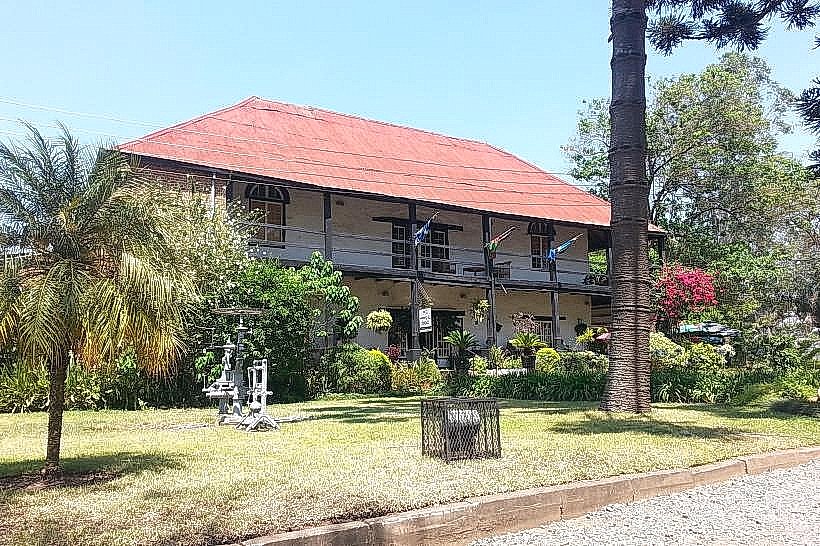
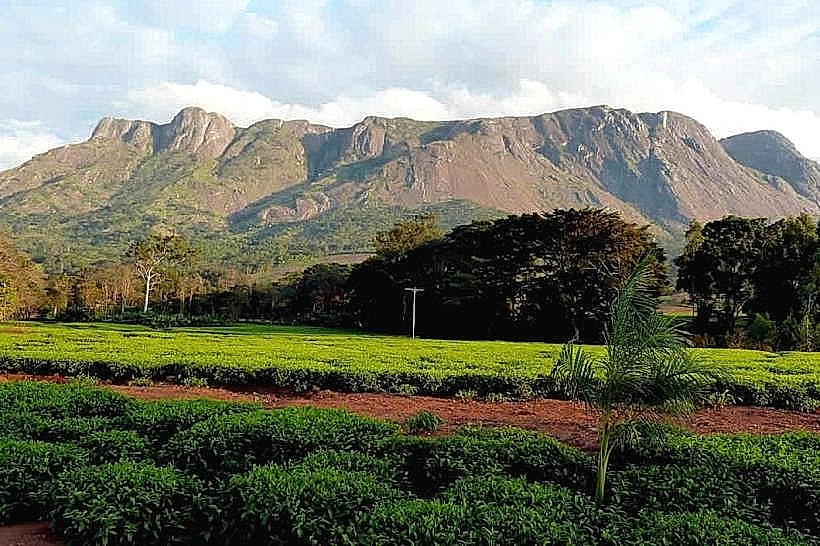
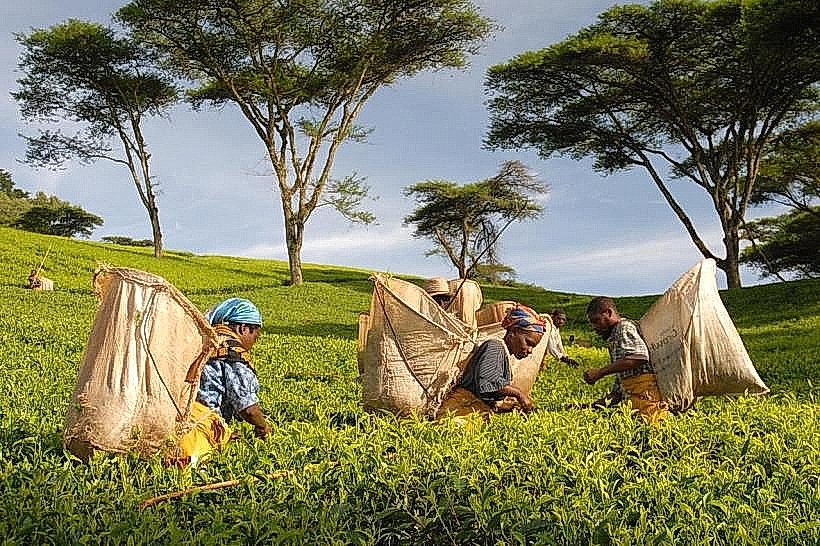
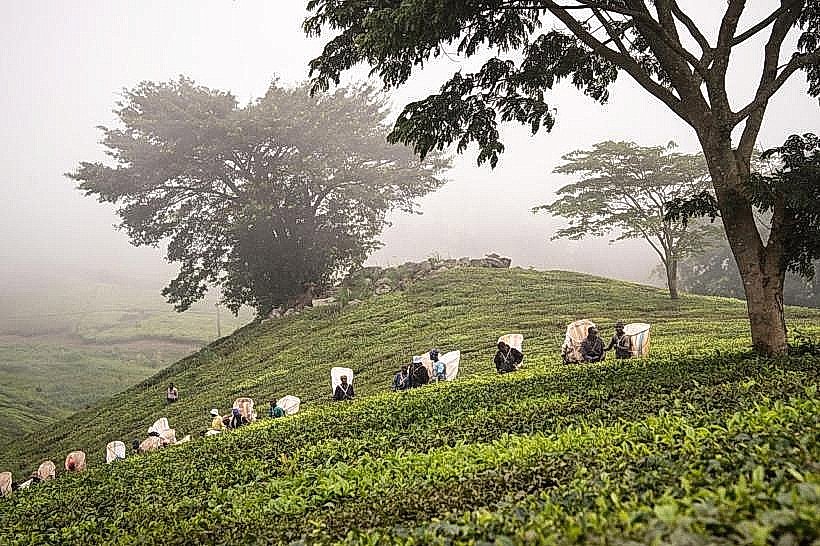
The landmark presents a highly modified, manicured green landscape that mimics a continuous botanical garden scaled across thousands of hectares. The terrain is defined by endless undulating hills blanketed in neatly pruned, bright green tea bushes (Camellia sinensis) maintained at uniform knee-to-waist heights. The agricultural monoculture is broken by pockets of dark green native afromontane rainforest, windbreaks of tall blue gum trees, and stands of macadamia and coffee orchards. The infrastructure features century-old brick and timber factories with corrugated iron roofing, rustic colonial-style bungalows with expansive verandas, and dirt field lanes cutting through the green crop layers where pluckers move carrying large woven bamboo baskets.
Location & Access Logistics
The estates are located approximately 20 to 40 kilometers southeast of Blantyre along the paved M12 highway. Private vehicles access the region by driving south from the Limbe commercial sector onto the M12 road, which winds directly through the primary tea plantation blocks. Well-graded gravel and packed-dirt access tracks branch off the main highway to lead to the individual corporate estates-such as the prominent Satemwa and Conforzi properties-where secure vehicle parking clearings are maintained at the factory sites. Public transit users can catch a local minibus from the primary Limbe terminal bound for Thyolo or Mulanje, disembark at specific estate junctions along the M12 highway, and utilize local motorcycle taxis to traverse the final 1 to 3 kilometers of dirt roads to the main reception offices.
Historical & Ecological Origin
Malawi was the first country on the African continent to establish commercial tea cultivation, with initial experimental plantings introduced by Scottish missionaries in the 1880s before formal commercial production commenced in Thyolo and Mulanje in 1908. Throughout the 1920s, British, Scottish, and Italian planters systematically cleared chunks of the highland forest to establish major corporate estates, including Satemwa (founded by Scot Maclean Kay in 1923) and Conforzi (founded by Italian settler Ignaco Conforzi in 1907). Geologically, the region sits at a high-altitude gradient between 600 and 1,200 meters above sea level within the Shire Highlands, utilizing rich, volcanic red soils and heavy orographic rainfall patterns generated by the nearby Mount Mulanje massif to sustain the deep-rooting crop networks. The industry stands as the nation's second-largest foreign exchange earner after tobacco.
Key Highlights & Activities
Structured agro-tourism experiences represent the primary public activity, highlighted by technical factory tours where visitors trace the mechanical transformation of freshly picked leaves through the withering, rolling, oxidation, drying, and sorting halls. Specialized tea masterclasses and tasting sessions are hosted at the Satemwa estate, allowing participants to sample up to twenty distinct varieties of single-origin black, green, oolong, and white teas. Self-guided and guided trail hiking or mountain biking are common along the extensive, low-traffic estate track networks that wind past high viewpoints overlooking the Lower Shire Valley. Birdwatching is highly active within the adjacent Thyolo Forest Reserve, a rare evergreen montane canopy refuge that shelters endangered avian species such as the Thyolo alethe.
Infrastructure & Amenities
The primary agri-tourism hubs feature highly developed accommodation and hospitality infrastructure. Premium lodging is available within historic, restored 1930s colonial structures, including Huntingdon House and Chawani Bungalow on the Satemwa estate, as well as The Thyolo House boutique hotel on the Conforzi estate. These facilities house permanent public restroom blocks, hot shower installations, and high-end dining halls. Shade is abundant beneath the mature exotic trees growing around the old estate lawns and within the native forest pockets, though the open tea fields offer no protection from elements. Mobile telecommunications connectivity is excellent and stable, with 4G cellular signals blanketed across the entire plantation zone due to the close proximity of the Blantyre-Limbe municipal infrastructure, though 5G remains localized. Full-service restaurants and cafes operate inside the primary lodges, running on mains electricity supplemented by automatic diesel generator backups.
Best Time to Visit
The optimal period for trail movement, landscape photography, and clear views toward Mount Mulanje corresponds with the dry winter season from May to August, when ambient afternoon temperatures range between a cool 15 and 22 degrees Celsius and atmospheric dust is low. Morning hours between 06:00 and 09:30 are highly preferred for field photography to capture the dense morning mists clearing off the green tea rows as local picking crews begin their shifts. The heavy tropical rainy season from November to April stimulates rapid crop growth and displays the greenest scenery, but introduces heavy downpours that cause unpaved field tracks to become muddy, slippery, and challenging for two-wheel-drive vehicles.
Facts & Legends
A distinct operational fact regarding the Thyolo estates is their global role in the mass beverage market; bulk leaf produced across these highlands serves as a primary blending base for major international consumer brands, meaning raw ingredients from Thyolo consistently supply the consumer bags of global companies like Lipton, PG Tips, and Tetley. Local historical lore highlights the cultural fusion embedded in the estates, where the Italian Conforzi family introduced Mediterranean architectural lines and agricultural principles to the British-dominated protectorate in the early twentieth century, establishing a century-long cross-cultural lineage that persists today through garden-to-table culinary fusion features at the historic main farmhouse.
Nearby Landmarks
Thyolo Forest Reserve Boundary – 0.1km South
Thyolo District Administrative Boma – 4.5km Southwest
Chimwenya Game Park (Game Haven) – 18.5km Northwest
Limbe Commercial Sector – 25.0km Northwest
Mount Mulanje Massif Base – 45.0km East