Landmark: René Moawad Garden (Sanayeh)
City: Beirut
Country: Lebanon
Continent: Asia
René Moawad Garden (Sanayeh), Beirut, Lebanon, Asia
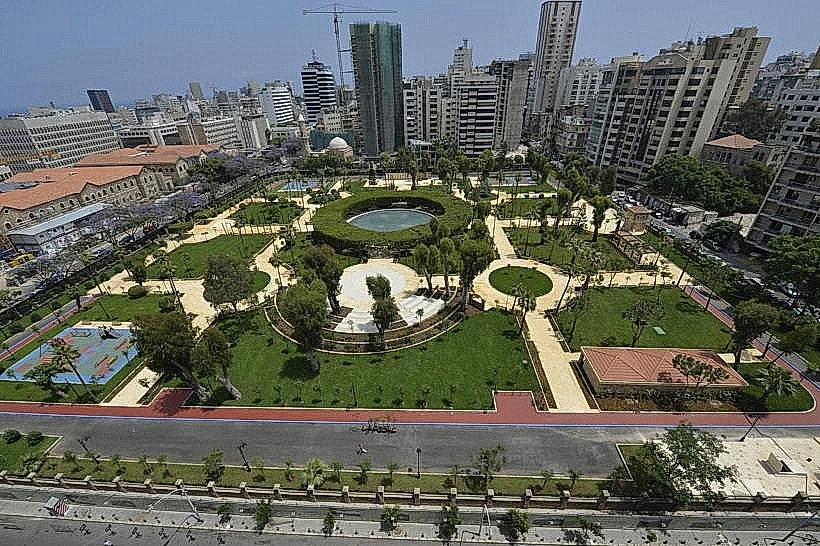
The René Moawad Garden, commonly referred to as the Sanayeh Garden, is one of the oldest and largest public green spaces in Beirut, Lebanon. Located in the Sanayeh district, it covers approximately 22,000 square meters and serves as a primary urban park for the city's residents.
Visual Characteristics
The garden follows a symmetrical layout with wide, paved promenades and circular plazas centered around a landmark Ottoman-era fountain. The vegetation consists of mature Mediterranean flora, including ancient pine trees, cypress, and citrus groves, providing significant canopy cover. The perimeter is defined by wrought-iron fencing and stone walls, while the interior features a mix of sand-covered play areas and smooth concrete paths for cycling.
Location & Access Logistics
The park is bounded by Spears Street to the north and Rue Justinien to the south, roughly 1.5km west of the Beirut Central District. It is accessible on foot from the Hamra and Verdun neighborhoods. While there is no dedicated on-site parking lot, street parking is available on the surrounding side streets, and several private parking structures are located within 300 meters. Public transit users can access the garden via "Service" taxis or vans heading toward the Sanayeh or Hamra hubs.
Historical & Ecological Origin
Commissioned by Khalil Pasha in 1907, the park was originally named the Garden of the Public (Hamidiyeh Public Garden) before being renamed in honor of President René Moawad, who was assassinated nearby in 1989. Architecturally, the central fountain and the surrounding "Sanayeh" complex of buildings represent late Ottoman civil engineering. The garden underwent a multi-million dollar restoration in 2014, which modernized its irrigation and lighting systems while preserving the centenarian trees.
Key Highlights & Activities
The garden is a dedicated car-free zone, making it a hub for jogging, walking, and children’s cycling. The central plaza is a frequent site for public art installations and book fairs. On the northern edge, the park serves as an informal reading area for students from the nearby Lebanese National Library. Dedicated zones for children include modern playground equipment and rubberized safety flooring.
Infrastructure & Amenities
The park is equipped with high-speed 5G cellular coverage and a renovated public restroom facility near the main entrance. Numerous wooden benches and shaded seating areas are distributed along the radial paths. While food vendors are not permitted inside the garden, dozens of cafes, bakeries, and convenience stores are located directly across the street on Spears Street.
Best Time to Visit
The park is open daily from 07:00 to 19:00. The best time for photography is in the early morning or late afternoon when sunlight filters through the pine canopy. Spring (March to May) is the optimal month for weather, as the garden is in full bloom and the humidity remains low. Weekend afternoons are the busiest periods, often attracting local families and recreational groups.
Facts & Legends
During the 2006 conflict and several historical periods of displacement, the Sanayeh Garden served as a sanctuary for refugees, with local NGOs setting up makeshift kitchens and shelters under its trees. A local "secret" is the Ottoman fountain, which was originally intended to display the Sultan’s tughra (calligraphic monogram) and served as the city’s symbolic reservoir when it was first inaugurated.
Nearby Landmarks
Lebanese National Library (0.1km North)
Ministry of Interior (0.2km West)
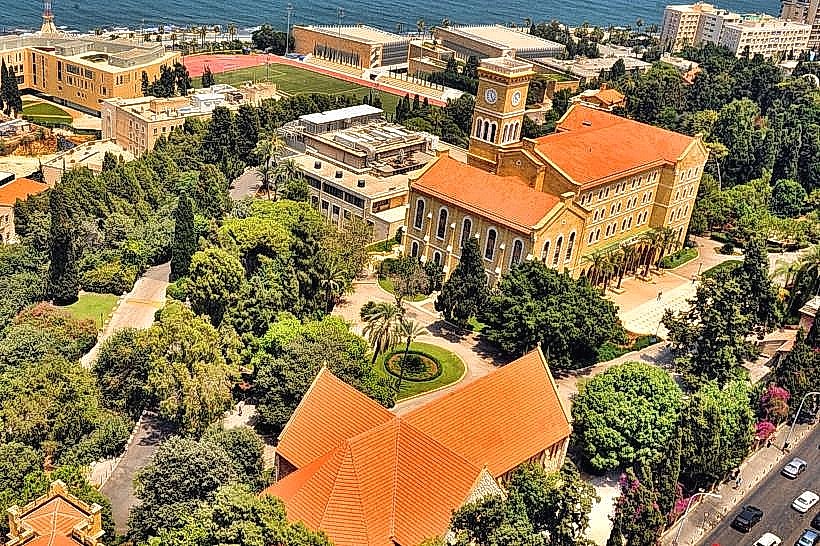
American University of Beirut (AUB) (1.2km Northwest)
Hamra Street (0.8km North)
Grand Serail (1.1km East)