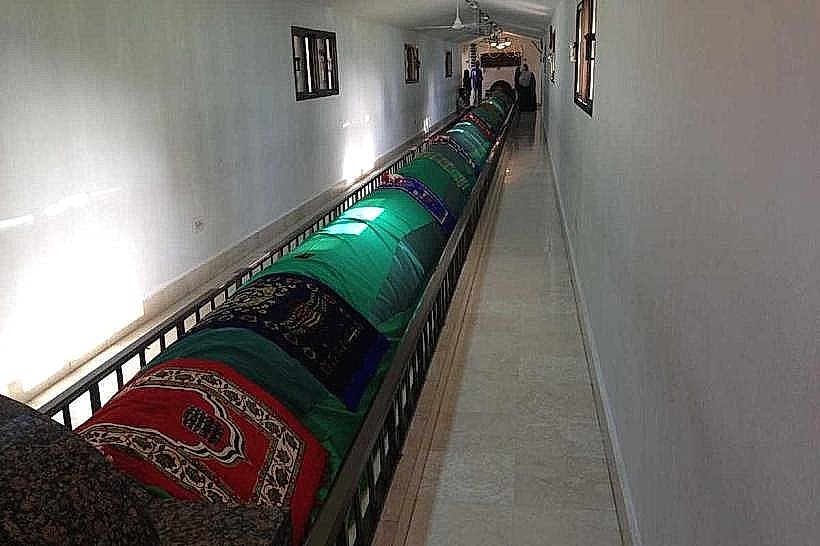
Landmark: Tomb of Prophet Umran
City: Salalah
Country: Oman
Continent: Asia
Tomb of Prophet Umran, Salalah, Oman, Asia
The Tomb of Prophet Umran is a religious site located in the Al Qard district of Salalah, situated in the southern Dhofar region of Oman. The mausoleum is positioned near the city center, approximately 1 kilometer north of the Haffa Souq and the Sultan’s Palace.
Visual Characteristics
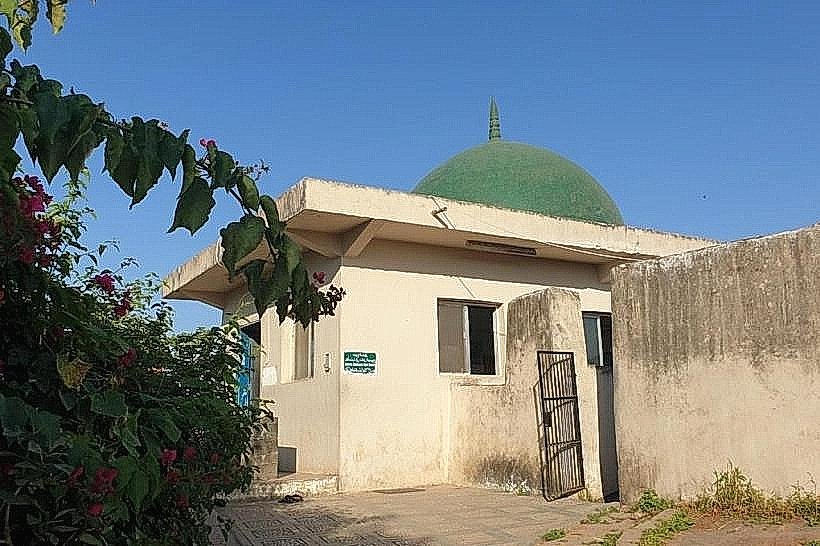
The landmark is a long, low-profile rectangular building finished in white lime plaster with a green-painted roof. The most defining feature is the interior sarcophagus, which measures approximately 12 meters in length and is draped in a green ceremonial cloth. The floor is covered in traditional patterned carpets, and the interior walls are largely unadorned, featuring small windows that provide natural light. The tomb is surrounded by a fenced garden courtyard containing well-maintained grass and small shrubs.
Location & Access Logistics
The site is located just off Ar Rubat Street and is easily accessible via the Al Matar Street corridor. It is approximately a 15-minute drive from Salalah International Airport. A paved parking lot is available directly outside the entrance gate. While no specific bus line stops at the gate, the site is a short walk from the central Salalah bus stations and is a standard destination for local taxis.
Historical & Ecological Origin
The current structure was built to house a grave traditionally attributed to the Prophet Umran, identified in various traditions as the father of the Virgin Mary or the father of Moses. The site is situated on the coastal Salalah plain, a fertile area composed of alluvial silt and limestone deposits. The architectural style is consistent with 20th-century Dhofari religious renovations, focusing on functional, minimalist masonry.
Key Highlights & Activities
Visitors can enter the mausoleum to observe the 12-meter grave, which is one of the longest in the region. The surrounding garden offers a quiet area for reflection. Photography is permitted in the outdoor courtyard and garden areas, but silence and modest dress are strictly required inside the tomb room. Many visitors also stop to observe the small mosque located on the same grounds.
Infrastructure & Amenities
The site includes a small mosque for prayer and basic public restrooms for visitors. Shaded seating is available in the outdoor garden area. There are no food vendors or gift shops on the immediate premises, though the site’s central location means numerous restaurants and grocery stores are within 500 meters. Cell phone signal (4G/5G) is strong and reliable throughout the site.
Best Time to Visit
The best time to visit is during the winter months (October to April) for comfortable temperatures, or during the Khareef (July to September) for the lush green courtyard scenery. For photography, the late afternoon provides soft lighting on the white exterior walls. The site is typically open to the public daily from early morning until sunset, though it may close briefly during prayer times.
Facts & Legends
A specific local oddity is the extreme length of the grave; local tradition suggests it reflects the physical height of people from ancient times, or that the exact location of the body was unknown, requiring a long monument to ensure the remains were covered. A common legend states that the site was discovered through a dream by a local resident centuries ago. A tip for visitors is to check the local prayer schedule, as the gates may be closed to non-worshippers during the noon (Dhuhr) and afternoon (Asr) prayers.
Nearby Landmarks
Sultan Qaboos Mosque (1.5km Northwest)
Haffa Souq (1.2km South)
Al Hosn Palace (1.3km South)
Salalah Gardens Mall (3.5km West)