Landmark: Mvuu Camp
City: Zomba
Country: Malawi
Continent: Africa
Mvuu Camp, Zomba, Malawi, Africa
Mvuu Camp is a permanent safari lodging facility situated on the eastern bank of the Shire River within the central section of Liwonde National Park. The camp is located in the Machinga District of southern Malawi, approximately 30km north-northwest of Liwonde township.
Visual Characteristics
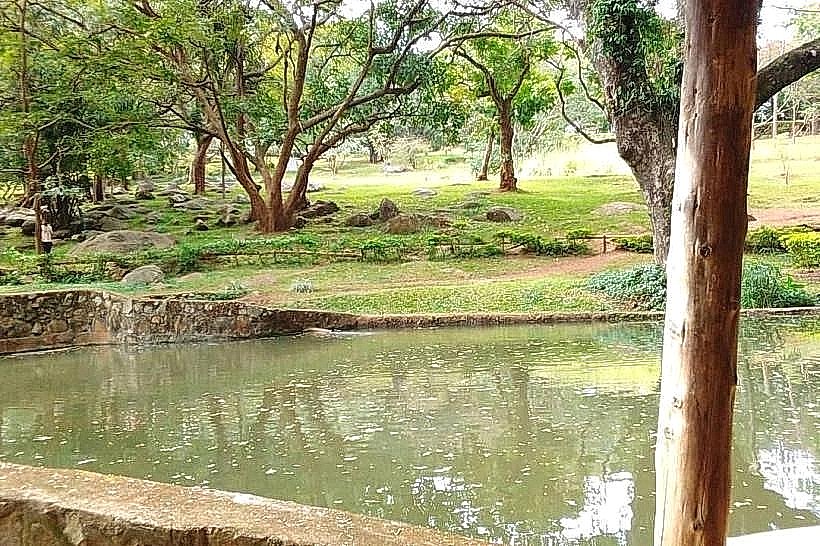
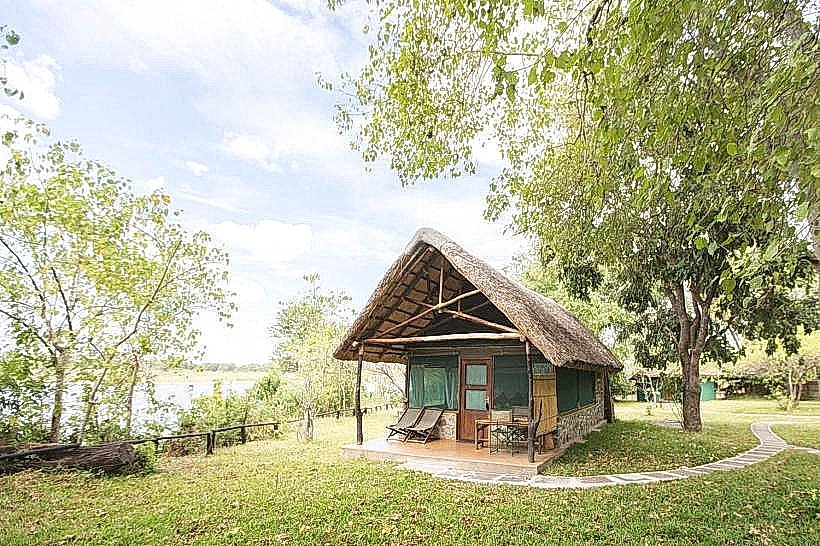
The landmark consists of stone-and-thatch chalets, canvas walk-in tents, and a central timber-and-thatch main pavilion built on elevated wooden decks under a dense canopy of mature fever trees, baobabs, and wild mango trees. The color palette incorporates natural canvas sand-tones, weathered gray wood, and local thatch roofing. The camp overlooks a broad, slow-moving stretch of the Shire River, which displays a murky green color and is flanked by tall reed beds and muddy banks. Stone walkways connect the individual living quarters to the main dining area, which features an open-sided layout to allow panoramic views of the water.
Location & Access Logistics
The primary access route requires driving to the western bank staging point on the Shire River, known as the Ulongwe or Nanthomba gate. From the main paved M3 highway at Ulongwe trading center, visitors travel east along a 14km unpaved dirt track to reach the river edge. From this point, a mandatory 10-minute motorized boat transfer operated by the camp transports guests across the river channel to the eastern bank. Alternatively, the site can be reached via a rough 4x4-only dirt track through the park's southern gate, a journey of approximately 32km that is often impassable during wet periods. A private gravel airstrip is located 1.5km east of the camp for chartered light aircraft. Public transport does not serve the camp or the river crossings directly.
Historical & Ecological Origin
Mvuu Camp was established in the early 1990s by Central African Wilderness Safaris as one of the first eco-tourism concessions within Liwonde National Park. Its original purpose was to provide a sustainable financial framework for park conservation through low-impact tourism. Ecologically, it sits directly inside a riverine forest and floodplain ecosystem that supports a dense population of hippopotamuses-from which the camp derives its name, "Mvuu," meaning hippopotamus in the Chichewa language.
Key Highlights & Activities
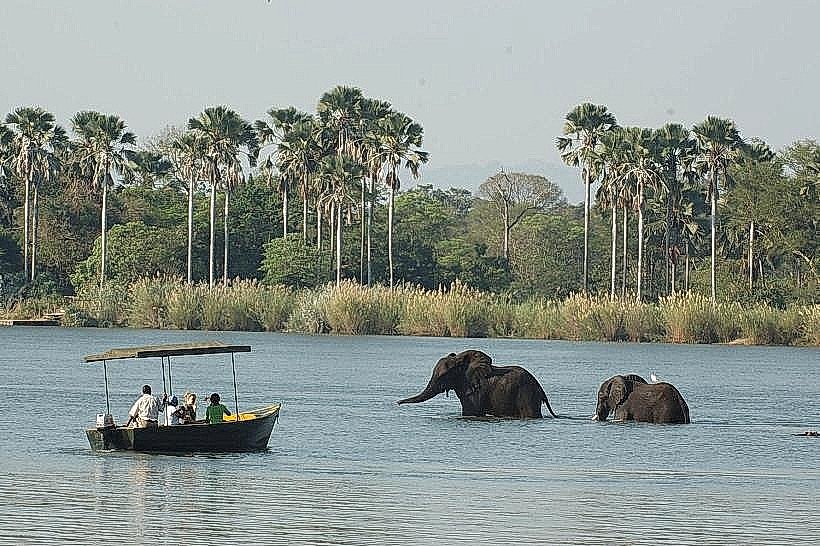
Motorized boat safaris depart daily from the camp jetty to observe aquatic wildlife along the river channels. Open-vehicle game drives are conducted in the mornings and evenings within the surrounding mopane woodlands. Guided walking safaris led by armed national park scouts depart directly from the camp perimeter. A dedicated hide and raised viewing platform near the riverbank allow for stationary wildlife photography.
Infrastructure & Amenities
The camp features semi-developed safari infrastructure, including private flushing toilets, hot showers powered by solar water heaters, and an outdoor swimming pool. The main lodge building houses a restaurant, a fully stocked bar, and a small wildlife reference library. Natural shade is abundant due to the heavy forest canopy. Cellular phone signal (4G) is weak and inconsistent, fluctuating depending on atmospheric conditions across the open river, while limited satellite internet is restricted to the central reception area.
Best Time to Visit
The dry season from May to October is the optimal time for visitation, as mammals concentrate in high numbers along the riverbanks and the dirt approach roads are fully dry. The golden hours of early morning (06:00 to 08:00) and late afternoon (16:00 to 18:00) provide the best lighting for river-based wildlife photography. The wet season from November to April brings high humidity and dense foliage that restricts visibility, though it offers peak conditions for bird watching due to the arrival of migratory species.
Facts & Legends
The camp's perimeter is entirely open to the national park, meaning elephants, hippos, and warthogs regularly graze between the chalets at night; consequently, guests are legally required to be escorted by trained watchmen (askaris) after dark. A verified historical oddity is that the camp once served as a base of operations for the massive "500 Elephants" translocation project, during which specialized capture teams crated and moved hundreds of elephants from the adjacent floodplains to northern Malawi.
Nearby Landmarks
Mvuu Lodge – 0.4km North
Nanthomba Staging Point – 0.6km West
Shire River Central Channel – 0.1km West
Livingstone's Baobab – 3.5km South