Landmark: Williams Falls
City: Zomba
Country: Malawi
Continent: Africa
Williams Falls, Zomba, Malawi, Africa
Williams Falls is a picturesque forest cascade, natural landmark, and hiking destination located on the upper tableland of the Zomba-plateau_zomba" class="underline">Zomba Plateau. Situated within the state-protected Zomba Forest Reserve in the Southern Region of Malawi, the waterfall is one of the primary hydrological features along the mountain’s extensive network of alpine streams.
Visual Characteristics
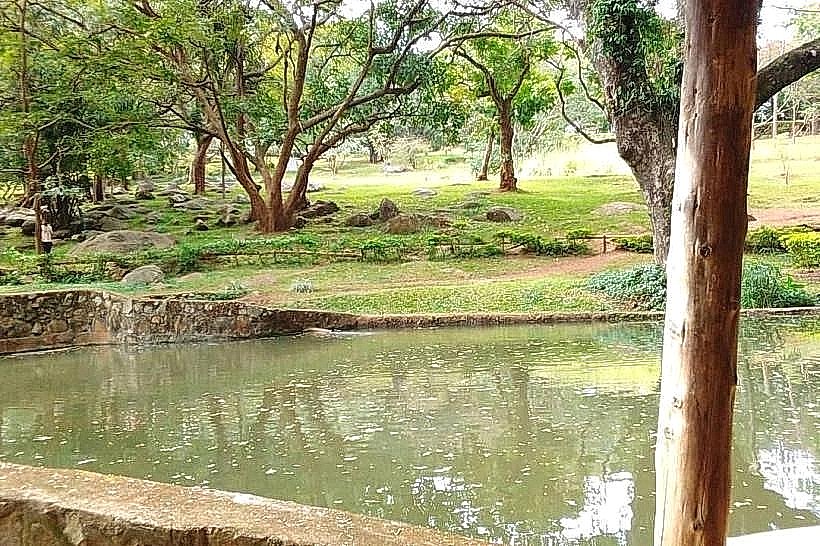
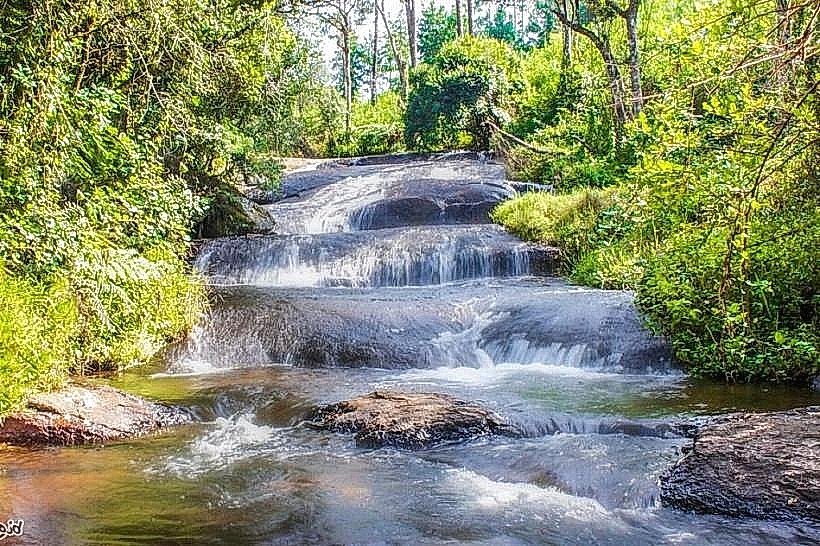
The landmark is characterized by a wide mountain stream that flows over a series of broad, stepped granite and syenite rock tiers rather than a single vertical drop. The water rolls gently down these smooth rock benches into a shallow, clear gravel basin at the base. The immediate environment is highly shaded and tranquil, completely enclosed by a dense, humid canopy of indigenous riverine trees, giant tropical ferns, and moss-covered banks. Well-worn earthen footpaths and rustic wooden footbridges snake along the stream edges, while the visual profile transitions from misty white cascades to deep, dark green forest shadows.
Location & Access Logistics
The waterfall is situated on the northwestern sector of the Zomba Plateau top, approximately 4 kilometers northwest of the Sunbird Ku Chawe Inn. Private vehicles approach the area from Zomba city via the paved Up Road, tracking onto the unpaved but well-graded interior forestry gravel roads once on the plateau. A dedicated clearing near the trail entrance serves as a rustic dirt parking zone. Public transit users can catch a minibus from the central Zomba bus depot to the mountain base and contract a private taxi to reach the upper plateau plateau tracks. From the designated vehicle drop-off clearing, the pedestrian walking route down to the falls measures roughly 150 meters along a sloped forest track.
Historical & Ecological Origin
The falls are formed by the upper reaches of the Mulunguzi River, which drains the high alpine marshes and crystalline springs of the Zomba Massif before gathering volume to feed the large municipal Mulunguzi Dam downstream. Geologically, the cascade passes over highly resilient syenite rock layers exposed by millions of years of water erosion slicing through the igneous mountain intrusion. The surrounding ecosystem represents a rare montane evergreen forest refuge that plays a vital role in regulating the regional microclimate and filtering the freshwater source before it descends to the plains below.
Key Highlights & Activities
Trail hiking and nature photography represent the primary public activities at the site. The waterfall functions as a central focal point along the Mulunguzi Nature Trail, a popular forest loop path that connects several plateau water installations. Visitors can safely approach the edge of the shallow pool to wade in the cold mountain water or utilize the rocky banks for picnics. Birdwatching is highly active within the dense overhanging vegetation, hosting resident montane specialists such as the white-starred robin, green-headed oriole, and various colorful sunbird lineages attracted to the damp riverine flora.
Infrastructure & Amenities
The site operates under a low-intervention natural asset framework managed by the Department of Forestry and lacks permanent visitor interpretation buildings, commercial concessions, or modern public restroom blocks at the direct falls clearing. Basic wooden benches and a rustic footbridge provide the only structural amenities. Continuous shade is highly abundant due to the heavy, multi-layered forest canopy, creating a cool microclimate even during midday heat. Mobile telecommunications connectivity is weak and highly localized; while outward-facing ridges of the plateau catch stable 4G network tracking, the low-lying ravine containing Williams Falls suffers from significant signal drops, and 5G infrastructure is entirely non-existent.
Best Time to Visit
The optimal period for visiting Williams Falls and securing sharp forest photography corresponds with the transition and dry winter months from April to August, when ambient temperatures on the plateau hover comfortably between 13 and 18 degrees Celsius and trails are dry. Morning hours between 08:30 and 11:30 are highly preferred to capture natural sunlight filtering through the dense canopy layers onto the cascading water. The wet summer season from November to April significantly increases the water volume, transforming the gentle cascades into a roaring torrent, but introduces slick clay walking conditions and dense mountain mists that reduce visibility along the interior access roads.
Facts & Legends
A distinct geological attribute of the stream tracking through Williams Falls is its exceptional purity; the high-altitude volcanic rock layers act as a natural macro-filter, ensuring the water remains entirely free of sediment and rich in minerals before it enters the municipal reservoir. Local forest lore preserves accounts from early mid-twentieth-century forestry teams who utilized the cool, deeply shaded granite basin at the foot of the falls as a natural refrigeration pool to store sensitive botanical seeds and cuttings gathered from the deep afromontane cloud forests before they were transported down to the primary test nurseries at the base of the mountain.
Nearby Landmarks
Mulunguzi River Nature Trail Bridge – 0.1km East
Mandala Falls Cascade – 1.8km Southeast
Mulunguzi Dam Reservoir Rim – 2.2km Southeast
Chingwe’s Hole Sinkhole – 3.5km West-Northwest
Sunbird Ku Chawe Inn Cliff Edge – 4.0km Southeast