Landmark: Zomba State House
City: Zomba
Country: Malawi
Continent: Africa
Zomba State House, Zomba, Malawi, Africa
The Zomba State House is a prominent historic government complex, presidential palace, and state-protected heritage site. Situated on the lower, densely forested slopes of the Zomba Plateau within the former colonial capital city of Zomba, the palace historically served as the primary official residence for the heads of state of both the Nyasaland Protectorate and the Republic of Malawi.
Visual Characteristics
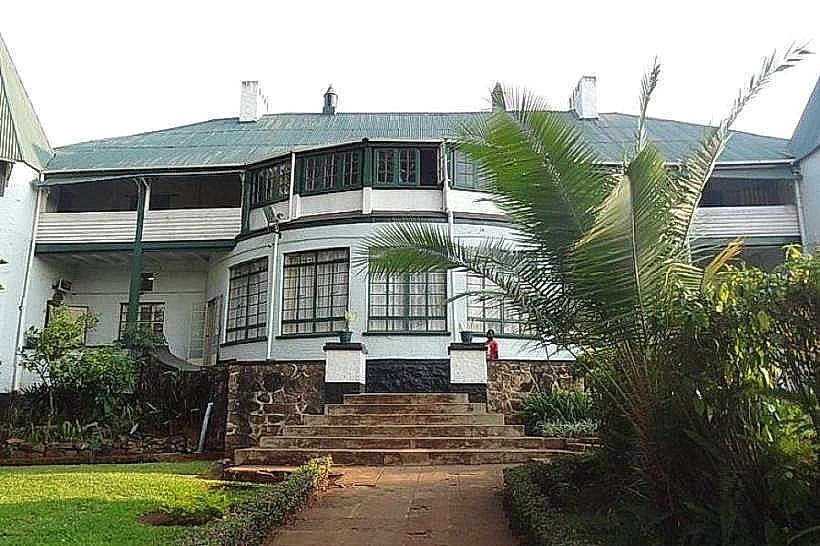
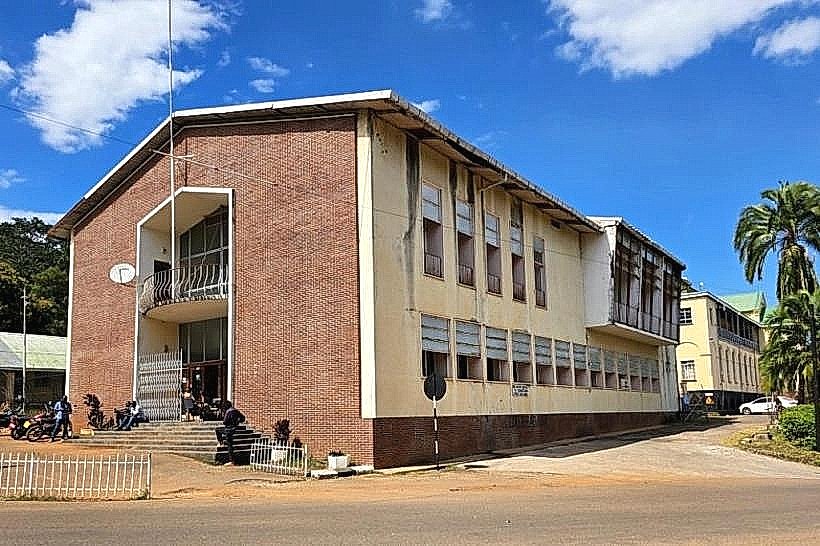
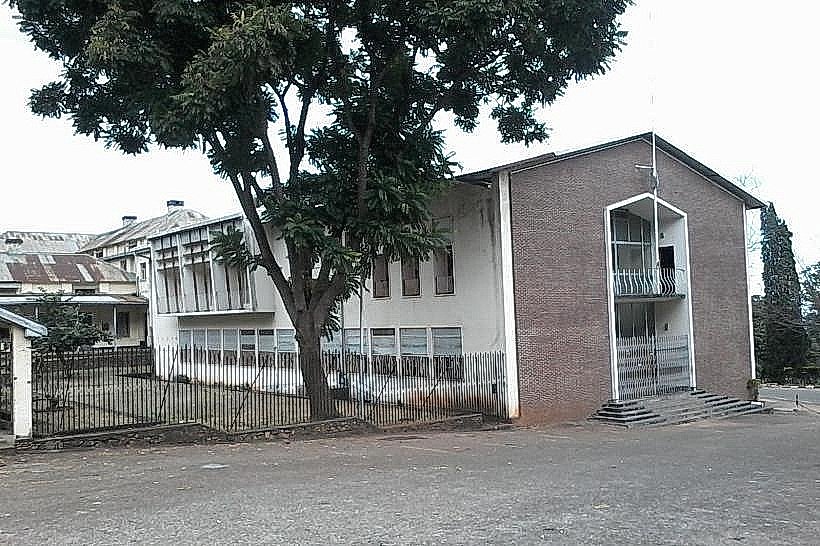
The landmark exhibits grand, late nineteenth-century British colonial-imperial architecture. The sprawling, multi-story brick superstructure features a light-yellow painted facade accented by a continuous row of high ground-floor brick arches forming an expansive lower veranda. The second level integrates a formal, columned balcony running the length of the wing, secured by decorative cross-patterned white balustrades. The pitched roofs are covered with corrugated iron and slate tiles, punctuated by prominent stone chimneys. The palace sits within a massive, highly secure estate defined by manicured formal gardens, terraced laws, stone perimeter walls, and old stands of indigenous and exotic timber trees that screen the residence from public view.
Location & Access Logistics
The estate is positioned approximately 2.5 kilometers northwest of the Zomba municipal commercial core, situated off the primary Up Road route leading toward the plateau rim. Private vehicle access is restricted exclusively to official state delegations via heavily fortified, guard-controlled security gates along the main perimeter roads, which open into sweeping asphalt driveways and secure inner courtyards. Public transit users can utilize local minibuses running the inner Zomba loops, disembarking at the upper municipal junction boundaries. Because the complex remains an active, high-security state asset, the immediate grounds, inner parking zones, and residential wings are strictly closed to general public traffic, unarranged tourist entry, and pedestrian transit.
Historical & Ecological Origin
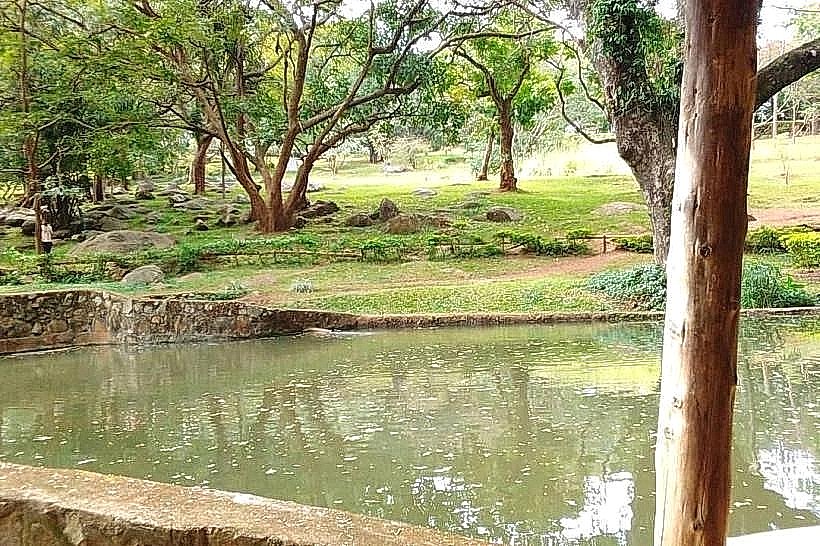
The palace evolved from the original administrative offices established by Sir Harry Johnston following the formal proclamation of the British Central Africa Protectorate in 1891. As administrative needs expanded, the site was systematically built out into a grand, multi-wing Government House to reflect British imperial authority, serving as the official seat of successive colonial governors. Following national independence in 1964, the property became the definitive State House and primary official residence of Malawi's first president, Dr. Hastings Kamuzu Banda, who significantly expanded the internal residential quarters and secure borders. Ecologically, the massive, strictly protected estate acts as an untouched environmental sanctuary at the foot of the Zomba Plateau, preserving old-growth afromontane tree species, safeguarding local stream catchment zones, and functioning as a secure habitat for native bird and small mammal populations away from urban development.
Key Highlights & Activities
State functions, international diplomatic receptions, and official executive summits represent the primary operational activities within the secure complex. While the active residential zones are legally barred from casual exploration, the palace holds massive historical significance as the administrative nucleus where the executive branches of the early independent Malawian state operated for three decades. The grand reception halls, cabinet meeting rooms, and formal state dining wings contain a rich preservation of mid-twentieth-century furniture, historic portraits, and state gifts reflecting Malawi's international diplomatic trajectory.
Infrastructure & Amenities
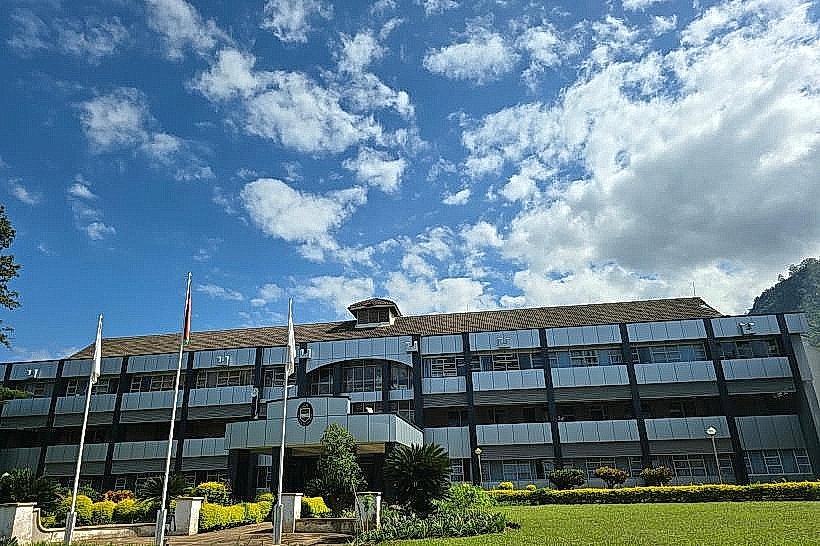
The state complex features highly developed, self-contained civil and security infrastructure. The interior contains comprehensive executive suites, administrative staff offices, modern security monitoring centers, and independent utility connections linked to specialized backups. Broad structural shade is provided by the massive double-tier verandas and the dense canopy of ancient cedar, mahogany, and pine trees framing the lawns. Mobile telecommunications connectivity is exceptional, with heavily reinforced 4G and 5G network signals active across the entire estate. Complete dining, mechanical maintenance, and medical triage facilities operate internally to support the resident head of state and the defending military detachment, running on independent mainlines and high-capacity automated standby generators.
Best Time to Visit
The exterior gates and surrounding forested approaches can be viewed during the dry winter season from May to August, when ambient temperatures range comfortably between 15 and 21 degrees Celsius and atmospheric clarity is optimal for observing the building elevations from allowable long-range vantage points. Morning hours between 08:30 and 11:00 offer clear sunlight on the primary southeastern facades, though any attempts at close-range photography or unauthorized lingering near the outer security barriers are strictly forbidden by state security protocols.
Facts & Legends
Local administrative history notes that despite the formal relocation of the national capital to Lilongwe in 1975 and the subsequent construction of the massive New State House (Kamuzu Palace), Dr. Hastings Kamuzu Banda frequently chose to return to the Zomba State House for extended periods, preferring its cooler mountain microclimate and historical layout over the modern capital structures. Regional political lore often highlights the complex as a site of intense twentieth-century political secrecy, with rumors persisting among local guides regarding the existence of secure underground tactical bunkers and reinforced tunnel linkages built into the granite foundations of the mountain base to facilitate emergency evacuation into the deep ravines of the Zomba Plateau.
Nearby Landmarks
Old Residency of Nyasaland (Masongola) – 1.1km East-Southeast
Mulunguzi River Gorge Cascades – 1.2km East
Zomba Botanical Gardens Base – 1.4km Southeast
Old Parliament Building (High Court) – 1.8km Southeast
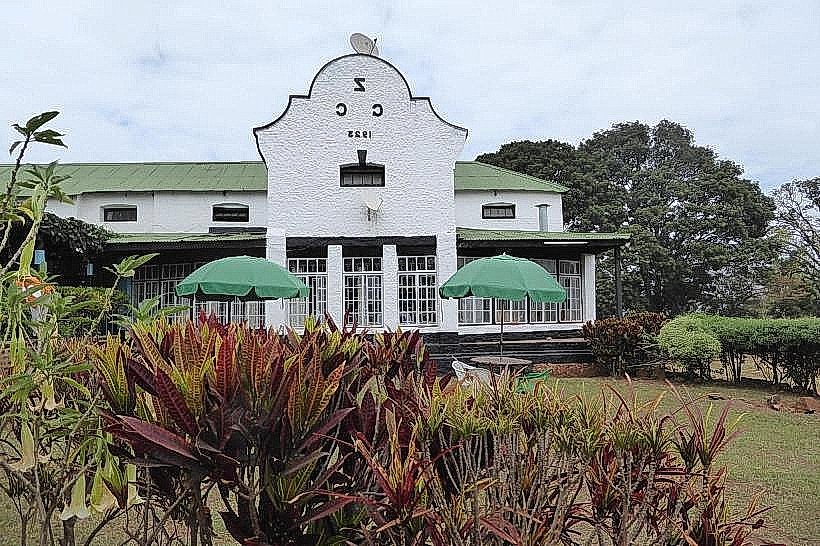
Zomba Gymkhana Club Grounds – 1.9km Southeast