Landmark: Old Residency of Nyasaland
City: Zomba
Country: Malawi
Continent: Africa
Old Residency of Nyasaland, Zomba, Malawi, Africa
The Old Residency of Nyasaland, locally designated as Masongola, is a historic government building, state-protected heritage monument, and administrative artifact. Situated on the lower slopes of the Zomba-plateau_zomba" class="underline">Zomba Plateau within the former colonial capital city of Zomba, the complex represents the oldest surviving purpose-built British administrative structure in Malawi, epitomizing the formal establishment of imperial governance in the region.
Visual Characteristics
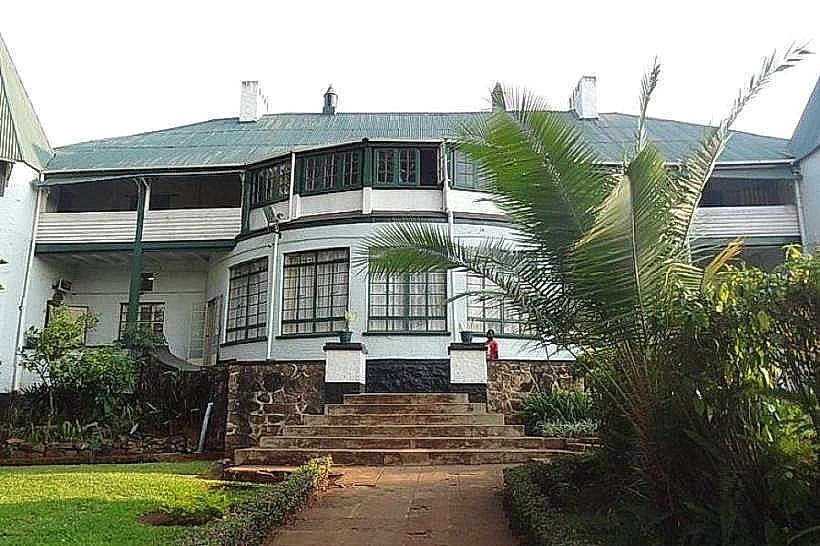
The landmark exhibits late nineteenth-century British colonial-fortified architecture, presenting a highly distinct structural profile designed specifically to resist localized military sieges. The primary single-story brick superstructure is anchored at either end by two prominent, symmetrical hexagonal brick towers featuring narrow defensive vertical window slits. The exterior walls are composed of thick, locally fired red clay bricks bound with lime mortar, resting on a elevated stone masonry foundation. The expansive roof, originally thatched with local dried grass, features pitched corrugated iron sheeting installed to secure long-term structural integrity. The surrounding grounds merge cleanly into a manicured hillside layout defined by terraced lawns, packed gravel pathways, and large stands of exotic and indigenous trees.
Location & Access Logistics
The facility is situated approximately 1.5 kilometers north-northwest of the Zomba city center, positioned directly on the banks of the upper Mulunguzi River along Mkulichi Road. Private vehicles approach the property from the commercial hub by driving north on the primary M3 highway, tracking northwest onto Up Road toward the Zomba Plateau, and turning right onto Mkulichi Road to reach the gated entrance. Paved parking spaces are available immediately adjacent to the building’s western facade. Public transport commuters can catch a local municipal minibus from the central Zomba bus terminal to the inner civic loop near the botanical gardens, completing the final approach via an uphill pedestrian walk of 800 meters along paved suburban tracks.
Historical & Ecological Origin
The consulate building was commissioned in 1886 by Captain Albert Hawes, the second British Consul to the territories of Lake Nyasa, to replace temporary thatched shelters with a permanent state headquarters. The building was constructed at a cost of 600 sterling pounds by John Buchanan, Zomba’s first European agricultural entrepreneur, and completed in 1888. Following the formal declaration of the British Central Africa Protectorate in 1891, the complex became the official residence and office of the first Commissioner and Consul-General, Sir Harry Johnston, effectively establishing Zomba as the national administrative capital. Geologically, the site occupies a well-watered, high-drainage alluvial ridge within the Shire Highlands, sitting at an altitude gradient that provided early colonial officials with a cooler, malaria-mitigating microclimate relative to the low-lying Shire Valley floor.
Key Highlights & Activities
Historical architectural exploration and photography represent the primary public activities at the site. Visitors can inspect the structural layout of the main dining room, which served a critical historical role as the first formal debating chamber for the Nyasaland Legislative Council following its establishment in 1907. The adjacent exterior parkland tracks facilitate guided walking tours through the historical garden terraces, which were mapped out in 1889 through a scientific collaboration between Sir Harry Johnston and the pioneer botanist Alexander Whyte. This property directly birthed the foundational collection of the adjoining Zomba Botanical Gardens.
Infrastructure & Amenities
The structural footprint has undergone functional evolution, transitioning over the decades from a state residency to a government-managed transit hostel in 1949, and subsequently modifying into the privately operated Hotel Masongola complex. The property contains modern indoor plumbing, public restroom installations, and fully functional hospitality rooms integrated within the old brick wings. Deep architectural shade is provided by the wide corrugated metal roof overhangs and under the dense canopy of ancient cedar and mahogany trees growing inside the residential perimeter. Mobile telecommunications connectivity is exceptional, with stable 4G and 5G network signals generated directly by the municipal transmitters operating within the Zomba civic core. Hot meals, beverages, and full dining amenities are supplied continuously by the hotel's on-site restaurant facility, which runs on mains electricity backed by automated standby generators.
Best Time to Visit
The optimal period for capturing external architectural photography and touring the historic gardens corresponds with the dry winter season from May to August, when ambient afternoon temperatures hover comfortably between 15 and 20 degrees Celsius and atmospheric dust is low. Morning hours between 08:30 and 11:30 are highly preferred for structural visualization to ensure that natural sunlight directly illuminates the primary brick facades and hexagonal tower structures without creating the harsh, high-contrast shadows typical of midday. The site remains accessible daily to both accommodated guests and historical researchers throughout the year.
Facts & Legends
The prominent architectural inclusion of the two flanking defensive towers with narrow window slits was directly dictated by geopolitical instability during the late 1880s, when the early British administrative node was under constant threat of armed attack from powerful regional slave-trading syndicates operating along the Yao and Swahili trade tracks. Local historical lore notes that the rich, deep-red color scheme of the interior woodwork was achieved using organic stains derived from native wild berries and indigenous hardwood sap collected by Buchanan's laborers during the initial clearance of the Mulunguzi riverine thickets, establishing a unique material baseline that survived multiple structural renovations over the past century.
Nearby Landmarks
Zomba Botanical Gardens Base – 0.3km Southeast
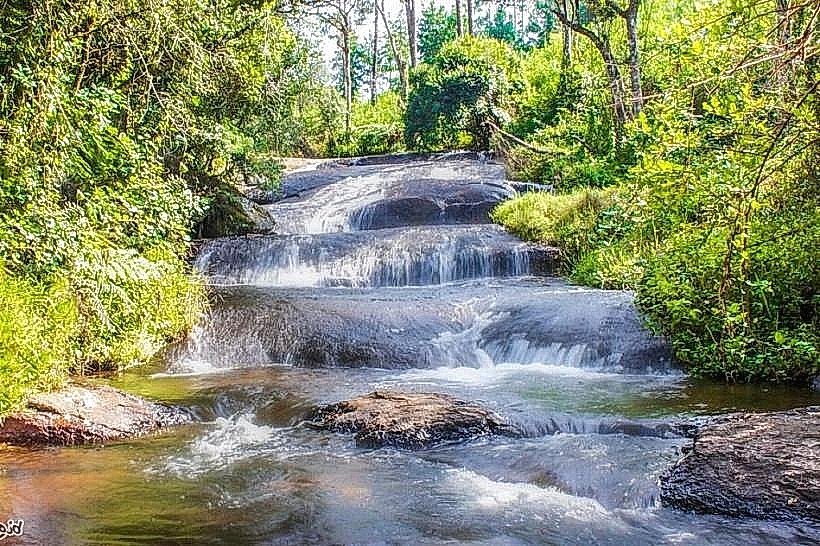
Mulunguzi River Gorge Cascades – 0.4km North
Old Parliament Building (High Court) – 0.6km South-Southeast
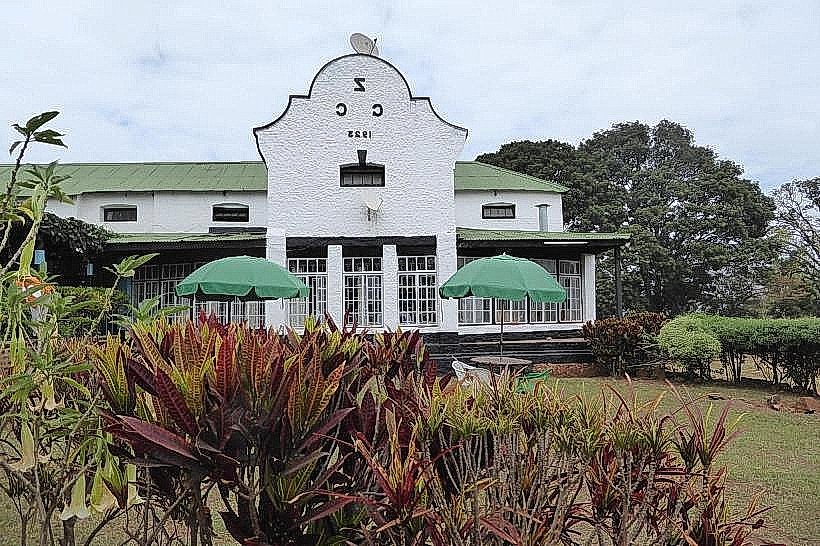
Gymkhana Club Historic Clubhouse – 0.7km Southeast
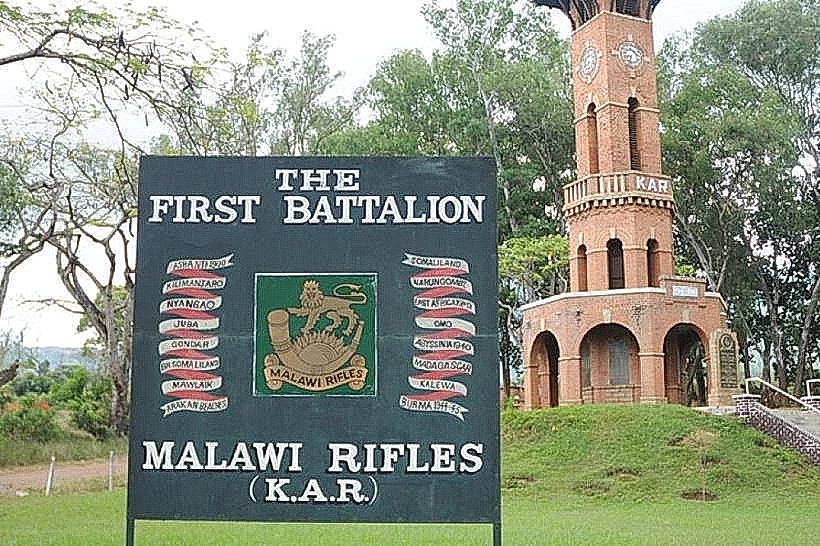
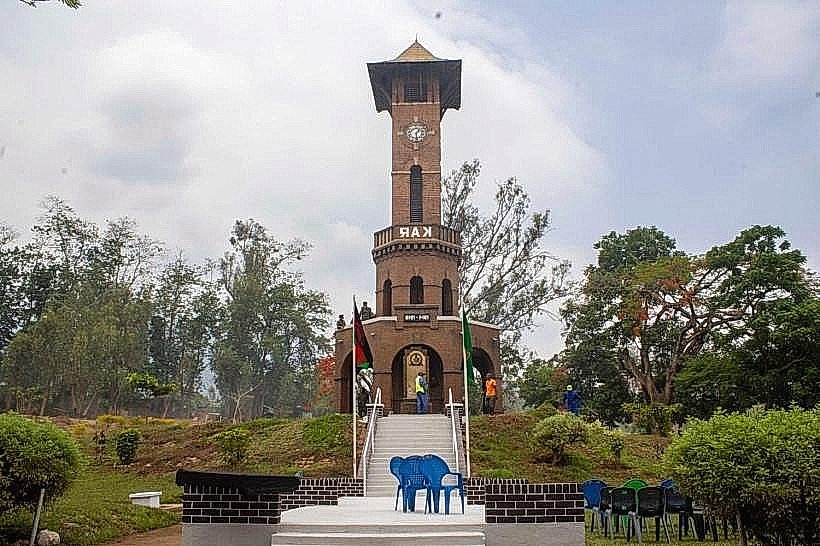
King's African Rifles Monument – 1.8km Northeast