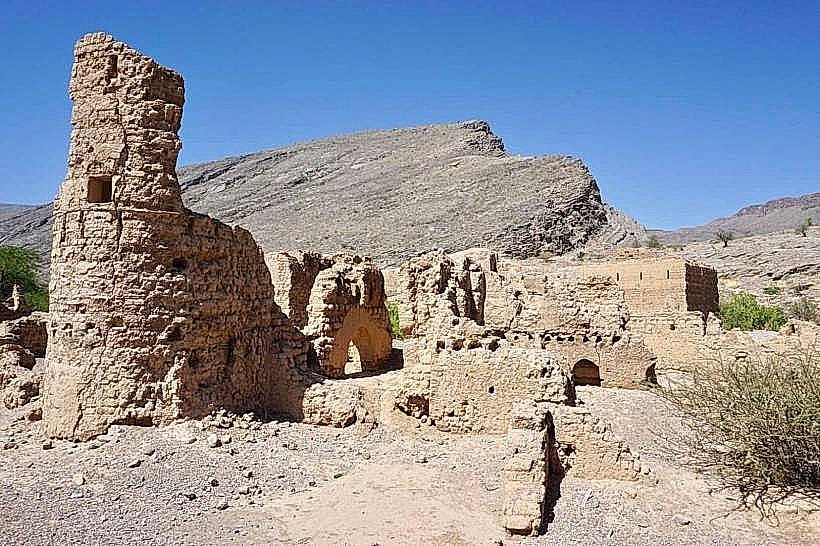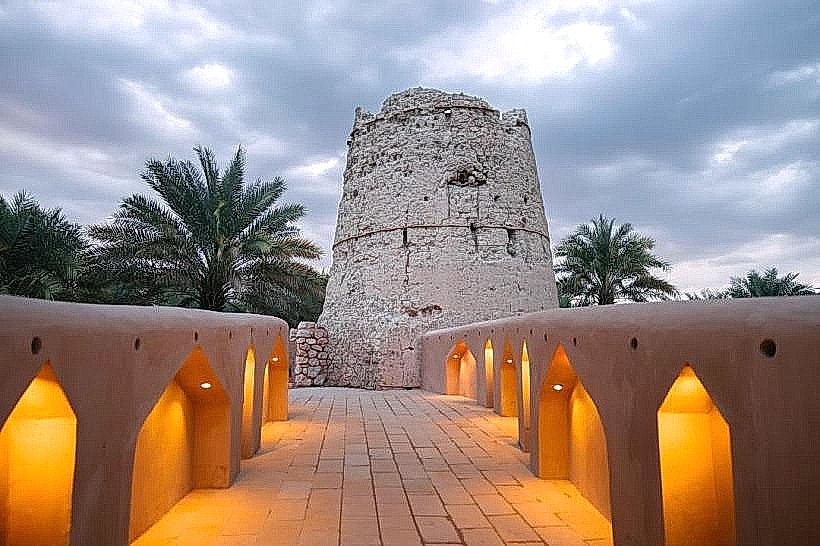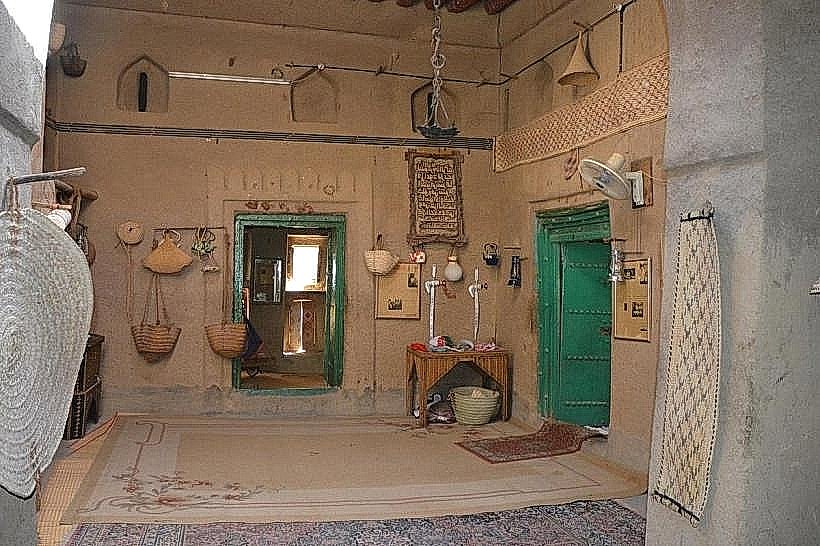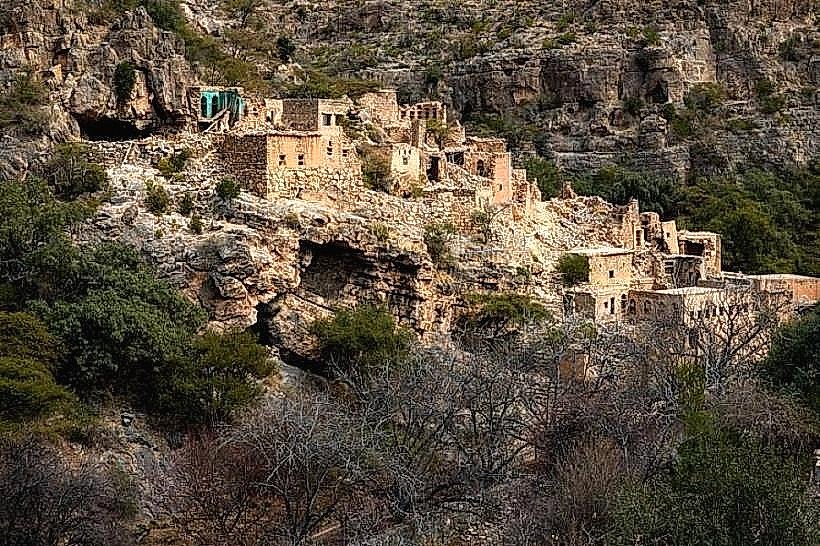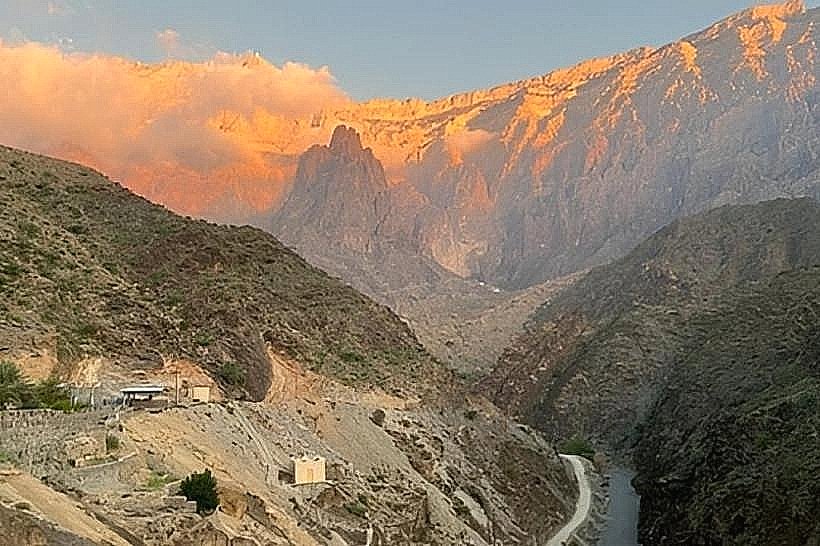
Landmark: Ar Rostaq Road Pass
City: Nizwa
Country: Oman
Continent: Asia
Ar Rostaq Road Pass, Nizwa, Oman, Asia
The Ar Rostaq Road Pass, commonly referred to as the Wadi Sahtan Pass or the Sharfat al Alamayn, is a high-altitude mountain crossing that connects the Ad Dakhiliyah region (Al Hamra) with the Al Batinah region (Ar Rostaq) via the Al Hajar Mountains. It is one of the steepest and most dramatic paved mountain passes in the Sultanate.
Visual Characteristics
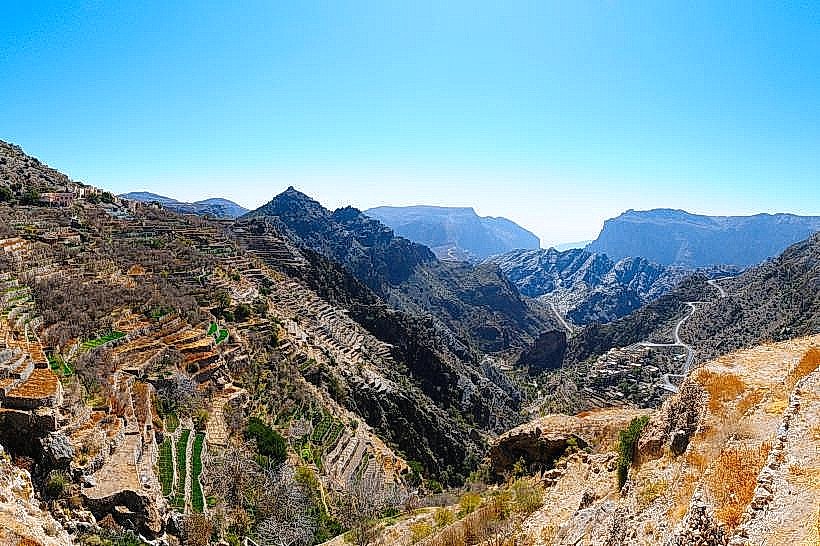
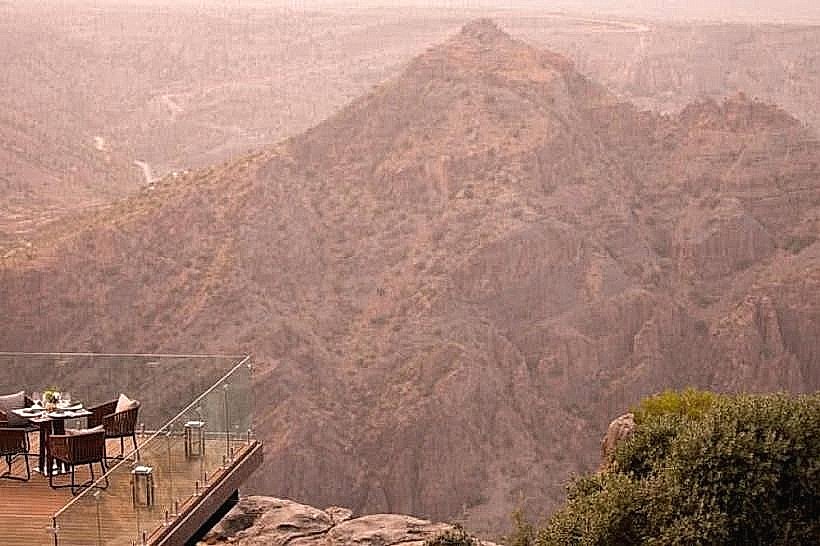
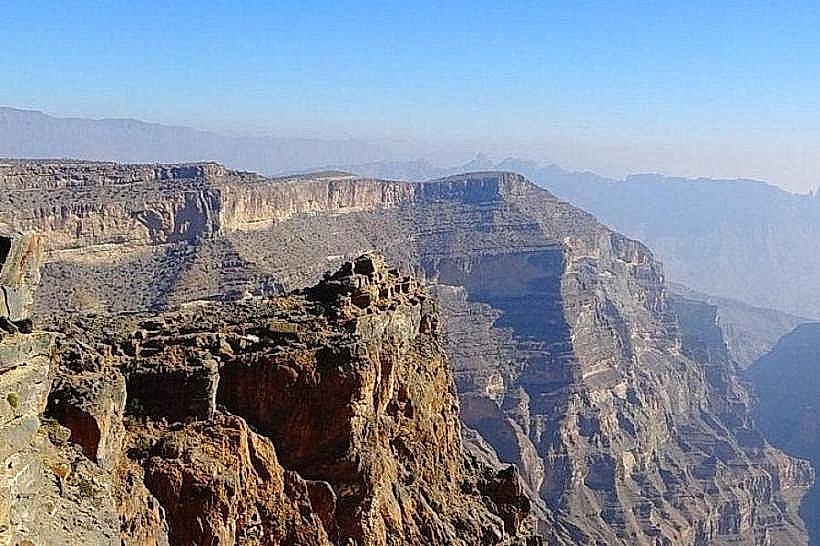
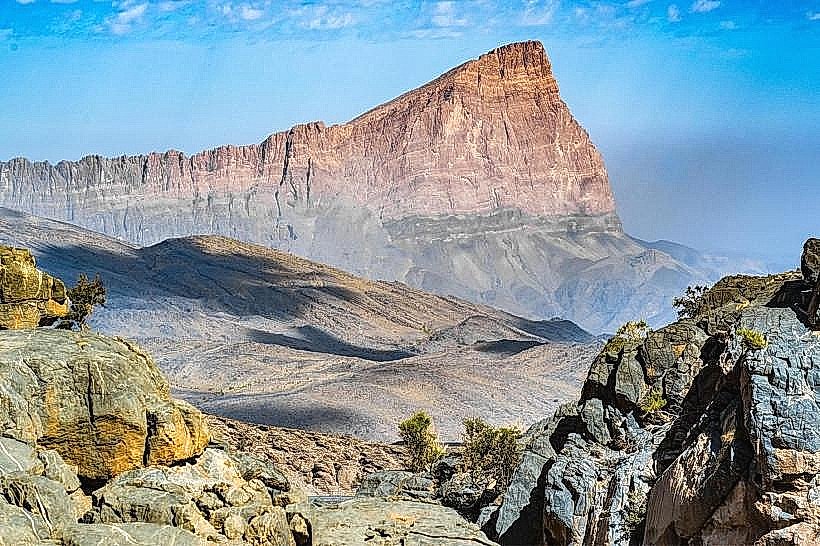
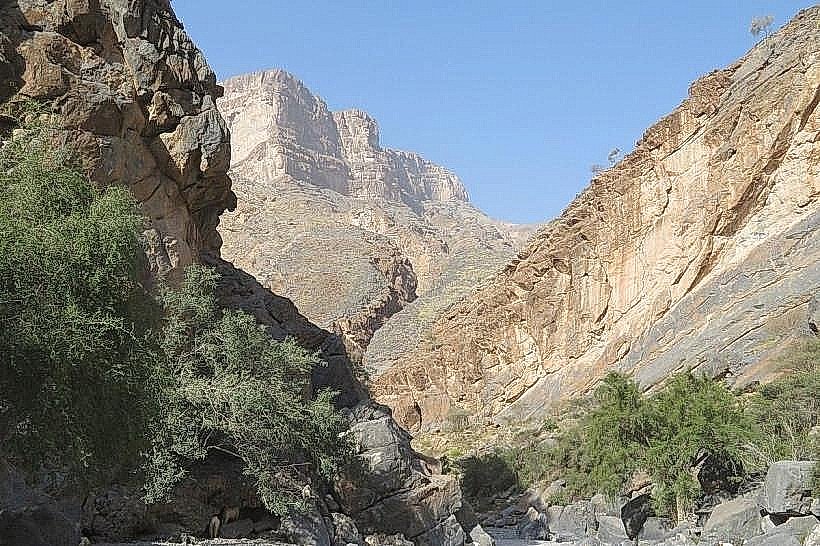
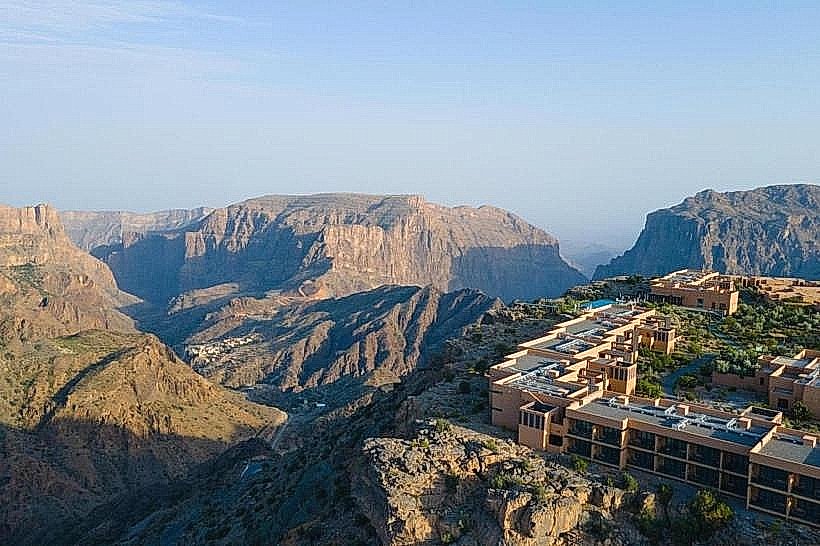
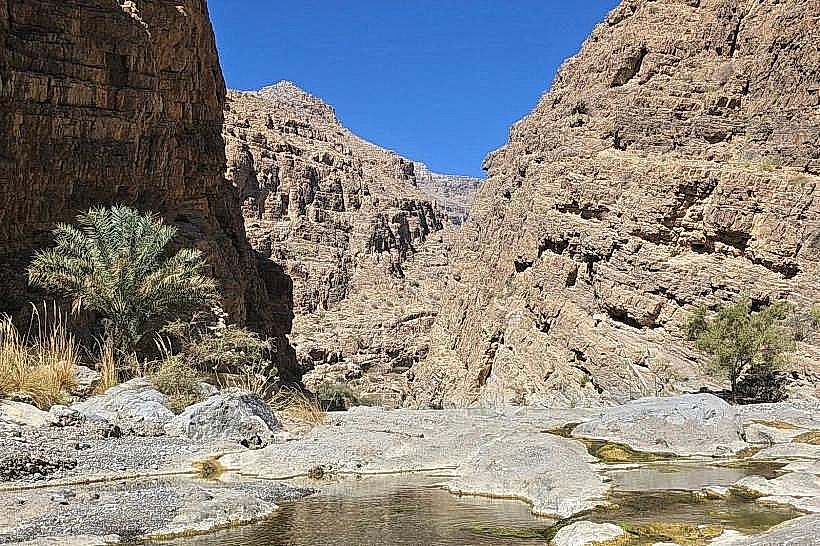
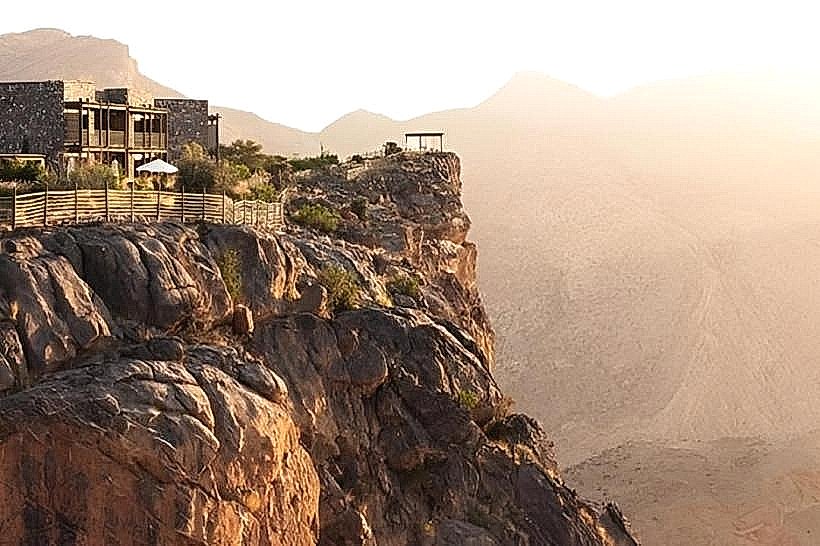
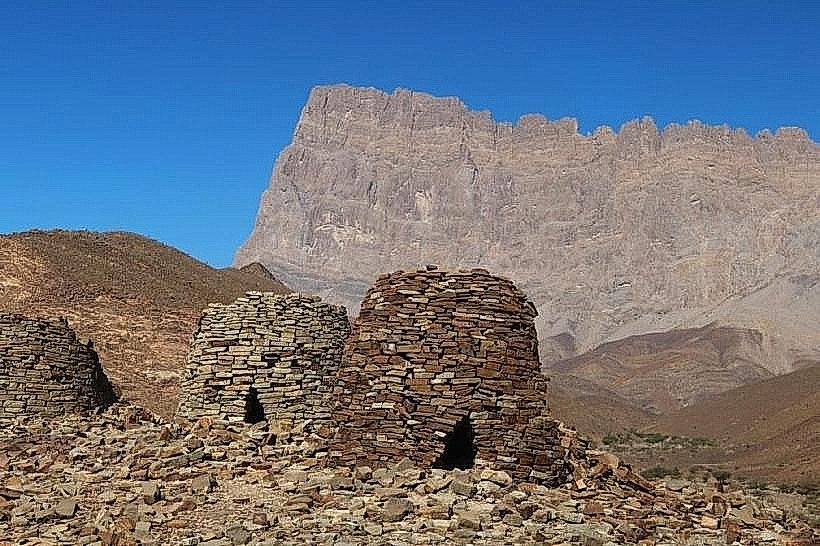
The pass is defined by its extreme verticality and a series of tight, reinforced hairpins that cling to the limestone cliff faces. At the summit, the terrain opens into a narrow ridge with sheer drops on both sides, offering a 360-degree view of the surrounding peaks and the deep gorges of Wadi Sahtan to the north. The rock formations are predominantly grey dolomite and limestone, often layered with stark, jagged edges.
Location & Access Logistics
The pass is located approximately 30km north of Al Hamra and 60km south of Ar Rostaq.
Requirement: A 4WD vehicle is mandatory. The gradients are exceptionally steep, and the descent toward Ar Rostaq features sections with high mechanical stress on braking systems.
Checkpoint: Royal Oman Police often monitor the route during inclement weather.
Transit: The road is fully paved, but the narrowness of the switchbacks requires high driver technical proficiency.
Historical & Ecological Origin
Historically, this route was a treacherous donkey and foot path used by tribes to trade dates and dried fish between the interior and the coast. The modern paved road was engineered to integrate the remote mountain communities into the national infrastructure. The pass crosses a high-altitude ecological zone home to the Arabian Tahr and ancient juniper forests that thrive in the cooler, more humid air trapped by the mountain peaks.
Key Highlights & Activities
The Summit Viewpoint: A designated stopping point at the highest elevation (roughly 2,000 meters) provides a perspective of the "Great Wall" of the Hajar Mountains.
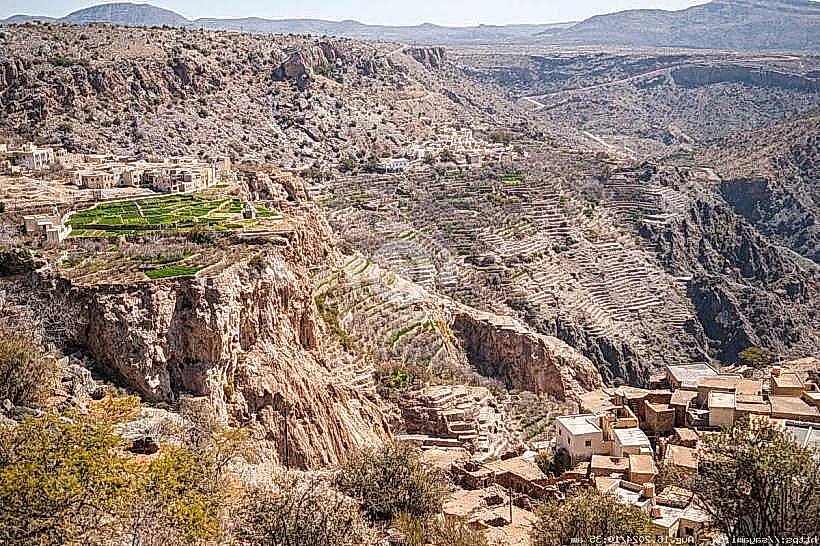
Photography: The pass offers a vertical view of the terraced gardens of Wadi Sahtan thousands of feet below.
Mountain Driving: The route is a primary destination for those seeking technical driving challenges and scenic transit between the north and south.
Infrastructure & Amenities
Infrastructure at the summit is limited to a paved pull-over area and safety barriers.
Restrooms: None on the pass; the nearest are in Al Hamra or Ar Rostaq.
Connectivity: 4G cellular signal is surprisingly strong at the summit but completely absent in the deep valleys on either side.
Emergency: Emergency escape ramps (sand pits) are located on the steepest descent sections toward Ar Rostaq.
Best Time to Visit
The pass is best traversed during daylight hours for safety and visibility. Winter months (November to March) provide clear skies and cool temperatures. Avoid the pass entirely during rain or if clouds are low, as the road is prone to heavy fog and the descent becomes hazardous when the asphalt is wet.
Facts & Legends
Local drivers refer to this as one of the "Test Roads" for new vehicles in Oman due to the strain it places on engines and cooling systems. A technical detail: the temperature at the summit can be up to 15°C lower than at the base in Ar Rostaq, causing rapid atmospheric changes during the 30-minute ascent.
Nearby Landmarks
Misfat Al Abriyeen - 25km South
Wadi Sahtan - 10km North (at base)
Al Hamra Old Town - 30km South
Ar Rostaq Fort - 65km North
Jabal Shams - 45km South-West