Landmark: Wadi Bani Habib
City: Nizwa
Country: Oman
Continent: Asia
Wadi Bani Habib, Nizwa, Oman, Asia
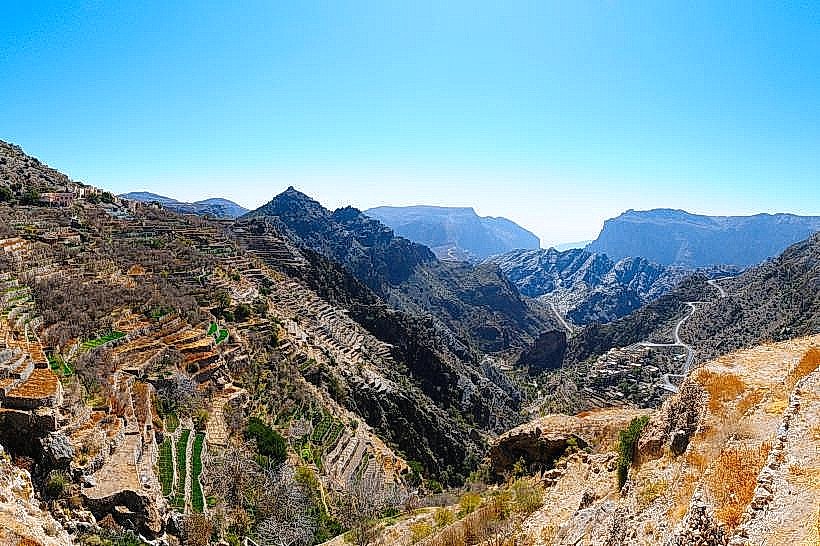
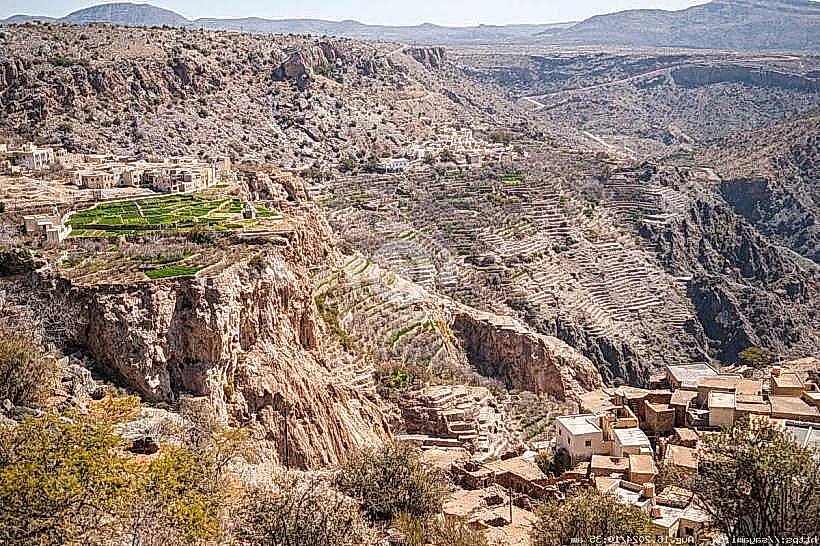
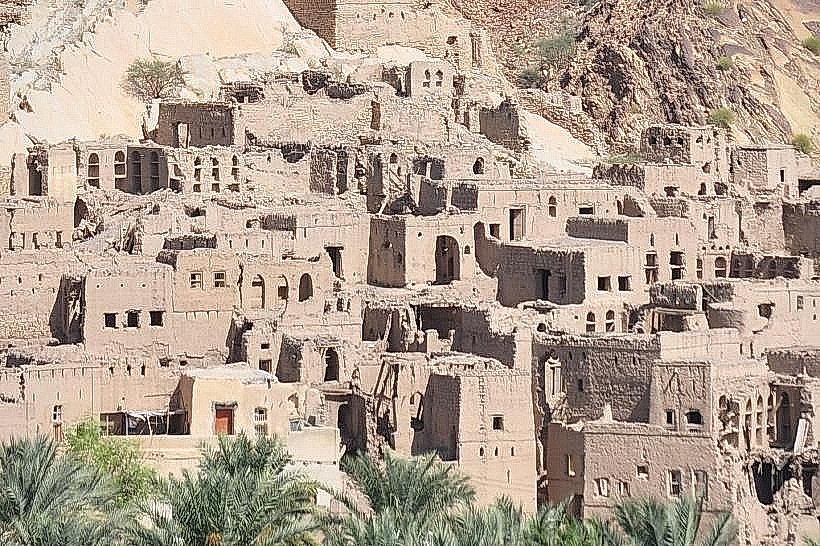
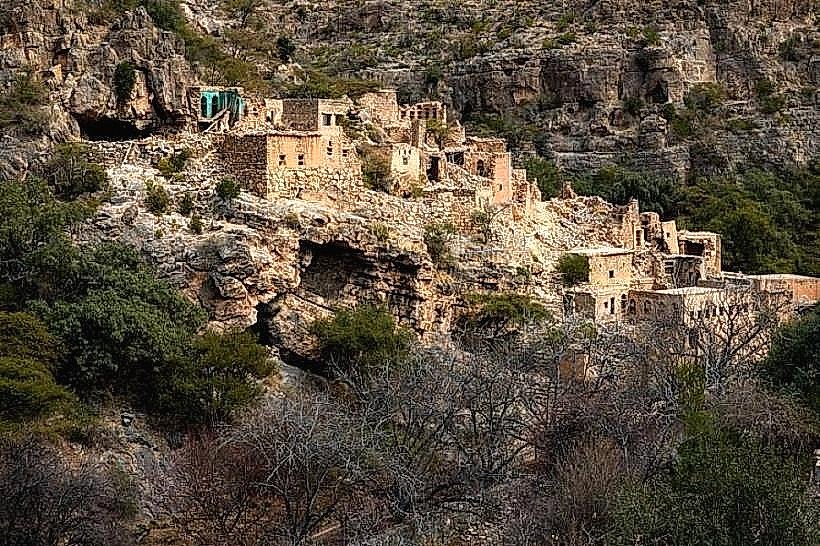
Wadi Bani Habib is an abandoned mountain village and seasonal riverbed located on the Saiq Plateau of Jabal Akhdar. The site is characterized by its ancient mud-brick architecture perched on a limestone cliff, overlooking a valley filled with walnut and pomegranate trees.
Visual Characteristics
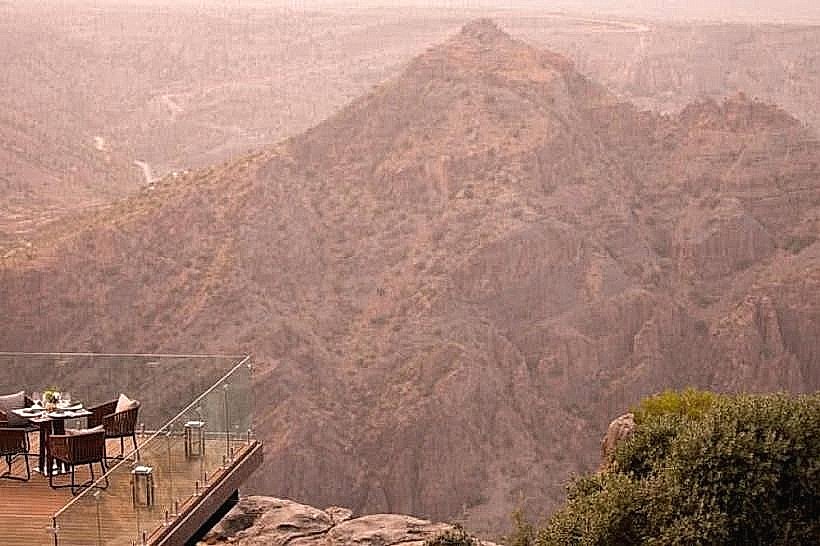
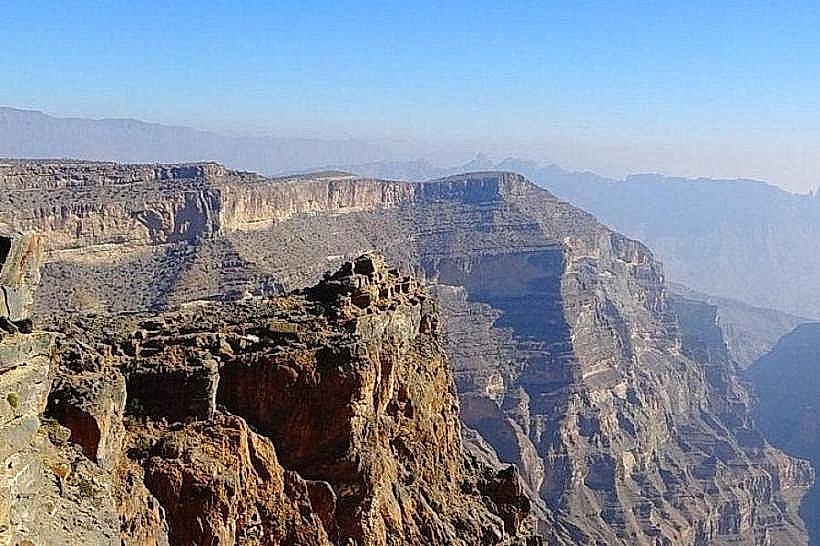
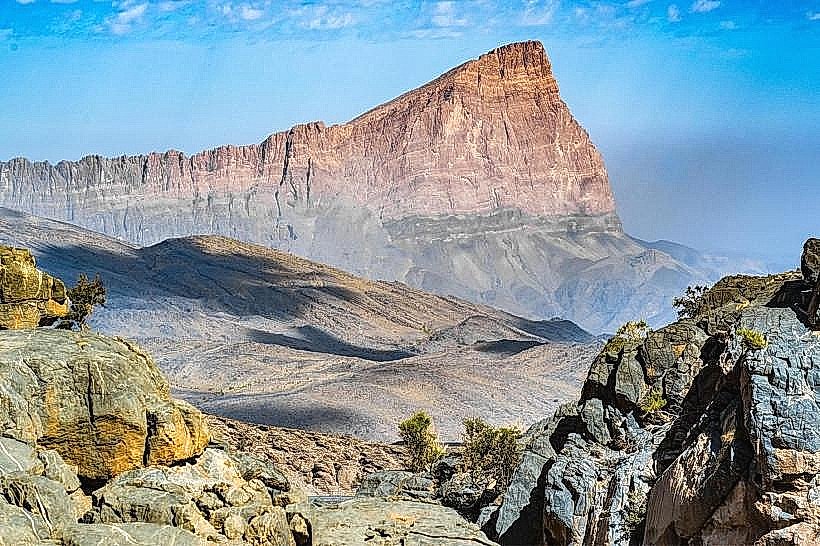
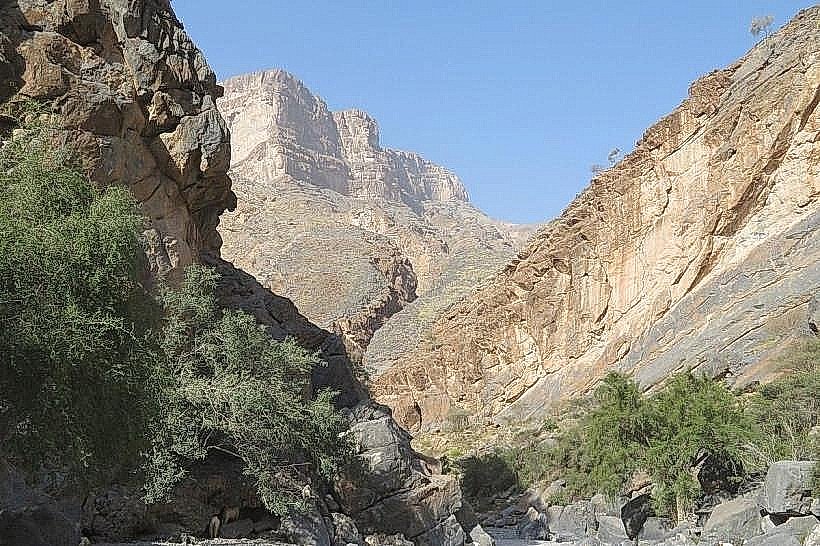
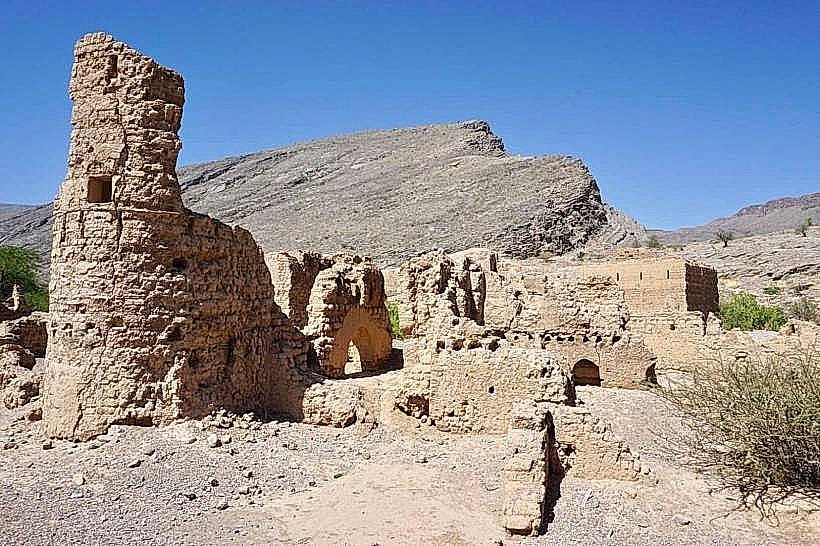
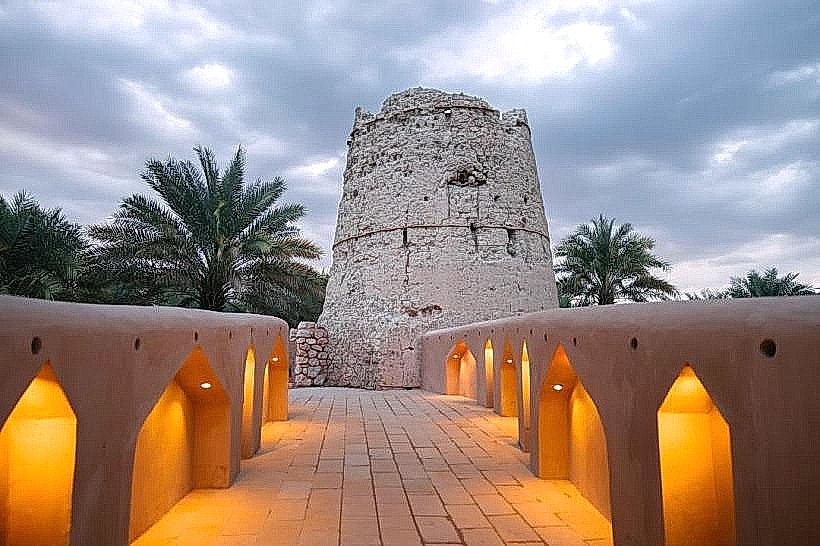
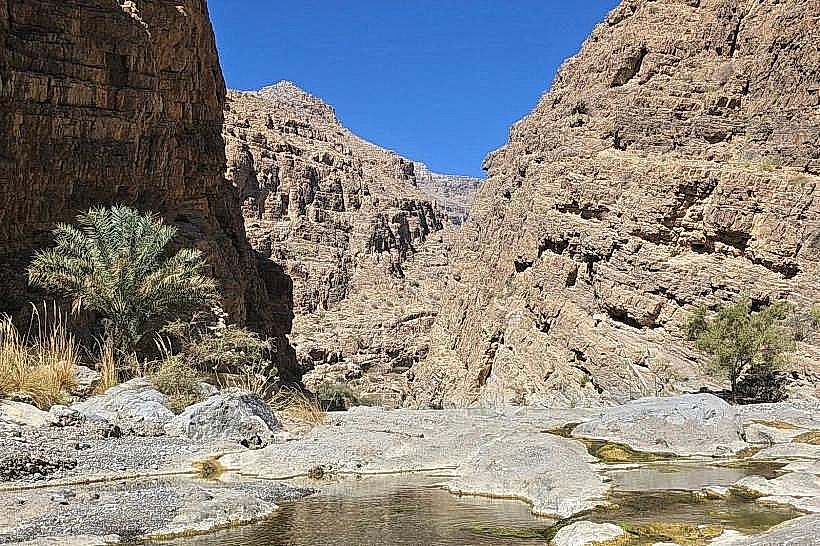
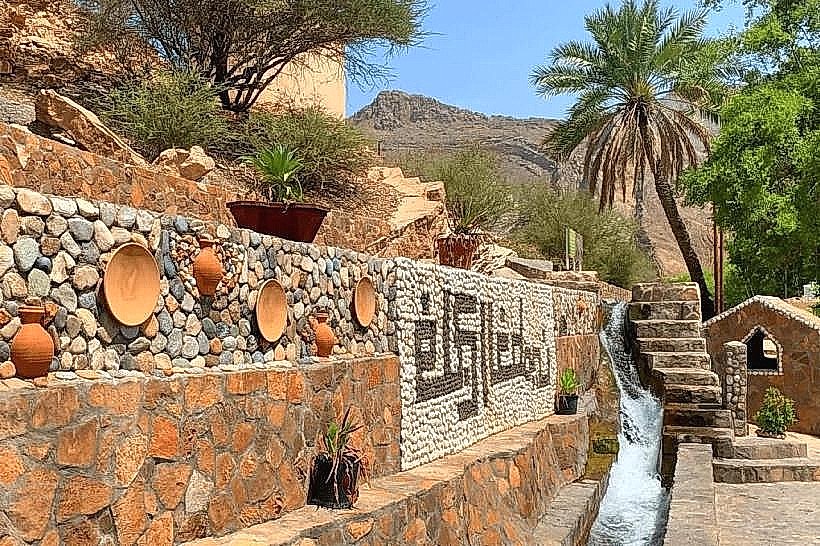
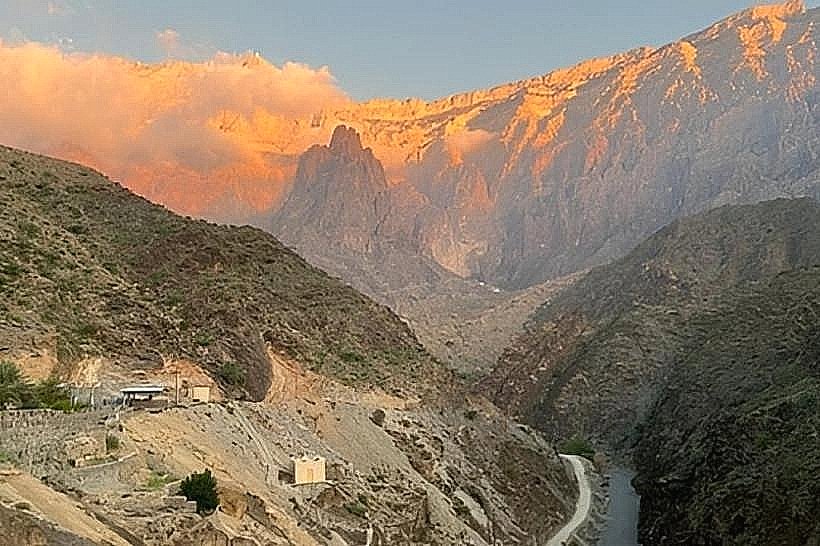
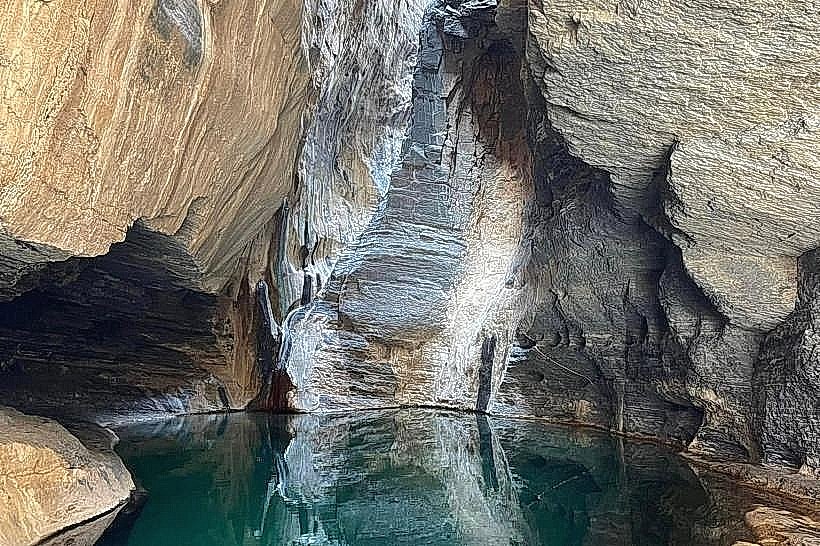
The ruins consist of multi-story stone and mud-brick houses that have largely integrated back into the grey limestone landscape. The valley floor below the abandoned settlement is a dense agricultural oasis, providing a sharp green contrast to the arid, jagged mountain ridges. Vertical canyon walls and steep rock-cut stairs define the descent from the modern road to the historical site.
Location & Access Logistics
The site is situated approximately 170km from Muscat and 6km east of the central Saiq Plateau. Access requires a 4WD vehicle to reach the Jabal Akhdar plateau. A paved road leads to a designated parking area at the canyon rim; from there, visitors must descend several hundred stone steps to reach the wadi floor and the ruins. No public transit serves the area.
Historical & Ecological Origin
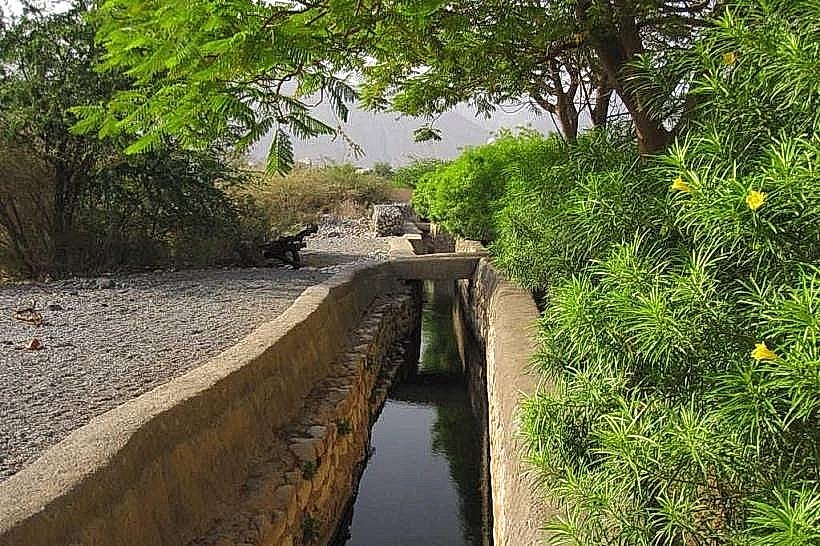
Historically, the village was home to the Bani Habib tribe and served as a center for high-altitude agriculture. The settlement was abandoned in the late 20th century as residents moved to modern housing on the plateau. The local ecology is sustained by the cooler mountain climate and traditional irrigation, supporting walnut, peach, and pomegranate orchards that are rare elsewhere in the region.
Key Highlights & Activities
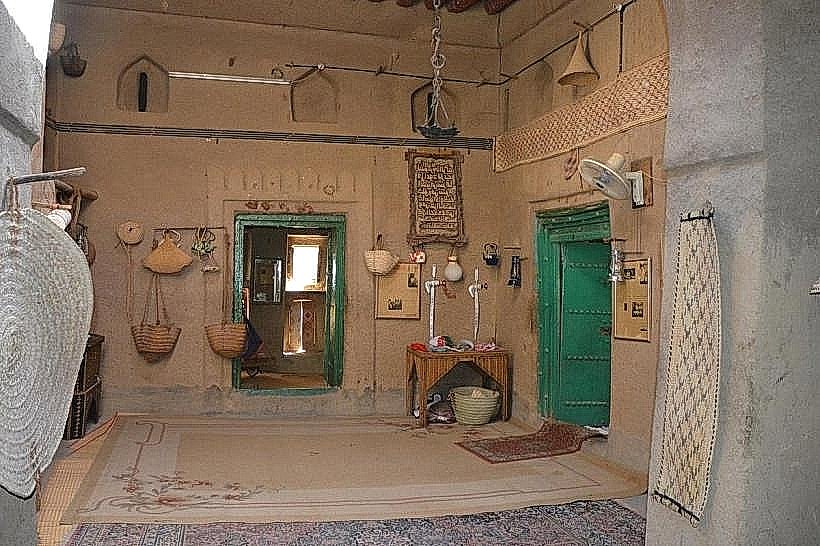
Exploration of the abandoned mud-brick ruins allows for a close examination of traditional Omani mountain construction.
Wadi Trekking: A short, relatively easy hike leads from the stairs through the walnut groves along the wadi floor.
Photography: The viewpoint from the parking area offers a panoramic perspective of the tiered ruins against the canyon backdrop.
Agricultural Observation: Visitors can see the seasonal changes in the orchards, particularly during the pomegranate harvest in September.
Infrastructure & Amenities
Infrastructure at the site is minimal to preserve its natural state.
A paved parking lot is available at the start of the stairs.
Small local vendors occasionally sell mountain produce and honey near the viewpoint.
4G cellular signal is available on the rim but often drops within the wadi bed.
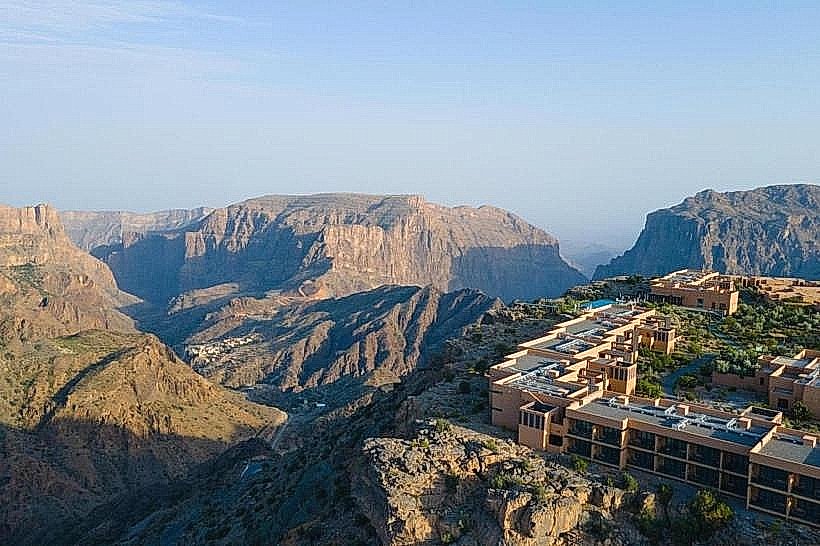
There are no public restrooms or dining facilities directly at the ruins; the nearest comprehensive amenities are in the town of Saiq or at the nearby luxury resorts.
Best Time to Visit
The winter months (November to March) provide temperate weather for the steep climb back up the stairs. For photography, the late afternoon "golden hour" illuminates the mud-brick facades with warm light. September is the optimal time to witness the pomegranate harvest, while April offers the sight of blossoming rose bushes on the surrounding plateau.
Facts & Legends
The village remains remarkably well-preserved due to its relative isolation and the dry mountain air. A local observation for visitors is the silence of the abandoned settlement, which contrasts with the bustling modern villages nearby. Geologically, the area around the wadi contains limestone layers that are millions of years old, often revealing small marine fossils.
Nearby Landmarks
Saiq Plateau Center - 6.5km West
Diana's Point - 8.0km West
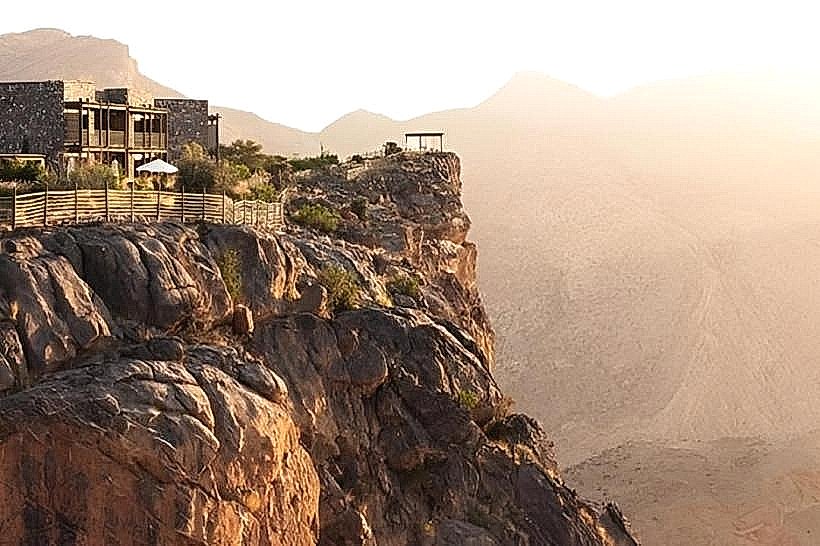
Anantara Al Jabal Al Akhdar Resort - 7.5km West
Al Ayn Village - 5.0km North-West
Birkat Al Mouz - 38km South (at mountain base)