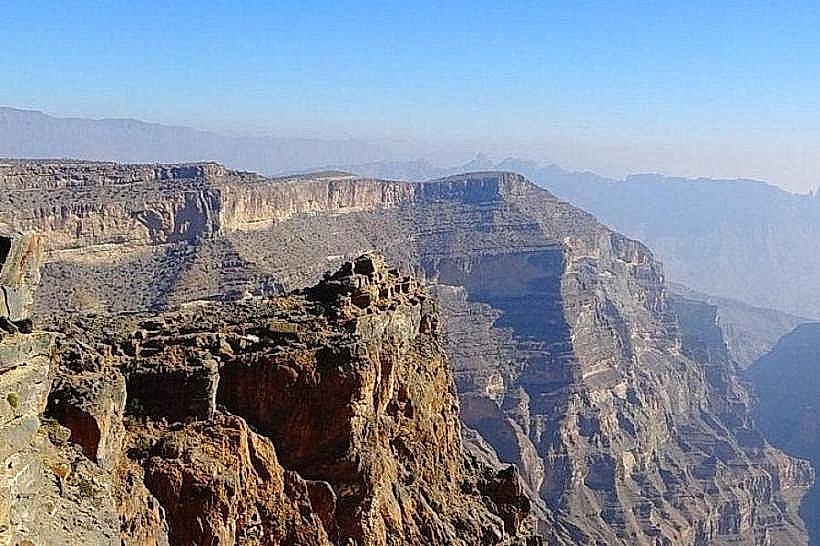
Landmark: Wadi Ghul
City: Nizwa
Country: Oman
Continent: Asia
Wadi Ghul, Nizwa, Oman, Asia
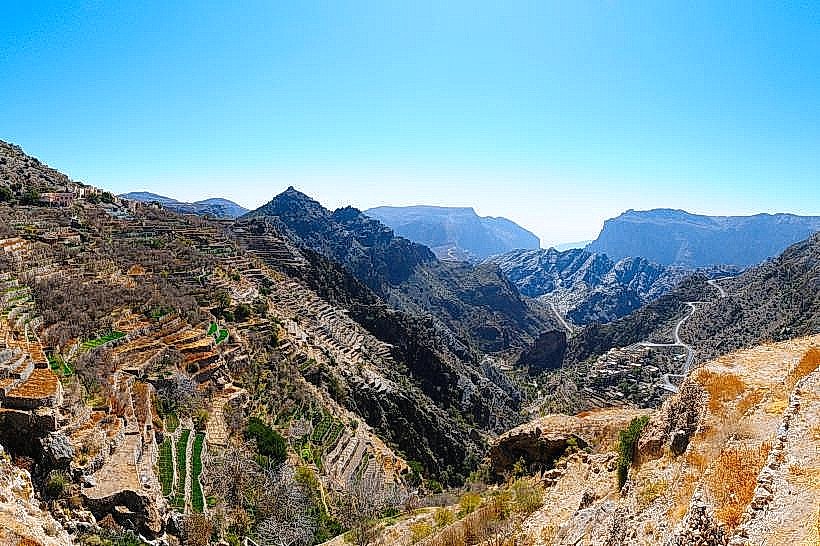
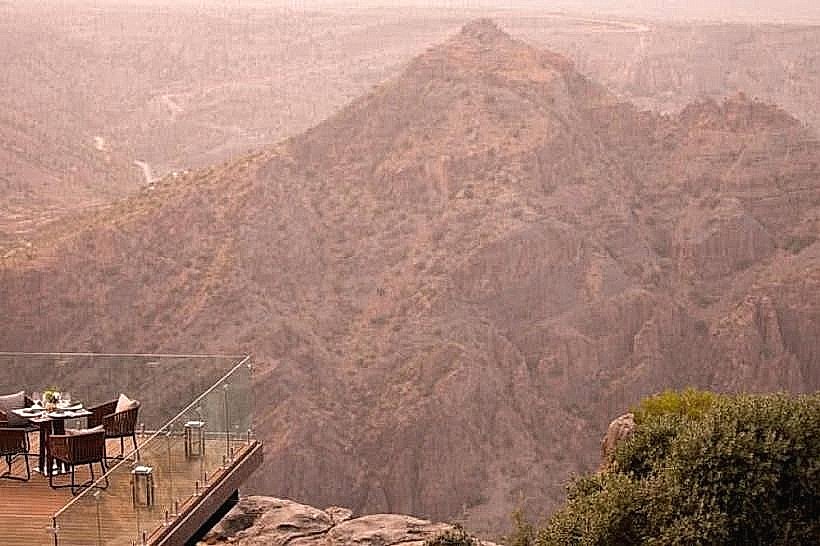
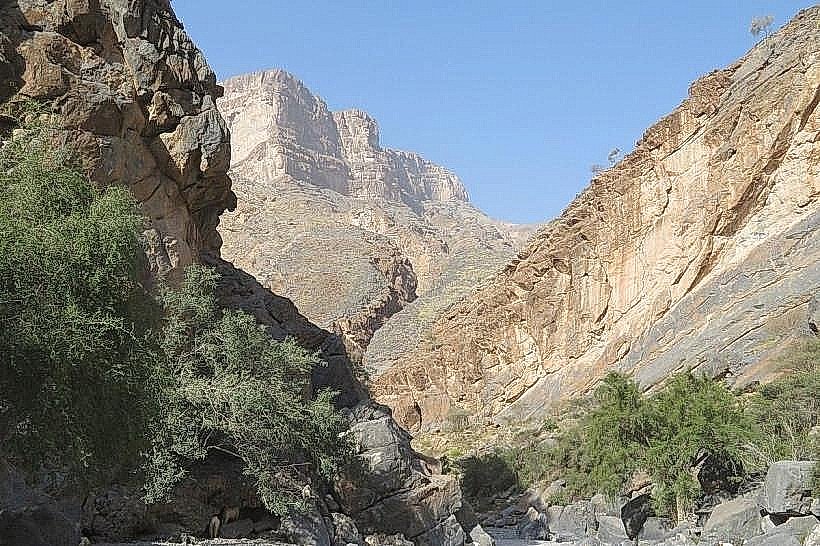
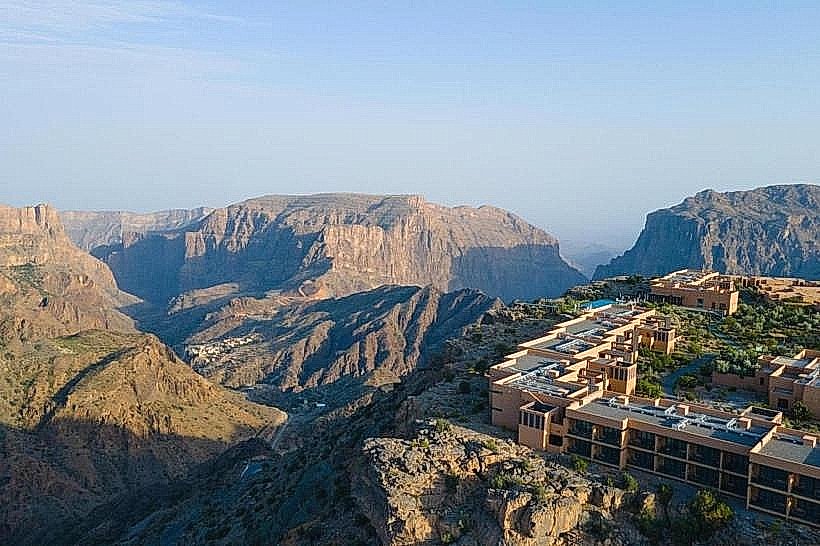
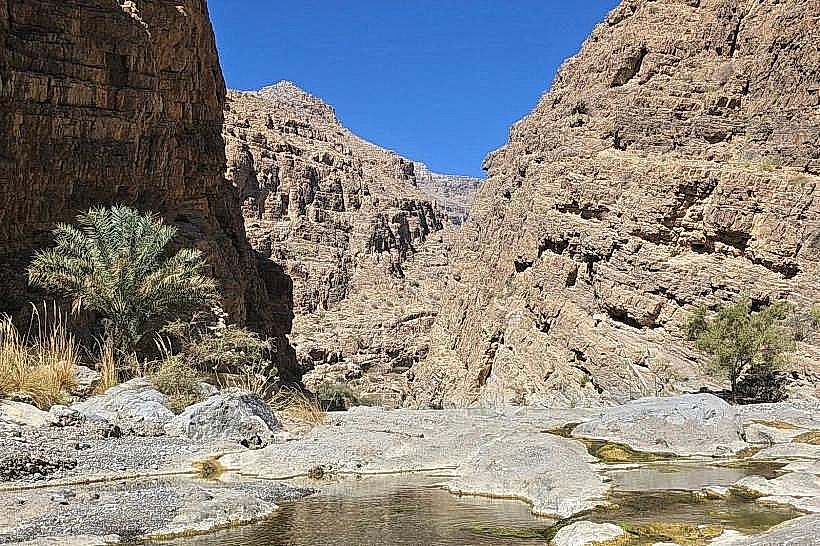
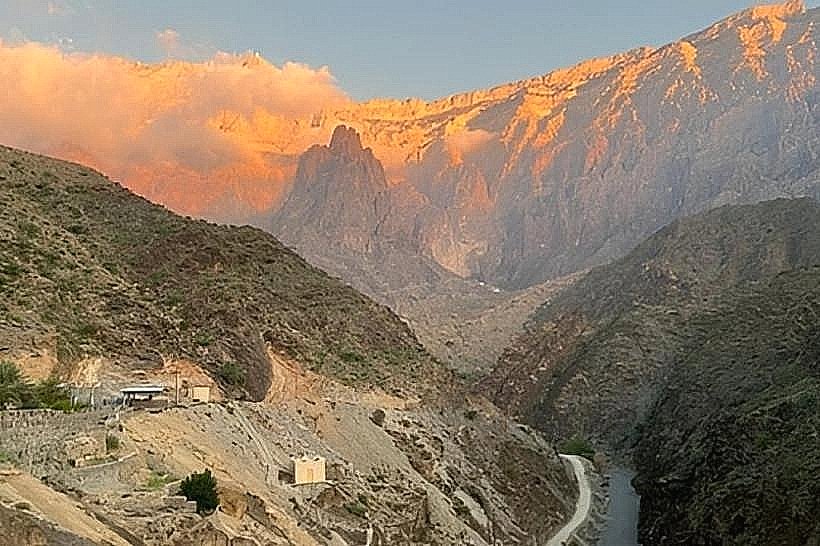
Wadi Ghul is a deep geological canyon located at the base of Jabal Shams in the Al Hajar Mountains, approximately 40km northwest of Nizwa. It is frequently categorized as the "Grand Canyon of Arabia" due to its vertical limestone walls that rise up to 1,000 meters above the valley floor.
Visual Characteristics
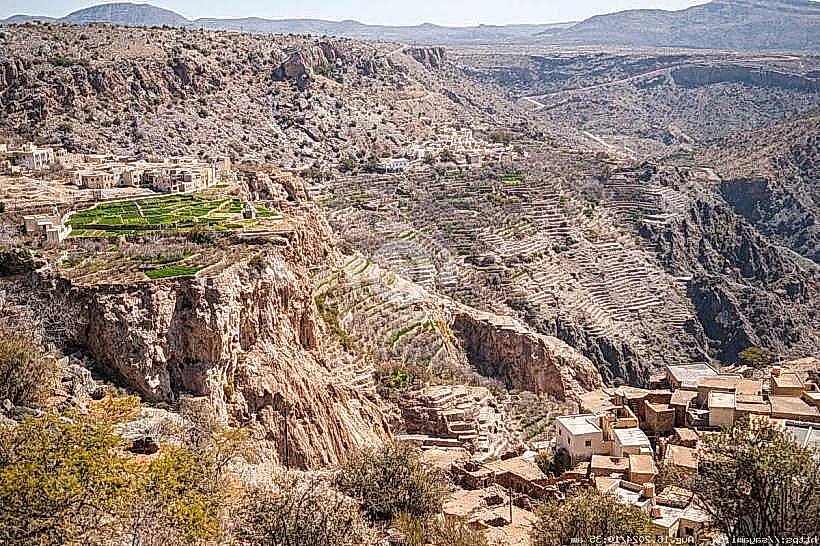
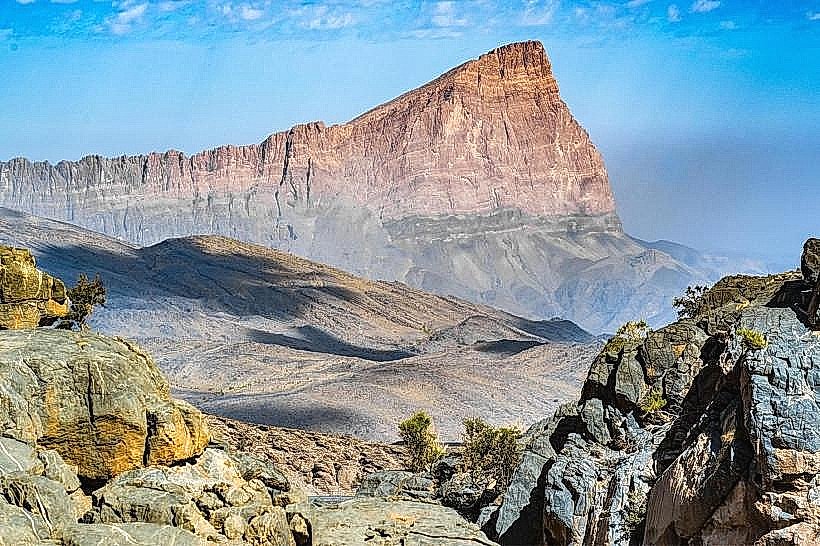
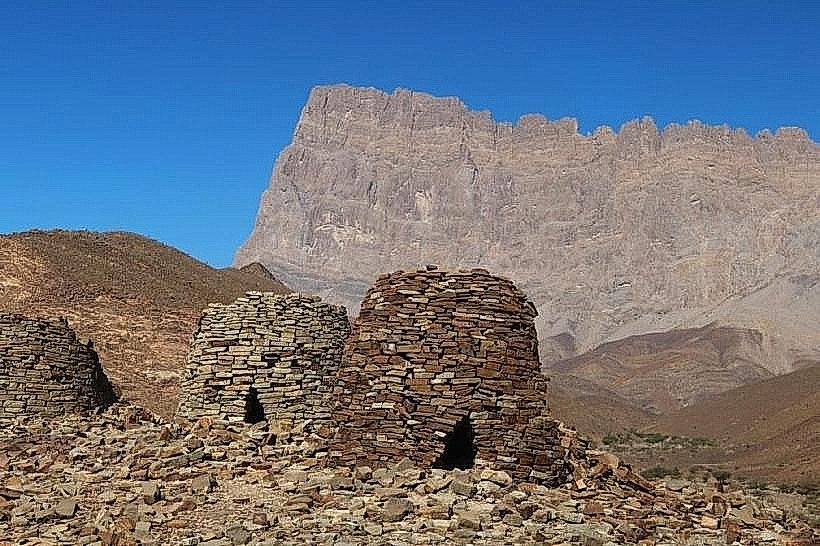
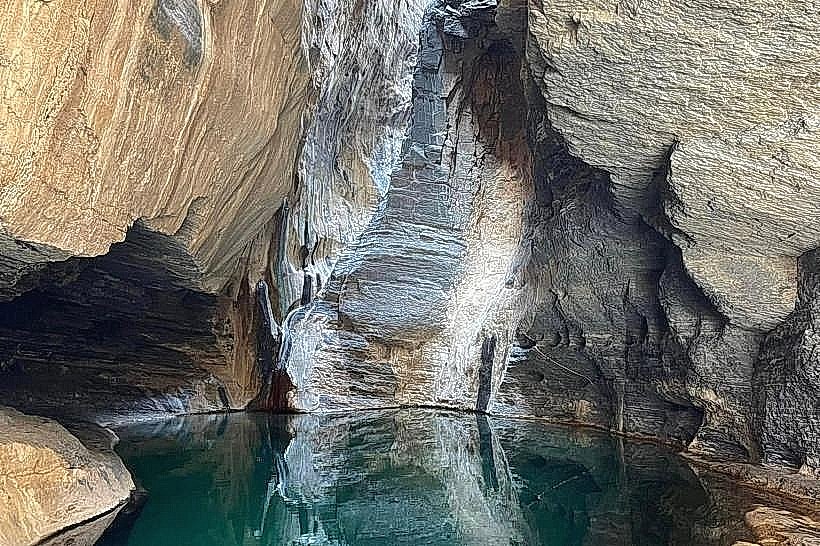
The canyon is characterized by massive, tiered limestone cliffs in shades of ochre, grey, and tan. The wadi floor is covered in light-colored alluvial gravel, boulders, and sparse desert flora such as acacia and sidr trees. During rare rainfall events, the base features temporary water pools and a flowing stream, though it remains dry for most of the year.
Location & Access Logistics
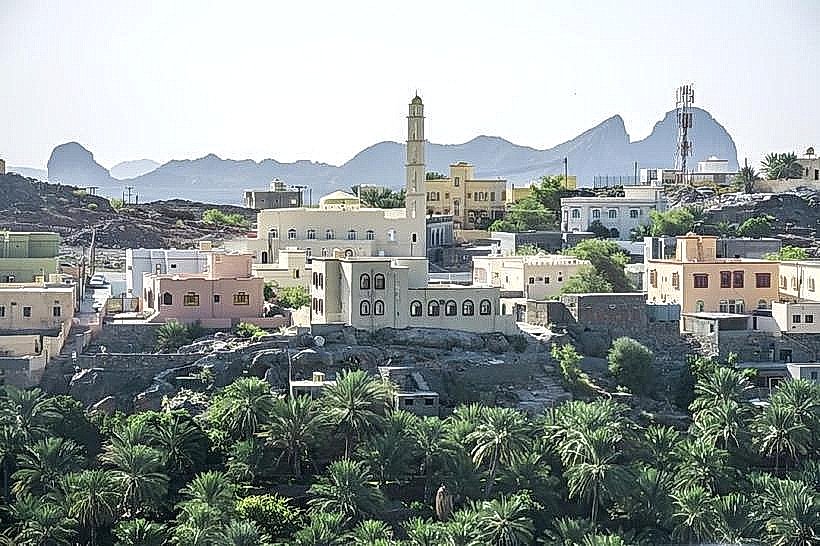
Access is via the Al Hamra-Jabal Shams road. To reach the wadi floor, take the turnoff for the village of Ghul. While the lower village is accessible by 2WD, entering the deep wadi bed requires a 4WD vehicle due to loose gravel and large rocks. There is no public transport to the canyon; visitors must utilize private vehicles or taxis from Al Hamra or Nizwa.
Historical & Ecological Origin
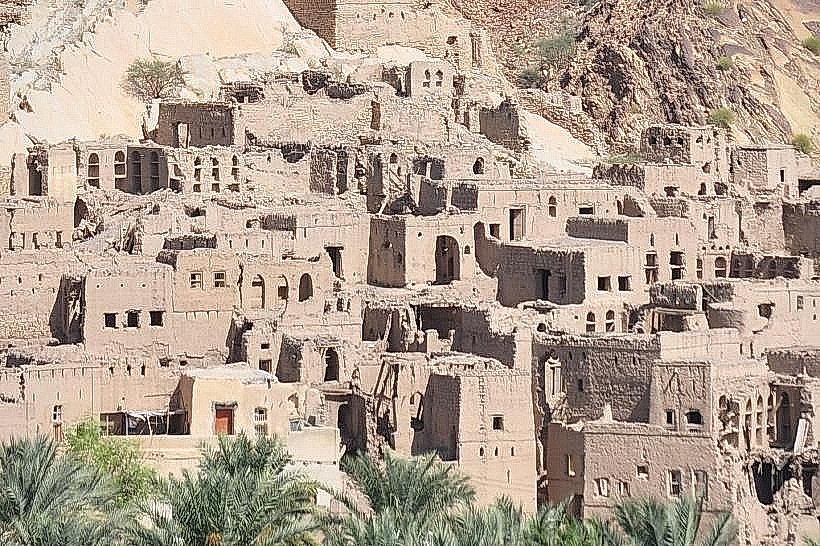
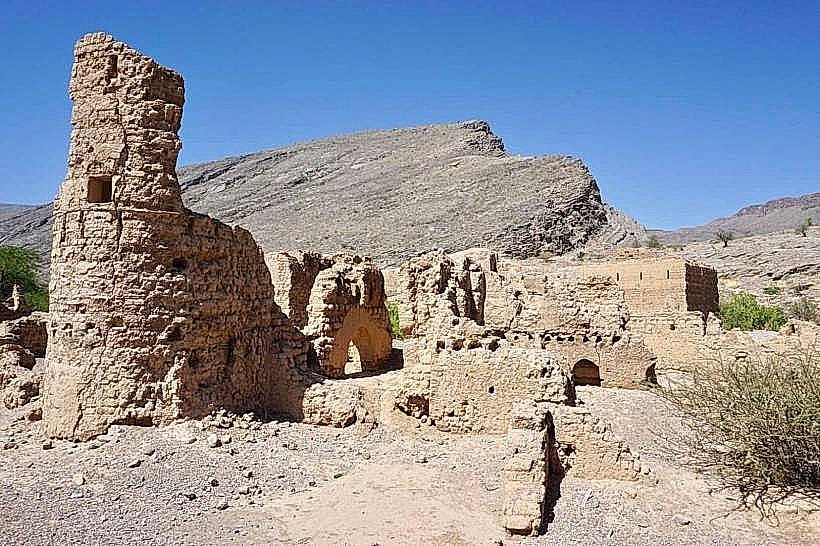
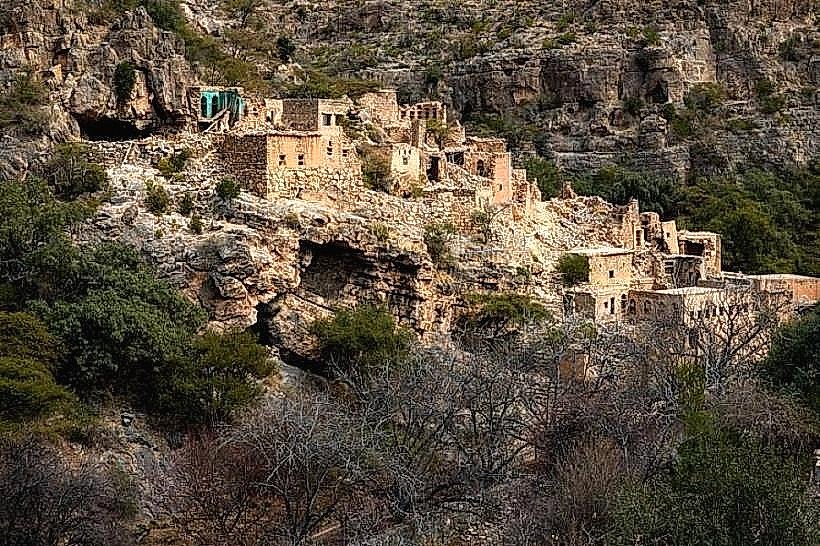
Wadi Ghul was formed over millions of years through tectonic uplift and hydraulic erosion by seasonal flash floods. Historically, the abandoned mud-brick village of Ghul, perched on the cliffside, served as a strategic settlement for local tribes who utilized the wadi's seasonal water for small-scale terraced farming.
Key Highlights & Activities
Off-road driving along the wadi floor is a primary activity for 4WD enthusiasts. Hiking is available via the "Rim Walk" (W6 trail), which starts at the top of the canyon on Jabal Shams and provides a vertical perspective of the wadi 1,000 meters below. Exploration of the ruins of the old Ghul village offers insight into traditional mountain architecture.
Infrastructure & Amenities
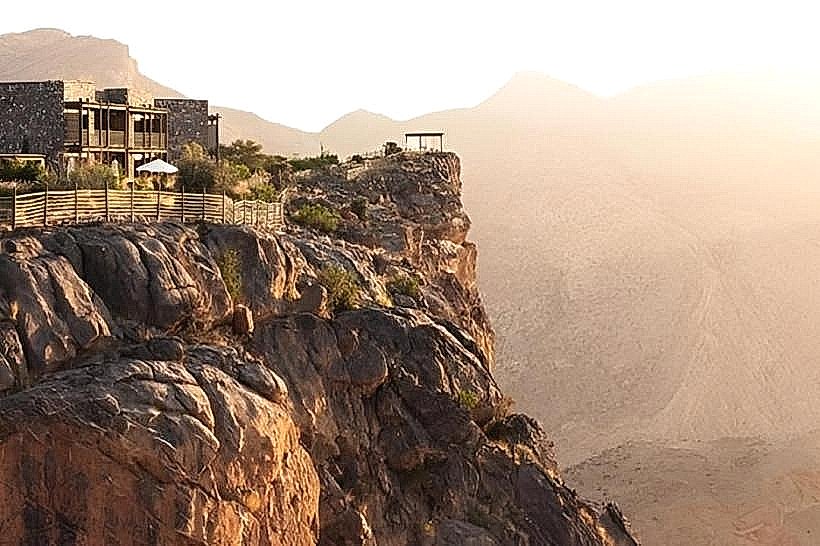
Infrastructure within the wadi itself is non-existent. There are no restrooms, shaded structures, or food vendors on the wadi floor. Visitors must rely on facilities in the nearby town of Al Hamra or at the resorts located at the summit of Jabal Shams. 4G cellular signal is intermittent and often disappears once deep inside the canyon walls.
Best Time to Visit
The winter months from November to March provide the most temperate climate for exploration. Photography is best during the early morning or late afternoon when the low sun angle highlights the textures and depth of the cliff faces. Avoid entering the wadi floor if there is a forecast of rain in the surrounding mountains due to the high risk of flash floods.
Facts & Legends
Local accounts describe the old village of Ghul as once being a major center for weaving traditional Omani rugs using goat hair. A specific geological tip is that the canyon walls contain clearly visible sedimentary layers that date back to the Cretaceous period, often containing fossilized remains of ancient marine organisms.
Nearby Landmarks
Jabal Shams Summit - 5.0km North (vertically above)
Al Hamra Old Town - 7.5km South-East
Misfat Al Abriyeen - 12km South-East
Wadi Nakhr - 0.5km North (Continuous with Ghul)
Bahla Fort - 28km South