Landmark: Dedza Pottery and Mountain
City: Lilongwe
Country: Malawi
Continent: Africa
Dedza Pottery and Mountain, Lilongwe, Malawi, Africa
The Dedza Pottery and Mountain complex is a combined industrial, cultural, and ecological landmark comprising the largest handcrafted ceramics production center in Southern Africa and its adjacent high-altitude forest reserve. The site is situated just north of the township of Dedza along the M1 transport corridor in the central highlands of Malawi.
Visual Characteristics
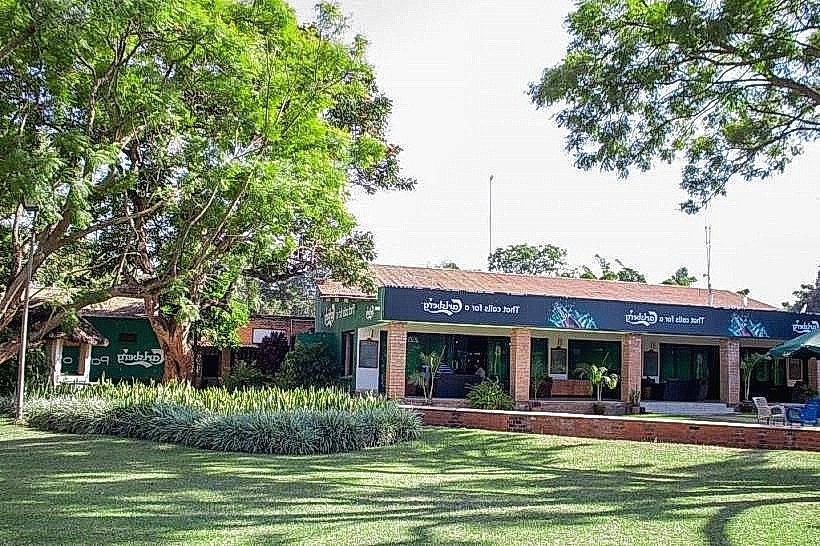
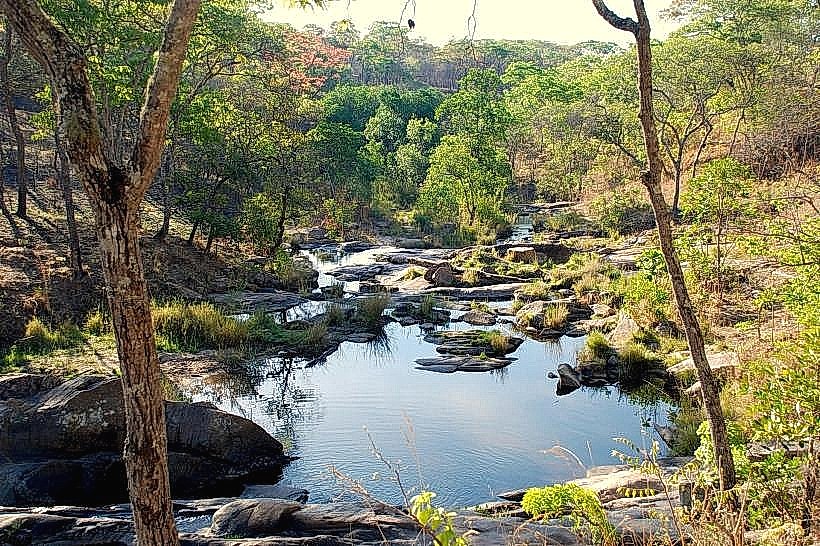
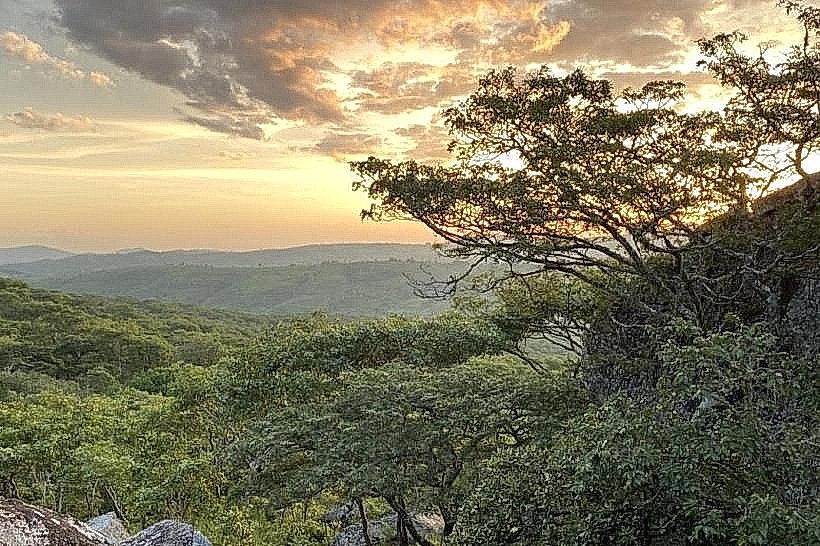
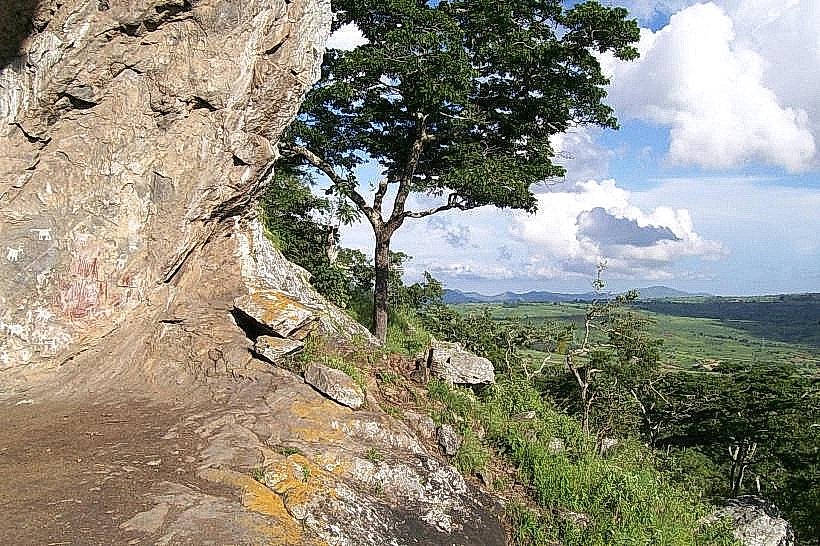
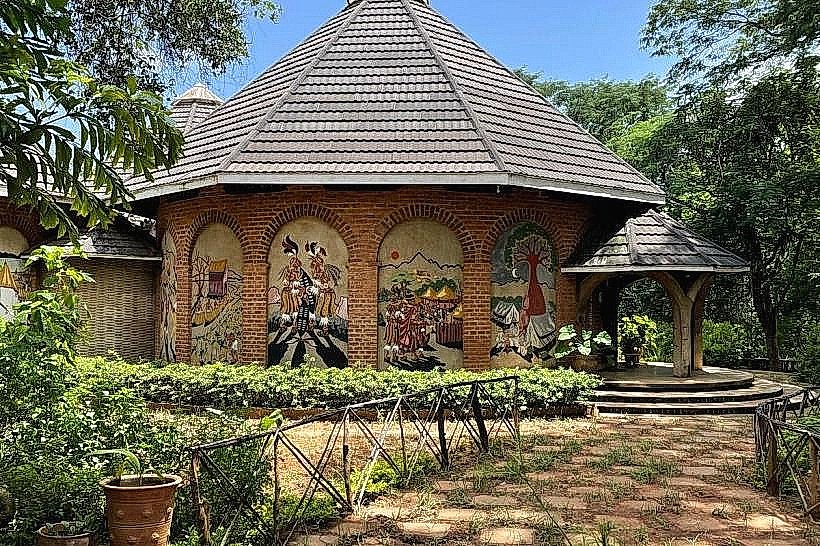
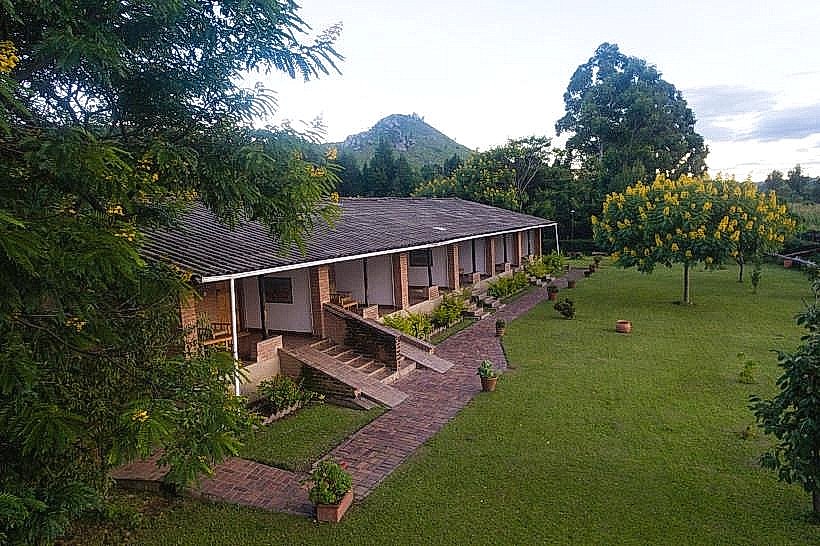
The landmark presents a striking contrast between commercial craft architecture and rugged montane terrain. At the base, Dedza Pottery consists of brick workshop factories, a single-story lodge with wheelchair-accessible concrete ramps, and a rustic restaurant featuring a central stone log fireplace and an outdoor dining terrace. The immediate grounds are configured into landscaped gardens filled with indigenous flowers and mature trees that merge directly into the slopes of Dedza Mountain, which ascends to a peak elevation of 2,198 meters. The mountain’s physical profile is dominated by linear commercial plantations of introduced pine trees, transitioning near the summit to remnant patches of native evergreen cloud forest, steep rock outcrops, and ravines containing dense riparian vegetation.
Location & Access Logistics
The facility is situated approximately 85 kilometers southeast of Lilongwe and 1.5 kilometers north of the central Dedza boma intersection. Vehicles access the property by turning west off the main paved M1 highway onto a well-graded gravel access road leading directly to the pottery factory gates, where a secure, paved vehicle parking area is available. Commuters utilizing public transit can board an inter-city coach from Lilongwe bound for Blantyre, disembark at the main Dedza M1 turnoff, and secure a local motorcycle taxi to travel the remaining 1.2 kilometers to the reception desk. A rough, high-clearance service road branches from the pottery grounds and tracks directly up the mountain ridge to the telecommunications towers at the summit.
Historical & Ecological Origin
Dedza Pottery was established in 1987 by co-founders Christopher and Charity Stevens to build a sustainable local industry based on the region’s natural clay deposits, growing to become a primary economic and artistic engine in the district. The towering backdrop, Dedza Mountain Forest Reserve, was formally gazetted earlier by the colonial administration in 1926, encompassing 2,917 hectares of high-altitude terrain. Geologically, the mountain serves an essential ecological role as an isolated basement complex massif, forming a critical highland watershed along the international border separating Malawi from Mozambique.
Key Highlights & Activities
Visitors can complete a guided factory tour through the ceramics workshop to observe the mechanical processing of raw clay, hand-shaping procedures, glaze application, and kiln firing. Mountain hiking is active along two primary routes departing from the pottery base: a short trail loop taking 1 to 4 hours and a demanding summit trek requiring 5 to 7 hours to reach the 2,198-meter peak. The summit area provides panoramic views across Lake Malawi and Mozambique to the east, while the dense montane forest patches near the upper ravines support specialized birdwatching for highland avian species and the identification of rare epiphytic orchids.
Infrastructure & Amenities
The lower facility includes a modern independent restaurant block, a curated craft gallery shop, and full public restroom installations equipped with hot showers at the campsite zone. Natural shade is abundant within the pottery garden clearings and beneath the mountain’s pine canopy, though the upper rocky ridges are entirely exposed to weather elements. Mobile telecommunications networks function reliably with 4G cellular signals coverage active across the lower commercial site and the western summit tracking faces, though 5G lines are absent. Food, baked goods, and specialized dairy items are provided continuously by the on-site pottery cafe, which runs on mains electricity backed by an industrial diesel generator.
Best Time to Visit
The optimal months for trail trekking and landscape photography span the dry winter season from May to October, when regional afternoon temperatures drop to a cool 15 to 20 degrees Celsius and atmospheric visibility is highest. Morning hours between 07:30 and 10:30 are preferred for ascending the mountain paths to avoid the heavy mists that frequently shroud the peak later in the day. The wet summer season from November to April stimulates lush green scenery across the valleys but causes the unpaved mountain service tracks to become slippery and introduces dense low-cloud covers that eliminate long-range views.
Facts & Legends
A distinct operational aspect of the pottery factory is that every single item produced remains entirely handcrafted and hand-painted by local Malawian artisans, utilizing unique decorative motifs inspired directly by regional geometric rock art styles. Local field guides note that on exceptionally clear winter mornings, the high-altitude vantage point of the summit allows hikers to trace the distinct physical profiles of the Zomba Plateau and Mount Mulanje over 200 kilometers to the south.
Nearby Landmarks
Mzengeleza Mountain Peak – 2.5km West
Dedza Boma Administrative District – 1.5km South
Chongoni Rock Art Area Boundary – 8.2km Northwest
Mphunzi Mountain Rock Art Shelters – 12.5km Northwest
Mozambique Border Line – 6.0km Southwest