Landmark: Lilongwe Golf Club
City: Lilongwe
Country: Malawi
Continent: Africa
Lilongwe Golf Club, Lilongwe, Malawi, Africa
The Lilongwe Golf Club is a prominent sporting and recreational complex containing the only 18-hole championship golf course in Malawi. The facility occupies a 73-hectare property positioned along the western periphery of Old Town Lilongwe in Area 3.
Visual Characteristics
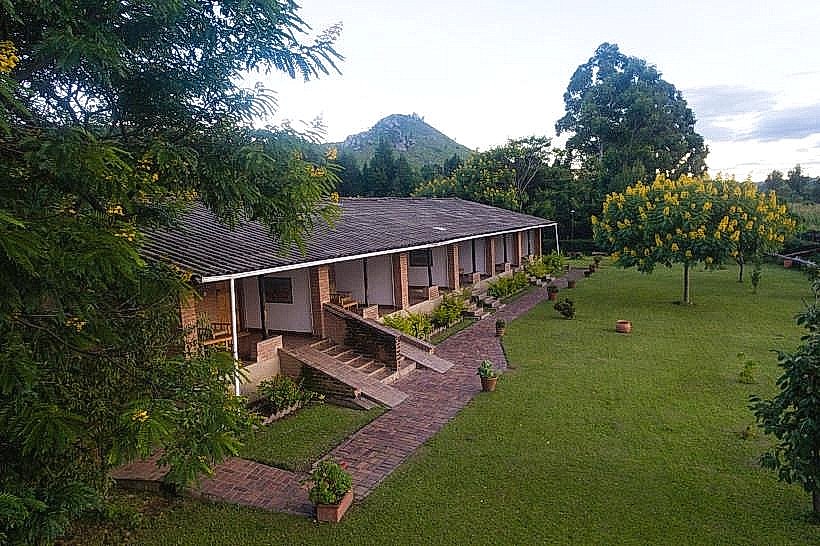
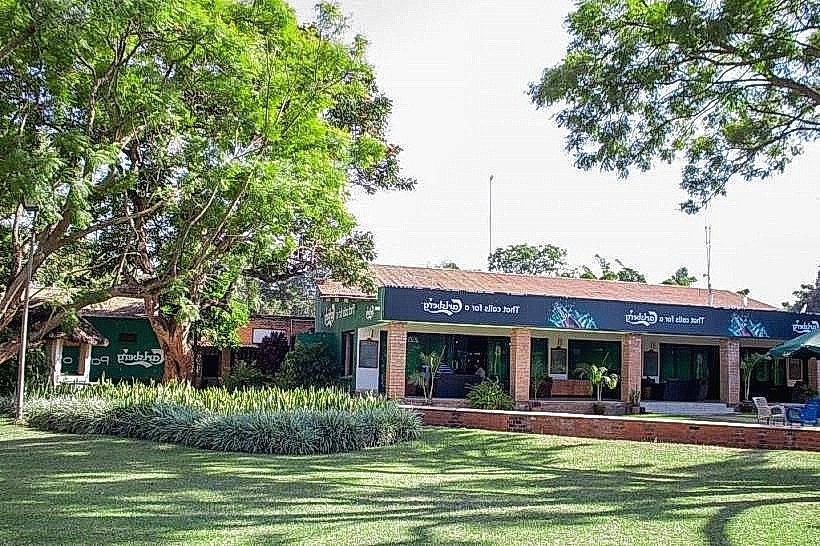
The landmark comprises expansive, undulating fairways sown with manicured Bermuda grass, interspersed with mature indigenous trees and artificial water hazards, including a prominent dam along the 18th hole. The architectural centerpiece is a single-story colonial-style clubhouse featuring whitewashed brick walls, a corrugated iron roof, and wide covered verandas overlooking the greens. The estate incorporates five clay tennis courts, a rectangular 25-meter concrete swimming pool, a dedicated grass cricket oval, and multi-purpose sports fields bordered by natural timber fencing. Packed dirt pathways and paved golf cart tracks wind through the parkland layout, contrasting with the dark red clay of the adjacent tennis courts.
Location & Access Logistics
The facility is situated along Glynn Jones Road in Area 3, directly opposite St. Peter's Anglican Cathedral and roughly 1.2 kilometers west of the traditional Old Town commercial core. Vehicles access the main entrance via Glynn Jones Road, which connects to an extensive asphalt-paved parking lot inside the secure perimeter. Public transit users can utilize any local minibus operating through Old Town, disembark at the main Area 3 terminal or the Glynn Jones Road junction, and walk approximately 400 meters west to reach the front gates.
Historical & Ecological Origin
The club was founded in 1930 during the British colonial administration of Nyasaland on 73 hectares of land originally owned by the Baron family, who converted the former agricultural farmland into a recreational space. Initially configured as a basic clearing with a limited number of holes, the facility was progressively expanded and re-engineered over subsequent decades into a fully realized 18-hole, par-71 championship course. The property functions as an important urban green space, preserving local topsoil structure and hosting numerous avian species within its managed parkland ecosystem.
Key Highlights & Activities
The primary sporting activity is navigating the 18-hole golf course, with golf clubs available for hire at the on-site pro shop and professional lessons open for booking. Visitors can access the five clay tennis courts for singles or doubles matches, use the squash courts, or swim laps in the outdoor 25-meter pool. The multi-purpose sports fields host organized matches of football, rugby, hockey, and cricket, the latter played regularly on Sunday mornings by regional clubs.
Infrastructure & Amenities
The clubhouse is equipped with modern, permanent restroom blocks and locker room facilities for members and guests. Extensive shade is provided by the wide verandas of the clubhouse architecture and large canopy trees bordering the fairways and pool deck. Mobile network reception is highly reliable, with full 4G and 5G signals active across the entire 73-hectare property. Food and beverage services are delivered through the on-site restaurant and two dedicated social spaces-the Carlsberg Hall of Fame Bar and the Hazard Bar-complemented by a safe, outdoor children's playground.
Best Time to Visit
The ideal time of day for playing golf and capturing landscape photography occurs between 07:00 and 10:00, when temperatures remain low and directional morning light accentuates the fairways without harsh shadows. The most favorable weather conditions correspond with the dry winter season from May to August, characterized by clear skies and moderate afternoon temperatures around 22 degrees Celsius. The wet summer season from November to April brings heavy rain that can saturate the low-lying fairways and restrict golf cart transit.
Facts & Legends
A distinct aspect of the course design is the structural layout of the par-5 18th hole, which functions as a critical tactical challenge featuring a large dam along the left boundary and an active wetland bisecting the fairway to deliberately penalize errant second shots. Local historians note that the club represents a key transition point in Malawian civic history; originally established as an exclusive colonial enclave, it underwent progressive demographic integration following independence, leading to the appointment of Dean Lungu as its first black chairman in 1996.
Nearby Landmarks
St. Peter's Anglican Cathedral – 0.1km East
Lilongwe Jamme Masjid – 0.9km East
Shoprite Lilongwe Complex – 1.1km East
Lizulu Market – 1.4km Northeast
Old Town Mall – 1.5km Southeast