Landmark: Djoudj National Bird Sanctuary
City: Saint Louis
Country: Senegal
Continent: Africa
Djoudj National Bird Sanctuary, Saint Louis, Senegal, Africa
The Djoudj National Bird Sanctuary is a 16,000-hectare wetland preserve located in the Senegal River delta, approximately 60km north of Saint-Louis. It serves as the first major permanent water source for migratory birds crossing the Sahara Desert, hosting over 1.5 million individuals annually.
Visual Characteristics
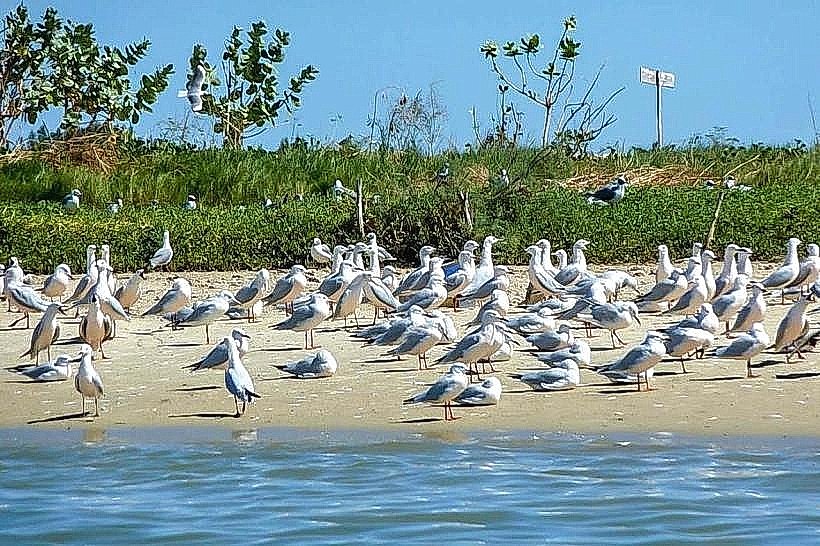
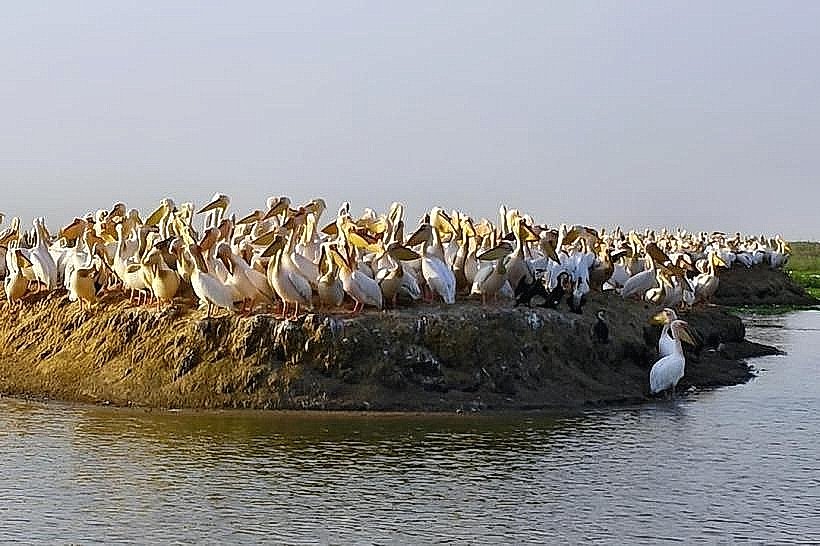
The sanctuary is a vast floodplain consisting of large open-water lakes, such as Grand Lac, and a network of narrow, reed-lined channels and ponds. The landscape is dominated by aquatic vegetation, including water lilies and invasive Typha reeds, set against the surrounding dry Sahelian savanna. During the nesting season, the muddy islets and sandbanks are densely covered by thousands of Great White Pelicans, creating large white patches visible across the dark water and green marshland.
Location & Access Logistics
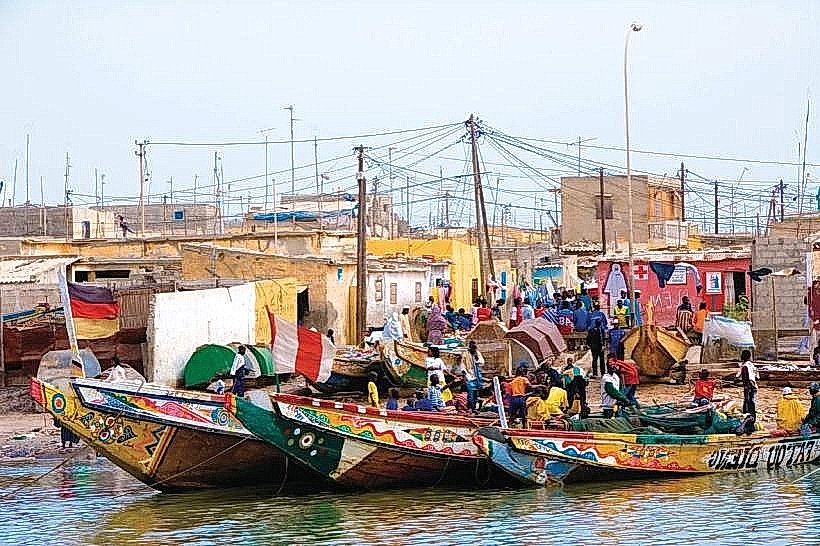
The site is situated in the Saint-Louis Region of northwest Senegal, bordering Mauritania. Access is via a 60km drive from Saint-Louis; the final 20km involves unpaved dirt tracks through the village of Ross-Béthio. Visitors typically hire a 4x4 vehicle or join an organized tour. Upon arrival at the park headquarters, internal transit to the bird colonies is conducted via motorized wooden pirogues (traditional boats) that navigate the interior man-made and natural canals.
Historical & Ecological Origin
Established in 1971 and designated a UNESCO World Heritage site in 1981, the sanctuary occupies a low-lying basin in the Senegal River delta. The ecology was significantly altered by the 1986 construction of the Diama Dam, which prevented saltwater intrusion and transformed the area into a year-round freshwater system. This change allowed for permanent bird nesting but also necessitated constant management of invasive freshwater plants that threaten to choke the waterways.
Key Highlights & Activities
The primary activity is a guided pirogue excursion to the "Pelican Sanctuary," a massive breeding ground where thousands of birds nest in close proximity. Birdwatching is the central focus, with over 365 recorded species including flamingos, African spoonbills, and various herons. Crocodile sightings are frequent along the muddy banks, and warthogs or patas monkeys are often visible in the surrounding scrubland. Guided bush walks are also available on designated trails near the park entrance.
Infrastructure & Amenities
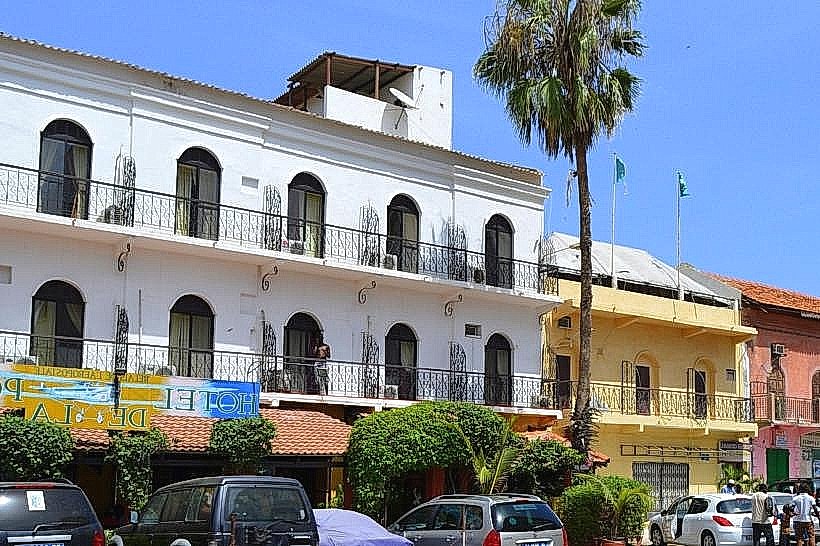
Infrastructure is basic and centers on the park entrance, which houses a small information office and a reception desk for entry fees. Public restrooms are located at the headquarters. The on-site "Hôtel du Djoudj" offers basic lodging and a restaurant, though many visitors opt for day trips from Saint-Louis. 4G cellular signal is available but becomes weak in the deeper reaches of the marsh. Natural shade is nonexistent on the water; pirogues are equipped with canvas canopies.
Best Time to Visit
The sanctuary is open from November to April, coinciding with the arrival of Palearctic migrants from Europe. January and February are the peak months for bird density and diversity. Pirogue tours are most effective in the early morning (08:00–10:00) when bird activity is highest and temperatures are moderate. The park is generally closed or inaccessible during the rainy season (July to September) due to flooded tracks and the absence of migratory species.
Facts & Legends
A verified biological oddity is that the sanctuary acts as a "biological airport," where birds arriving from Europe may lose up to 50% of their body weight during the trans-Saharan flight and rely entirely on the Djoudj wetlands for recovery. Local lore among the nearby inhabitants suggests that the appearance of certain bird species in high numbers predicts the success of the coming agricultural harvest in the delta.
Nearby Landmarks
Saint-Louis Historic Center: 60km South
Diama Dam: 25km Southwest
Ross-Béthio: 20km South
Diawling National Park (Mauritania): Adjacent to the North
Senegal River: 2km North