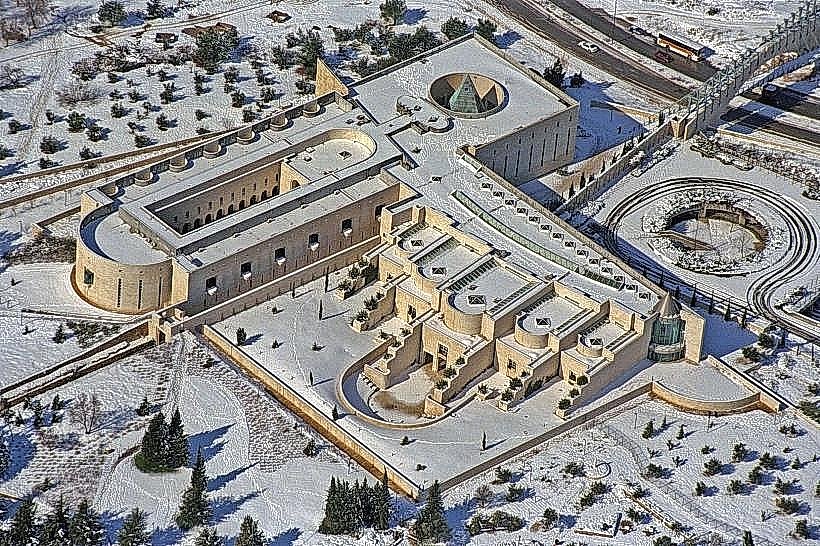
Landmark: Supreme Court of Israel
City: Jerusalem
Country: Israel
Continent: Asia
Supreme Court of Israel, Jerusalem, Israel, Asia
The Supreme Court of Israel is a landmark architectural and judicial institution located in the Givat Ram governmental precinct. Opened in 1992, the building is renowned for its complex symbolism, blending modern design with traditional Jerusalem architectural elements to reflect the continuity of law and justice.
Visual Characteristics
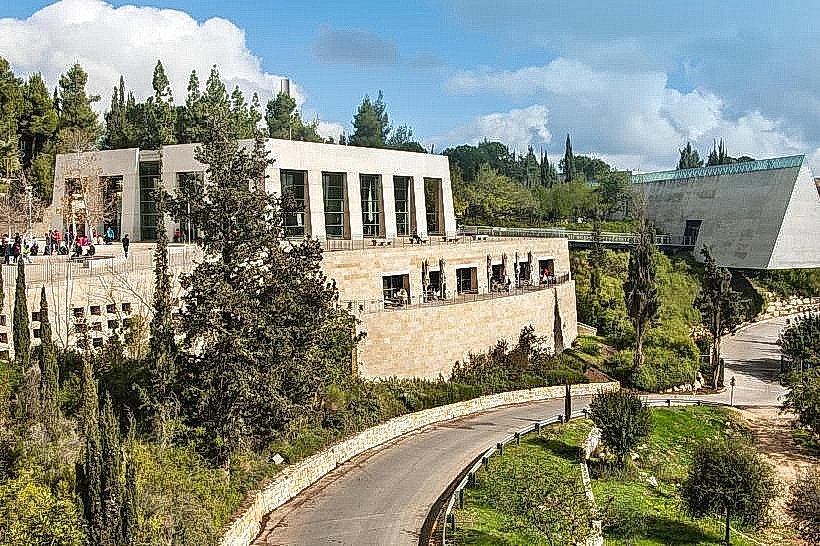
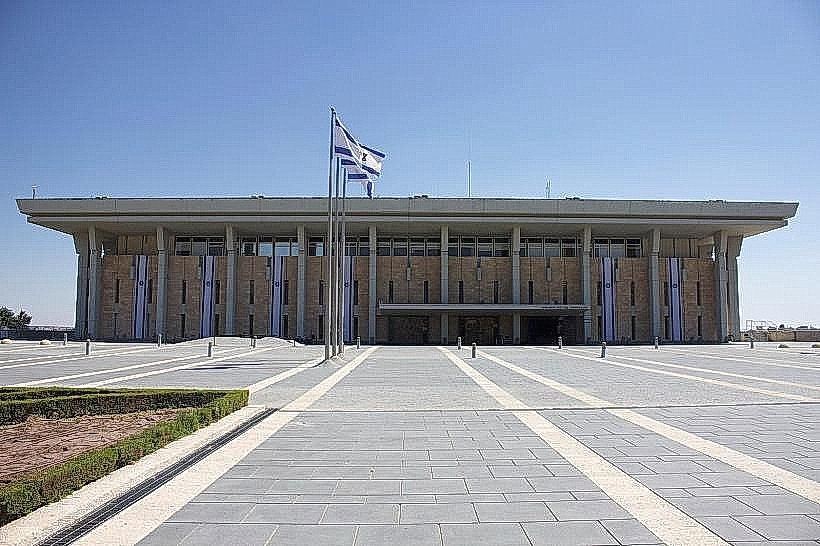
The building features a sophisticated interplay of light and shadow, utilizing local Jerusalem limestone, glass, and copper. Key architectural elements include a copper-clad pyramid roof (inspired by the Tomb of Zechariah), a semicircular panoramic window overlooking the city, and a cloistered inner courtyard bisected by a narrow water channel. The interior transitions from narrow, subdued spaces to wide, light-filled halls, symbolizing the journey toward enlightenment and justice.
Location & Access Logistics
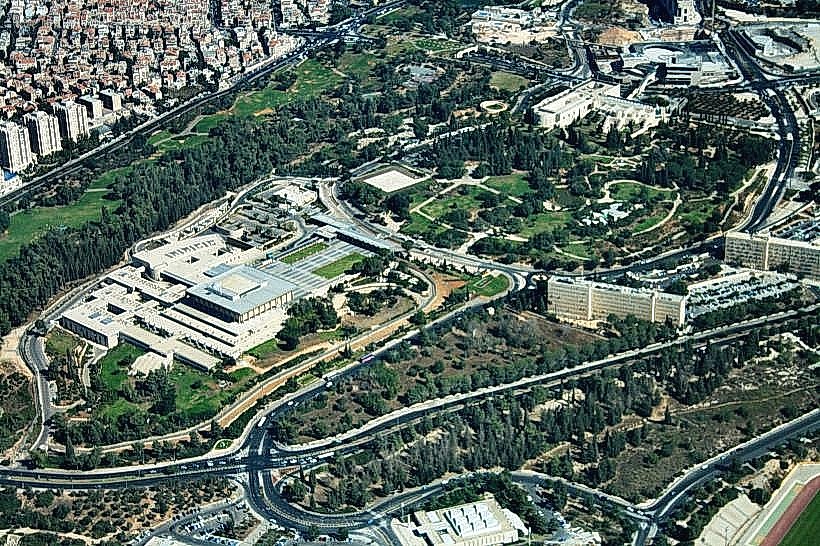
The court is situated on Sha'arei Mishpat Street, positioned on a hilltop above The Knesset. It is a 5-minute walk from the Yitzhak Navon Railway Station and the Jerusalem Central Bus Station. Public transport includes the Jerusalem Light Rail (City Hall or Central Station stops) and bus lines 7, 14, 35, and 66. Visitor parking is available in the nearby Kiryat Ben-Gurion public lots.
Historical & Ecological Origin
Before moving to its current site, the Supreme Court sat in the historic Russian Compound for 44 years. The current building was funded by a donation from Dorothy de Rothschild and designed by the sibling architect team Ram Karmi and Ada Karmi-Melamede. The site’s location on a ridge provides a strategic vantage point, physically placing the judiciary above the legislative and executive branches to emphasize the supremacy of the law.
Key Highlights & Activities
Visitors can explore the Supreme Court Museum, which details the evolution of the Israeli legal system from Ottoman and British Mandate periods to the present. Public galleries in the five courtrooms allow visitors to observe live legal proceedings. The arched library-a multi-story, circular structure-is one of the building’s most visually striking spaces, though access to the collection itself is generally reserved for researchers.
Infrastructure & Amenities
The facility is fully wheelchair accessible, with elevators connecting the administrative, judicial, and public wings. Amenities include a cafeteria for visitors and staff, a specialized law library, and public restrooms. 5G cellular coverage is universal throughout the grounds. Security screening is mandatory for all entrants at the main gatehouse.
Best Time to Visit
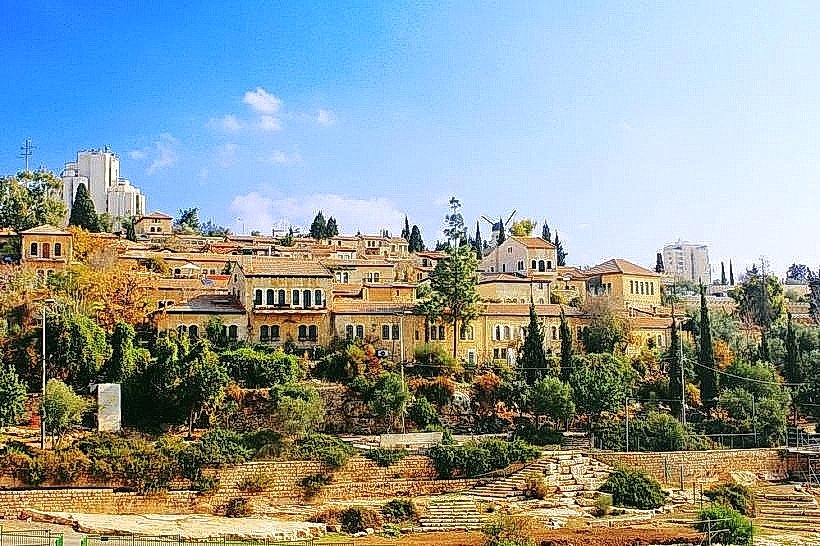
The best time for a visit is Sunday through Thursday between 08:30 and 13:30, when the court is in session and public tours are typically offered. Guided tours in English are generally available at 11:00. For photography, the "Golden Hour" in the late afternoon provides dramatic lighting on the limestone facades and the panoramic views of the Nachla'ot neighborhood.
Facts & Legends
A unique design detail is the "Wall of Unhewn Stone" at the entrance, which serves as a tactile reminder of ancient Jerusalem's foundations. The building is designed on a North-South axis to maximize natural light, which architects used to represent transparency in the judicial process. A local architectural "secret" is the intentional alignment of the building's main thoroughfare with the Knesset, creating a direct visual link between the two pillars of Israeli democracy.
Nearby Landmarks
The Knesset – 0.3km South
Wohl Rose Garden – 0.2km East
National Library of Israel – 0.5km West
The Israel Museum – 0.7km Southwest
International Convention Center – 0.6km North