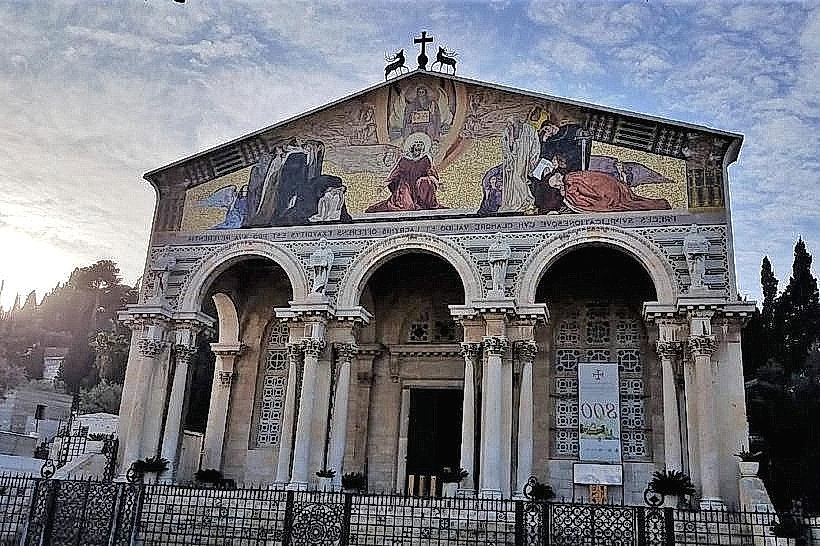
Landmark: Church of All Nations
City: Jerusalem
Country: Israel
Continent: Asia
Church of All Nations, Jerusalem, Israel, Asia
The Church of All Nations, also known as the Basilica of the Agony, is a Roman Catholic church located on the Mount of Olives in East Jerusalem. It is built adjacent to the Garden of Gethsemane and enshrines a section of bedrock where Jesus is believed to have prayed before his arrest.
Visual Characteristics
The basilica is a neoclassical structure distinguished by a facade of three arches supported by Corinthian columns and topped by a massive mosaic depicting Jesus as the mediator between God and humanity. The interior features twelve gray columns and deep blue domes decorated with mosaic stars, creating a somber, twilight atmosphere. The central altar overlooks the "Rock of Agony," which is surrounded by a wrought-iron enclosure shaped like a crown of thorns.
Location & Access Logistics
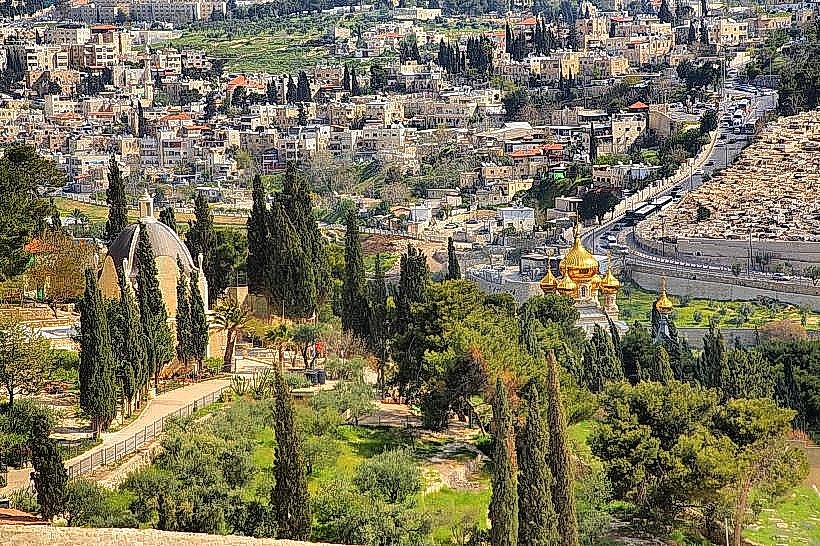
The church is situated at the foot of the Mount of Olives, approximately 500 meters east of the Old City's Lions' Gate. It is accessible via Sultan Suleiman Street or the Jericho Road. Local bus lines 255, 275, and 236 stop at the nearby Gethsemane/Jericho Road station. There is no dedicated visitor parking at the site; limited street parking may be found along the access roads, or visitors can use the lots near the Old City.
Historical & Ecological Origin
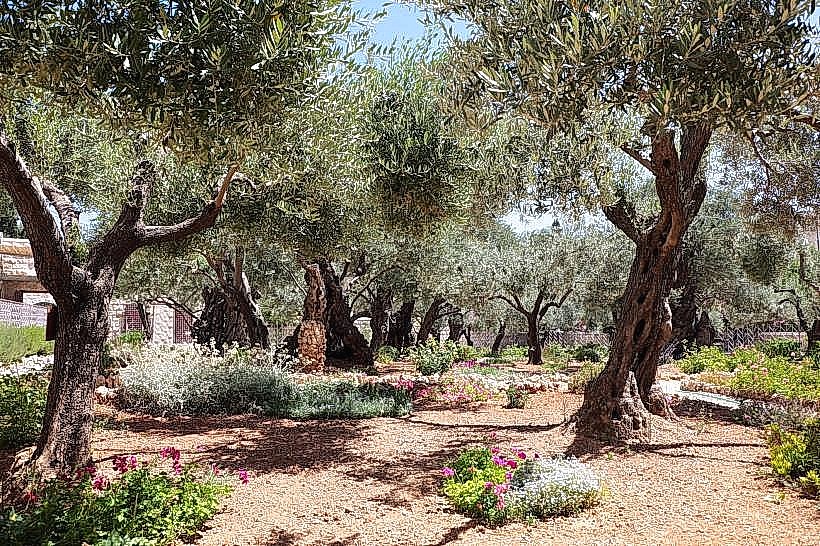
The current building was constructed between 1919 and 1924 using funds from twelve different nations, hence its name. It was designed by Italian architect Antonio Barluzzi and sits on the foundations of a 4th-century Byzantine basilica and a 12th-century Crusader church. The site is historically significant for its location in the Kidron Valley, characterized by ancient olive groves, some of which are among the oldest known in the world.
Key Highlights & Activities
Visitors can enter the basilica to observe the "Rock of Agony" and the intricate ceiling mosaics representing the donor nations. Quiet prayer and reflection are permitted inside the sanctuary. The adjacent Garden of Gethsemane is accessible via a paved path, allowing visitors to view the ancient olive trees. Liturgical services are held regularly in multiple languages.
Infrastructure & Amenities
The site includes a small pilgrim office and a modest outdoor seating area. There are no public restrooms or food vendors within the church complex itself; these facilities are located a short walk away near the Tomb of the Virgin. 5G cellular signal is reliable. The church and surrounding paths are paved, though the slope of the Mount of Olives may present challenges for those with limited mobility.
Best Time to Visit
The interior is best viewed during the morning hours when natural light filters through the violet-stained glass windows, enhancing the blue mosaics. The garden and facade are ideal for photography in the late afternoon as the sun sets behind the Old City walls. The site is open daily, but visitors should avoid scheduled mass times to ensure access to the altar area.
Facts & Legends
A unique architectural detail is the use of violet-tinted glass throughout the basilica, intended to evoke a mood of depression and agony in keeping with the site's history. Local tradition maintains that the eight olive trees in the adjacent garden are descendants of the trees that stood there during the time of Christ, with carbon dating confirming several are at least 900 years old.
Nearby Landmarks
Gethsemane – 0.02km East
Tomb of the Virgin – 0.1km North
Church of Mary Magdalene – 0.2km East
Dominus Flevit Church – 0.4km East
Lions' Gate – 0.5km West