Landmark: Hezekiah's Tunnel
City: Jerusalem
Country: Israel
Continent: Asia
Hezekiah's Tunnel, Jerusalem, Israel, Asia
Hezekiah's Tunnel is a 533-meter subterranean water channel located beneath the City of David in Jerusalem. It was engineered to divert water from the Gihon Spring to the Pool of Siloam, ensuring a secure water supply during the Assyrian siege of 701 BCE.
Visual Characteristics
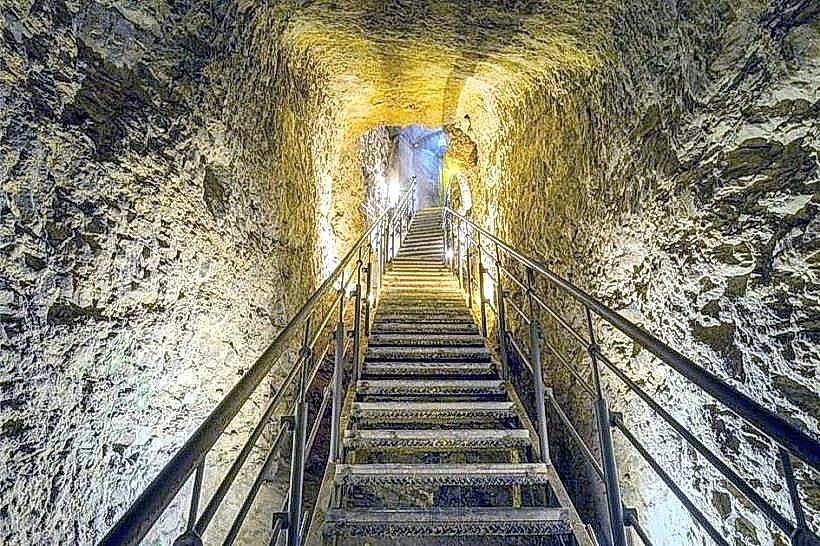
The tunnel is a narrow, winding passage carved directly into solid limestone bedrock. The height varies significantly, ranging from 1.5 meters to 5 meters, while the width remains consistently narrow, averaging approximately 60 centimeters. The walls exhibit clear diagonal chisel marks from the original excavators, and the floor is covered by flowing spring water that typically reaches knee-depth.
Location & Access Logistics
Entrance to the tunnel is located within the City of David archaeological park, accessed via the Warren’s Shaft visitor area. It is situated approximately 200 meters south of the Dung Gate. Visitors must arrive via the main park entrance on Ma'ale HaShalom Street, served by bus lines 1 and 3. Water-resistant footwear and a flashlight are required for entry.
Historical & Ecological Origin
Constructed during the reign of King Hezekiah of Judah, the tunnel is an Iron Age engineering feat completed around 701 BCE. Two teams of miners started at opposite ends-the Gihon Spring and the Pool of Siloam-meeting in the middle despite the winding path. Geologically, the tunnel exploits a natural karstic fissure in the Turonian limestone to facilitate the flow of water.
Key Highlights & Activities
The primary activity is the "wet walk," a 45-minute trek through the dark, water-filled channel. Visitors can observe the exact meeting point of the two original mining crews, marked by a shift in the direction of the chisel strokes. An alternative "dry walk" is available through a parallel Canaanite-era tunnel for those preferring to avoid the water.
Infrastructure & Amenities
The tunnel itself has no internal infrastructure; it lacks artificial lighting, handrails, or dry platforms. Safety briefings and equipment rentals (flashlights) are available at the City of David visitor center. Public restrooms and changing areas are located at the entrance and exit points of the tunnel system. 5G cellular signal is entirely blocked by the overhead rock.
Best Time to Visit
The tunnel is best visited during the morning hours (08:00–11:00) to avoid the high humidity and carbon dioxide levels that can accumulate when large tour groups are present. During the winter months, water levels may rise following heavy rainfall, occasionally leading to temporary closures. The site is closed on Saturdays and Jewish holidays.
Facts & Legends
A famous inscription, known as the Siloam Inscription, was discovered near the tunnel's exit in 1880. Written in Paleo-Hebrew, it describes the dramatic moment the two teams of stonecutters heard each other's picks and finally broke through the rock to complete the conduit. The original tablet is currently housed in the Istanbul Archaeology Museums.
Nearby Landmarks
Gihon Spring – 0.01km North
Pool of Siloam – 0.53km South
City of David – 0.1km West
Dung Gate – 0.3km North
Southern Wall Excavations – 0.4km North