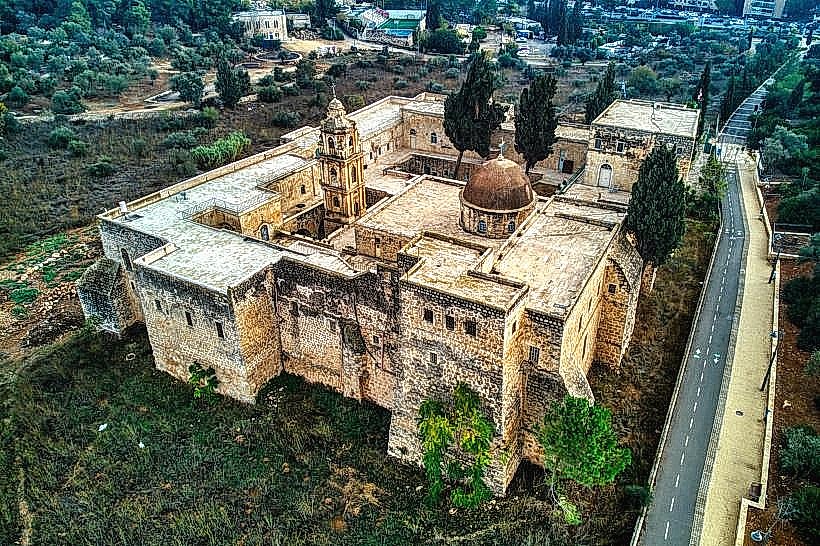
Landmark: Monastery of the Cross
City: Jerusalem
Country: Israel
Continent: Asia
Monastery of the Cross, Jerusalem, Israel, Asia
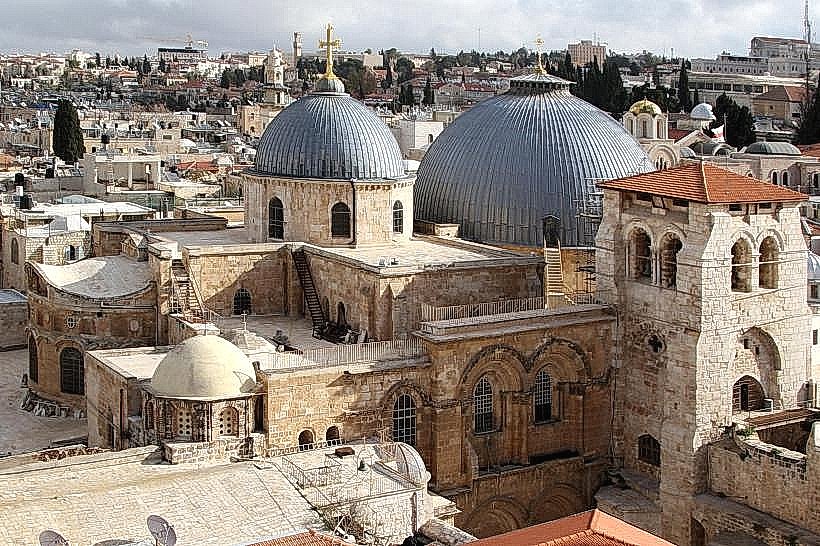
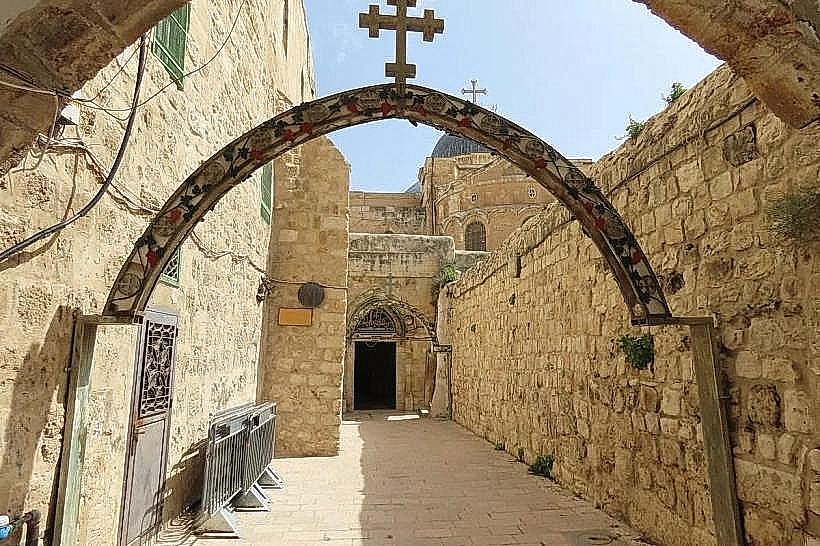
The Monastery of the Cross is a fortified Greek Orthodox complex situated in the Valley of the Cross, below the Givat Ram ridge. It is constructed from massive blocks of Jerusalem limestone and resembles a medieval fortress with high, windowless exterior walls and a central bell tower.
Visual Characteristics
The monastery features a heavy, defensive stone exterior designed to withstand sieges, contrasting with a highly decorative interior. Inside, the main church is characterized by 12th-century frescoes, complex floor mosaics dating back to the 5th century, and a silver-domed sanctuary. The architecture reflects a fusion of Byzantine and Romanesque styles, with low arched doorways and narrow corridors.
Location & Access Logistics
The site is located at Sh'ota Rustaveli Street 3, positioned in the parkland between the neighborhoods of Rehavia and Nayot. It is accessible via the 17, 19, and 32 bus lines, with the closest stop at Sderot Haim Hazaz. Pedestrian access is via paved paths through the valley floor. Limited street parking is available on the residential streets above the valley.
Historical & Ecological Origin
The current structure was primarily built by Georgian monks in the 11th century during the reign of King Bagrat IV, atop the ruins of a 5th-century Byzantine monastery. Geologically, it occupies a natural limestone basin that has remained largely undeveloped for centuries. The site is traditionally identified as the place where the tree used for the True Cross grew, a tradition that has dictated the valley's preservation.
Key Highlights & Activities
Visitors can explore the main church and the consecrated site behind the altar where the "Tree of the Cross" reportedly stood. The complex houses a small museum and a library that once held a significant collection of Georgian manuscripts. The surrounding valley provides trails for urban hiking and views of the monastery's fortified northern facade.
Infrastructure & Amenities
The facility includes a small gift shop and a ticket office at the main gate. Public restrooms are available for visitors within the inner courtyard. 5G cellular coverage is consistent throughout the open areas of the valley, though signal strength decreases inside the thick-walled stone chapel. The site is only partially accessible due to numerous ancient stone steps and narrow passages.
Best Time to Visit
The monastery is typically open to the public on Mondays, Tuesdays, Thursdays, and Saturdays from 10:00 to 16:00. It is closed on Wednesdays, Fridays, and Sundays. For photography, the late afternoon light illuminates the western stone walls and the bell tower against the green backdrop of the valley.
Facts & Legends
A unique historical detail is the presence of a fresco depicting the Georgian national poet Shota Rustaveli, who lived in the monastery during the 12th century. The central legend of the site claims that Lot planted three distinct cuttings-cypress, pine, and cedar-which miraculously grew into a single tree, eventually harvested for the crucifixion.
Nearby Landmarks
Israel Museum – 0.4km West
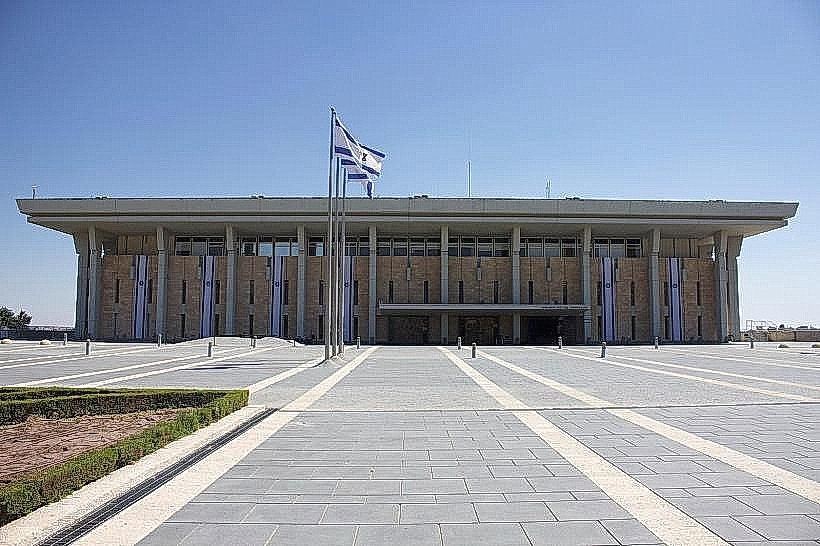
The Knesset – 0.6km Northwest
Sacher Park – 0.5km North
Bible Lands Museum – 0.7km West
Wohl Rose Garden – 0.8km North