Landmark: Valley of the Cross
City: Jerusalem
Country: Israel
Continent: Asia
Valley of the Cross, Jerusalem, Israel, Asia
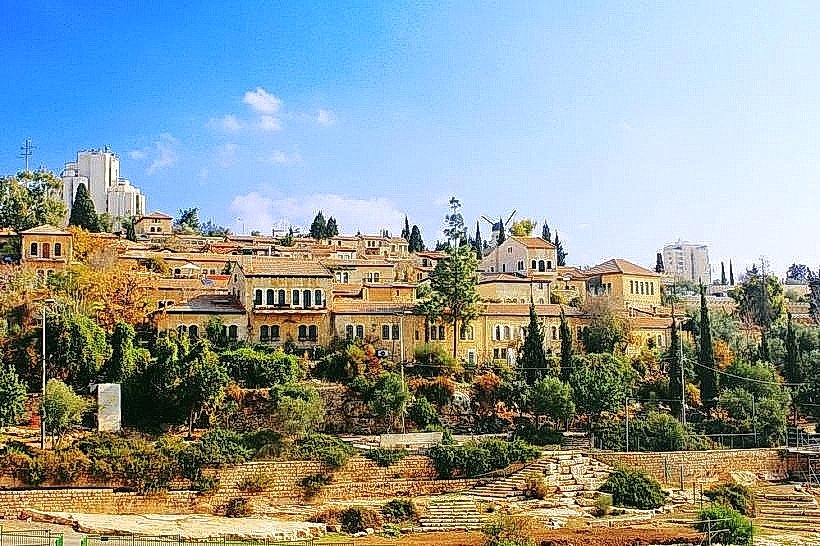
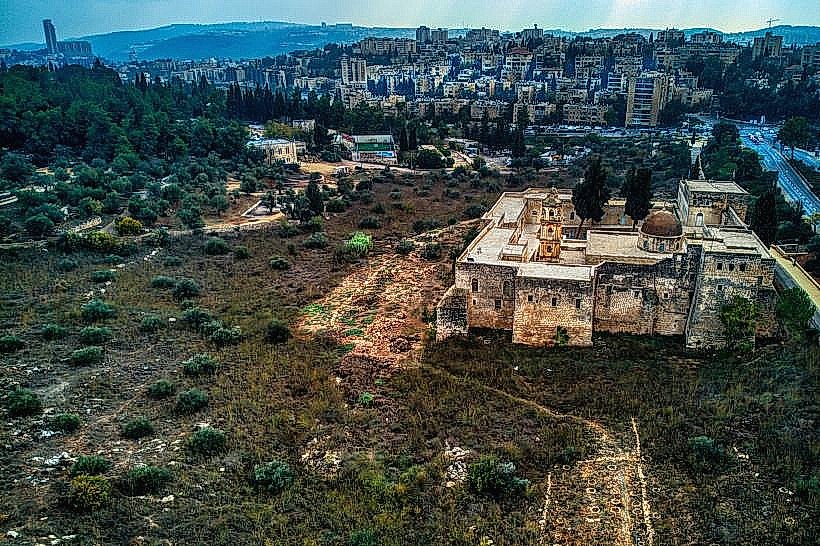
The Valley of the Cross is a large, undeveloped basin located between the neighborhoods of Rehavia and Givat Ram in West Jerusalem. It is dominated by a massive, fortress-like monastery and serves as one of the city's most significant green lungs and archaeological preserves.
Visual Characteristics
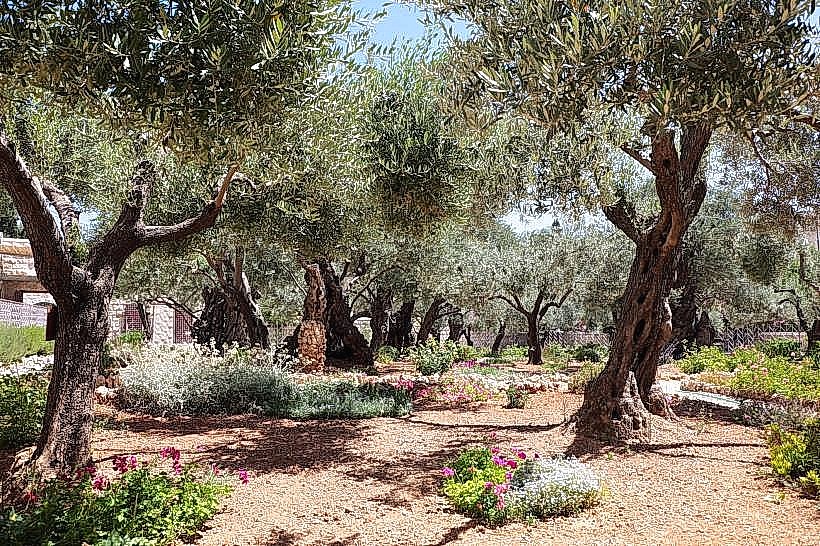
The valley is characterized by rugged limestone outcrops, ancient olive groves, and terraced slopes. The central feature is the Monastery of the Cross, a medieval structure with high, windowless stone walls, a central dome, and a fortified bell tower. The surrounding landscape remains largely unpaved, featuring Mediterranean flora such as almond trees, pine, and wild sage.
Location & Access Logistics
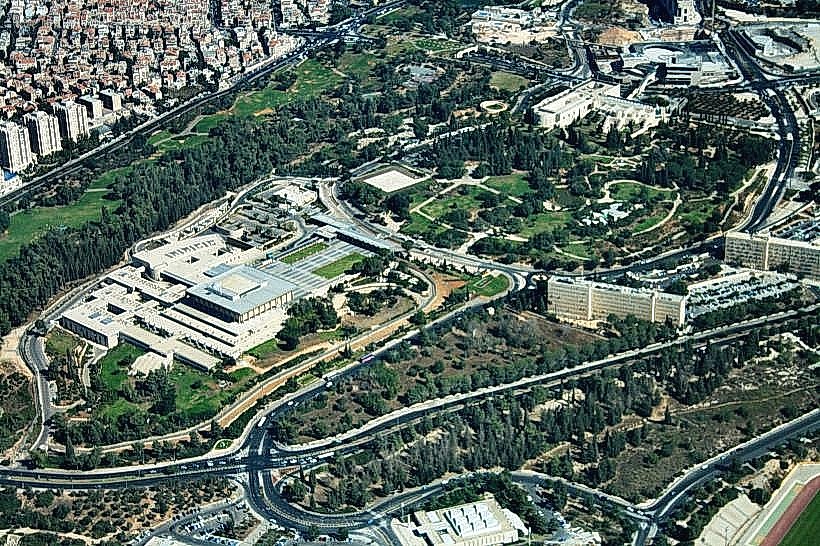
The valley is situated directly below the Israel Museum and The Knesset. Access is available via pedestrian paths from Sderot Haim Hazaz or through the park entrance near the intersection of Herzog and Tchernichovsky streets. Bus lines 17, 19, and 32 provide access to the perimeter. Limited street parking is available in the surrounding residential areas, with larger lots located at the nearby Museum Row.
Historical & Ecological Origin
Geologically, the valley is a natural karst depression in the Judean Mountains. Historically, it is the site where, according to Christian tradition, the tree used to create the True Cross grew. The current monastery was primarily built by Georgian monks in the 11th century over 5th-century Byzantine foundations. The area has remained largely unbuilt due to its religious significance and its role as a natural drainage basin.
Key Highlights & Activities
Visitors can tour the Monastery of the Cross to view its 12th-century frescoes, intricate mosaic floors, and the traditional site of the "Tree of the Cross." The valley floor is a popular destination for urban hiking, birdwatching, and picnicking. A paved cycling and walking path connects the valley to the larger Jerusalem Ring Trail.
Infrastructure & Amenities
The valley floor has minimal infrastructure to preserve its natural state, consisting of dirt trails and stone benches. The Monastery of the Cross has a small visitor entrance with basic facilities. Public restrooms and cafes are located at the Israel Museum and the Rehavia commercial fringe, approximately a 10-minute walk from the valley center. 5G cellular coverage is strong across the open basin.
Best Time to Visit
The optimal time for visiting is during late winter (February) to see the almond blossoms or spring (March–April) for wildflowers. For photography, the late afternoon light illuminates the western walls of the monastery and the olive groves. The monastery follows specific visiting hours, typically closing for a midday break between 12:00 and 14:00.
Facts & Legends
A unique historical detail is that the monastery once served as a major center for Georgian literature and culture in the Holy Land; the famous Georgian poet Shota Rustaveli lived and worked here in the 12th century. A local legend identifies a specific spot in the sanctuary where three different types of wood-pine, cedar, and cypress-miraculously grew from a single trunk to provide the timber for the Cross.
Nearby Landmarks
The Israel Museum – 0.4km West
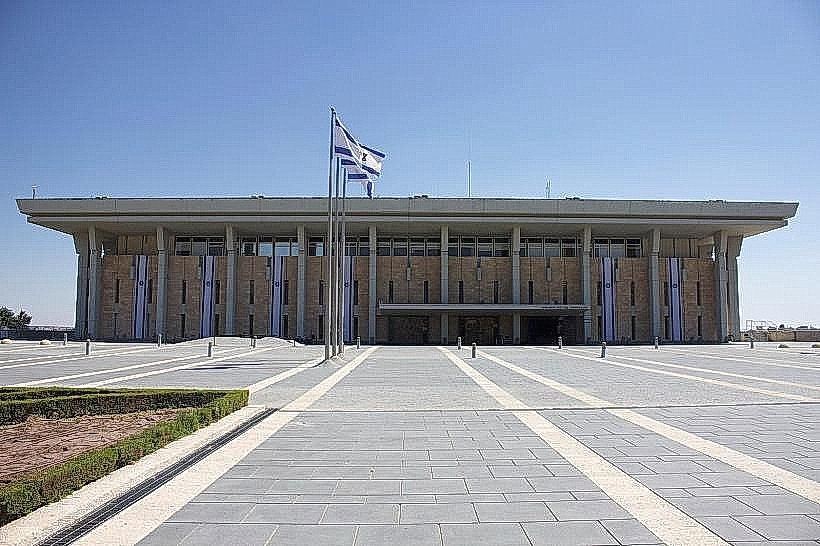
The Knesset – 0.6km Northwest
Rehavia Neighborhood – 0.3km East
Sacher Park – 0.5km North
Monastery of the Cross – 0.1km Central