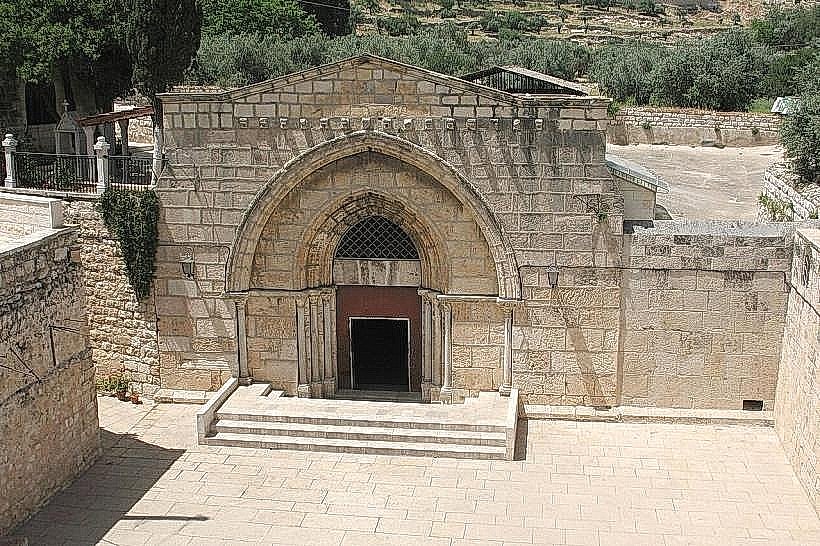
Landmark: Tomb of the Virgin Mary
City: Jerusalem
Country: Israel
Continent: Asia
Tomb of the Virgin Mary, Jerusalem, Israel, Asia
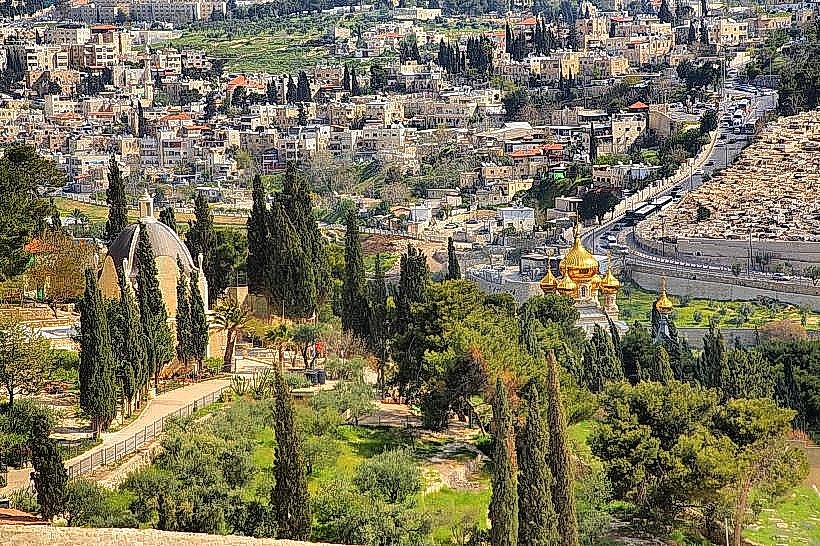
The Tomb of the Virgin Mary, also known as the Church of the Sepulchre of Saint Mary, is a subterranean rock-cut church located in the Kidron Valley at the foot of the Mount of Olives. It is a major Christian pilgrimage site held by the Greek Orthodox and Armenian Apostolic churches, traditionally venerated as the burial place of Mary, the mother of Jesus.
Visual Characteristics
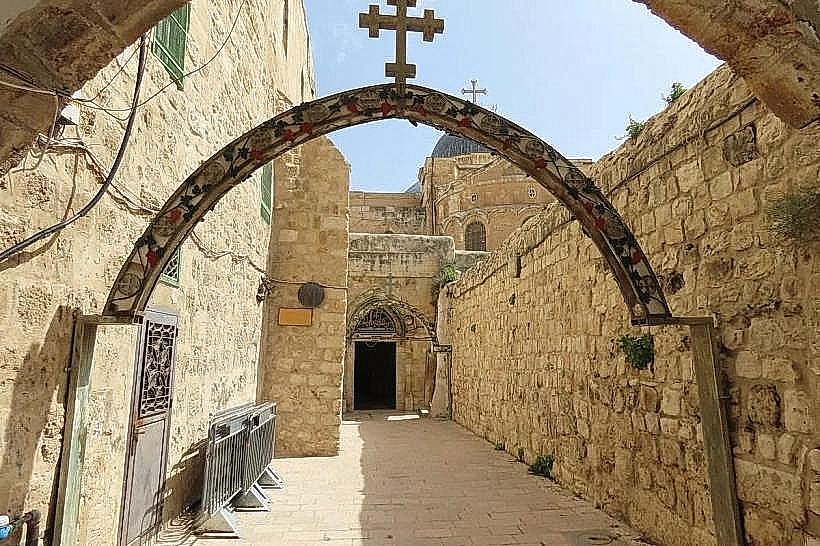
The site is accessed through a 12th-century Crusader-era stone portal leading to a wide, monumental staircase of 47 stone steps that descends deep underground. The interior is a dimly lit, T-shaped cruciform cave characterized by blackened stone walls from centuries of incense and candle soot. Hundreds of silver and gold lamps hang from the ceiling, and the central focus is a small, detached rock-cut edicule containing the empty stone sarcophagus.
Location & Access Logistics
The tomb is situated on Jericho Road, approximately 300 meters east of the Old City's Lions' Gate and immediately north of the Garden of Gethsemane. It is served by bus lines 255, 275, and 236. There is no dedicated parking lot at the site; visitors typically park in the Mount of Olives observation areas or near the Old City walls and descend on foot.
Historical & Ecological Origin
The original church was built in the 5th century, but the current structure primarily dates to the 12th-century Crusader reconstruction by the Benedictines. Architecturally, it preserves a rare transition between Byzantine rock-cutting and Romanesque masonry. The site is located at the lowest point of the Kidron Valley, an area historically prone to seasonal flooding from the wadi, which has necessitated various structural reinforcements over the centuries.
Key Highlights & Activities
Visitors descend the staircase to view the burial chamber and the various altars dedicated to different Christian denominations. Key activities include observing the "Tomb of the Parents" (Joachim and Anne) located in side niches halfway down the stairs. The site is an active place of worship where pilgrims often leave written petitions or light candles near the central sarcophagus.
Infrastructure & Amenities
The site has minimal modern infrastructure. There are no public restrooms, food vendors, or shops within the subterranean complex. Small souvenir stalls and basic facilities are located outside the entrance gate on the street level. 5G cellular signal is strong at the entrance but becomes weak or non-existent once deep inside the stone vault. The steep staircase makes the site inaccessible to wheelchairs.
Best Time to Visit
Early morning (08:00–10:00) is the optimal time to visit to avoid the humidity and crowds that accumulate in the confined underground space. For photography, the entrance facade is best captured in the late afternoon when the sun hits the Crusader stonework. The interior is consistently dark and requires high-ISO settings; flash photography is often restricted during services.
Facts & Legends
A unique feature of the site is its shared status; while it is a Christian church, it also contains a mihrab (prayer niche) directed toward Mecca, installed after the fall of the Crusader kingdom because Mary is also highly venerated in Islam. Local legend claims the tomb is empty because Mary was "assumed" bodily into heaven, a belief that mirrors the status of the nearby Church of the Holy Sepulchre.
Nearby Landmarks
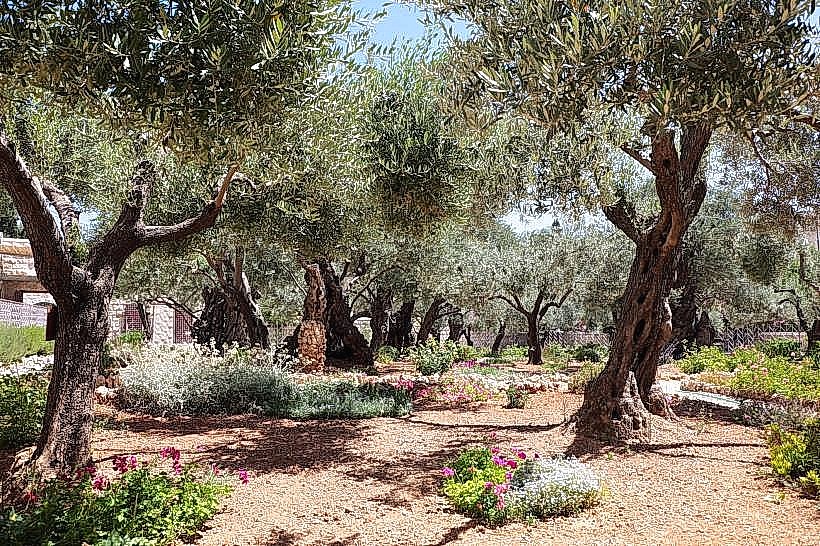
Garden of Gethsemane – 0.05km South
Church of All Nations – 0.1km South
Lions' Gate – 0.3km West
Kidron Valley Tombs – 0.4km South
Church of Mary Magdalene – 0.3km East